Skip to content
IEMI Labs

PoolOne

IEMI's one product for the home pool: the pool gate itself, made smart, so it checks every close and makes the pool area's calls, a child with no adult first, in one home app

Concept · not for sale
Our one product for Home: the poolEngineering design: PoolOne
Target price from$699per smart pool gate with its posts

Software: $3 per month (family alerts and the gate log)

Concept, not for sale yet. Tell us if you want it; that decides what we build.

Rate this idea and tell us what to change
PoolOne concept: the idea and where each part goes

Drag to rotate · right-drag to move · scroll to zoom · click a part for its size and placeSwipe to rotate · pinch to zoom · two fingers to move · tap a part for its size

How it fits together

PoolOne, part by part

Scroll or tap a part. Press “See the 3D CAD design” to watch the model, built from our CAD, light each part up and show how it connects.

PoolOne concept: the idea and where each part goes

Real-time 3D render · drag to rotate · final design may varySwipe sideways to rotate

  1. 01

    The whole PoolOne

    The pool gate is the pool area's own watcher: a camera and radar in the latch post, a camera in the hinge post and a magnet in the leaf feed one brain that reads every close, makes the pool-area calls, lights them on the gate and tells the family.

  2. 02Brain

    Raspberry Pi Zero 2 W (in the latch post)

    The brain: it runs the poolone-fw program

  3. 03

    Gate close sensor

    A Hall sensor behind the latch post wall reads the magnet in the leaf stile: latched, bounced, ajar or propped, and how long each close took

    Raspberry Pi Zero 2 W (in the latch post) · Analog, through a 12-bit MCP3021 ADC (SOT-23, on the Hall carrier) on I²C · Gap to the magnet, 100 times a second while the gate moves

  4. 04

    Pool camera

    Looks down at the deck and the water from 1.45 m: child or adult by height, someone in the water after hours, the gate opening

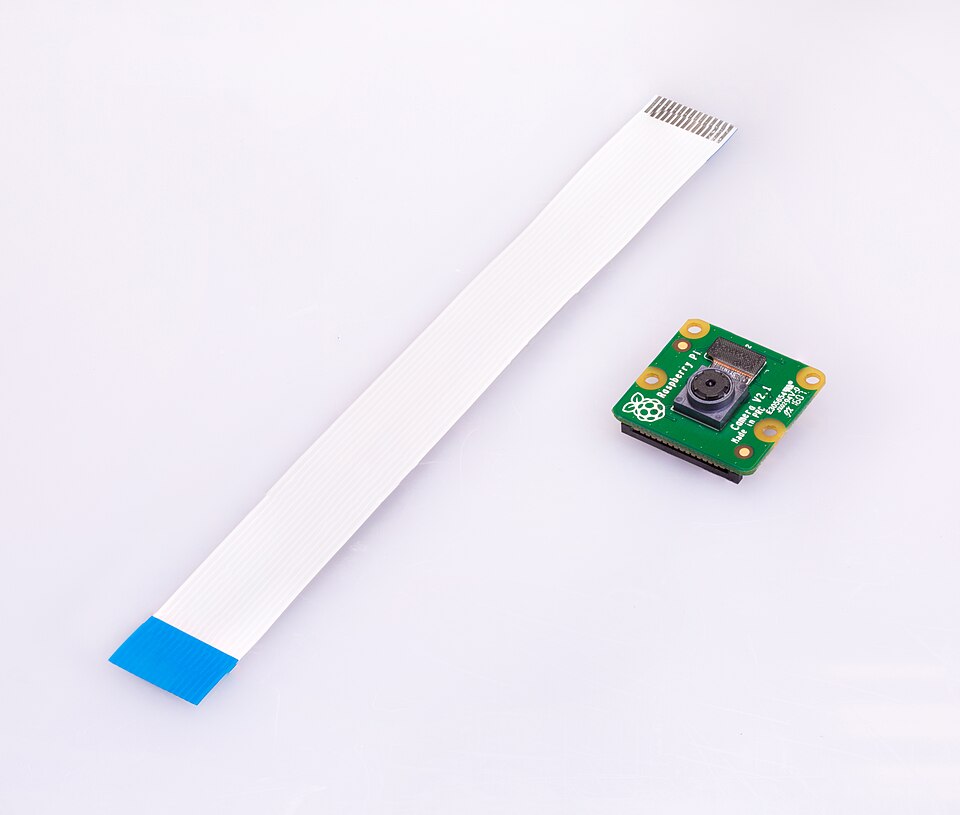
    Raspberry Pi Zero 2 W (in the latch post) · CSI-2 ribbon to the brain · Video, 2 frames a second analysed, never stored

  5. 05

    Tracking radar

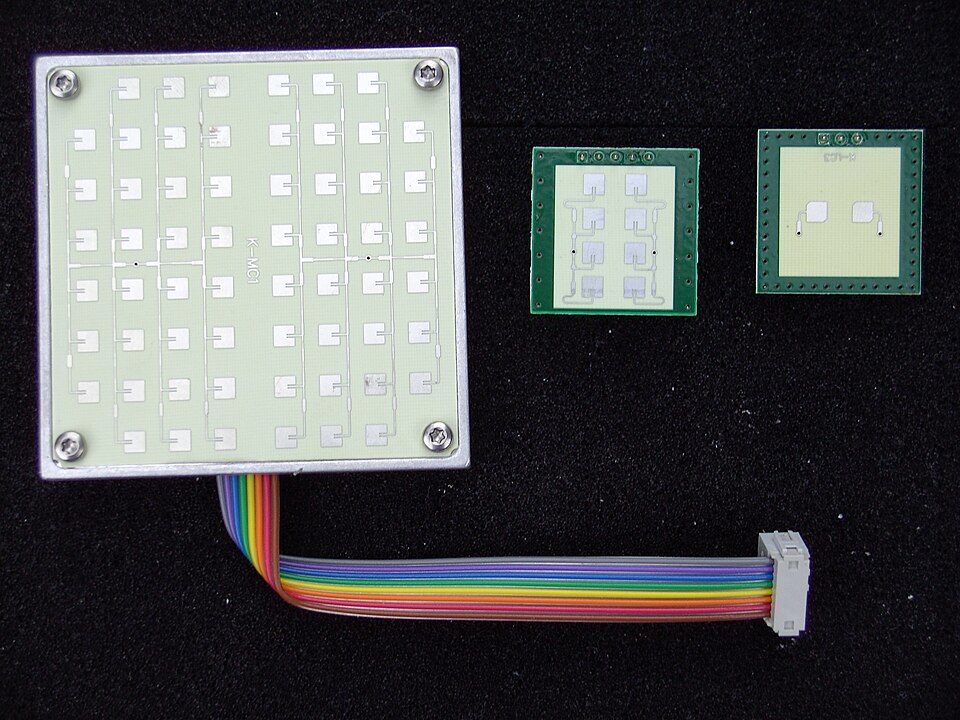
    Tracks up to 3 people in the pool area, day and night, and notices a track that starts inside with no gate opening

    Raspberry Pi Zero 2 W (in the latch post) · UART · x, y and speed of each person, 10 times a second

  6. 06

    Outside camera (hinge post)

    Looks at the 900 mm strip outside the fence by the gate: chairs, bins and toys left against it, a child at the gate

    Raspberry Pi Zero 2 W (in the latch post) · Its own Pi Zero 2 W, wired Ethernet-over-USB in the buried lead to the brain · Strip change and person events, with a still

  7. 07

    Call lights and tone

    Shows each call on the latch post: red on both faces for an open gate or a child alone, amber for a weak spring or a climbable object, with a tone

    Raspberry Pi Zero 2 W (in the latch post) · One data wire + PWM pin · Light colour and tone

  8. 08

    Secure element, tamper switches and power

    Signs each call; marks the log if a post cap is opened; 12 V buried lead to 5 V, with two backup cells in the latch post and one in the hinge post (about 10 h, est.)

    Raspberry Pi Zero 2 W (in the latch post) · I²C + GPIO; 5 V in the buried lead · Signatures, tamper flag, power

  9. 09

    All connected

    7 key parts, one program, and your phone

Our circuit board · rev A-0

One board of our own inside PoolOne

Every chip on one board we design, shaped to fit: the processor, cameras and sensors, Wi-Fi and Bluetooth, lights, sound and power. No plugs, ribbons or adapters. It is checked in our CAD against every part around it, and it arrives from the maker ready to run our software from a microSD card. Turn the model, or pick a part below to see where it sits.

Loading the 3D board…

Drag to turn · scroll to zoom · right-drag to move · click a partDrag to turn · tap a part

Checked before we order

Every board-level number PoolOne's jobs depend on, checked against its target: camera pixels and frame rate, power and battery life, heat where it works, shock, radio and software. Every lesson from every one of our boards is a rule here, so this review runs again whenever any board teaches us something. Boards are ordered only when nothing fails and the items to prove are measured.

No check fails19 pass · 3 fixed by the review · 8 to prove before we order · 0 failDesign review of 4 November 2026
AreaCheckOur boardTargetStatus
CameraPool camera: a child's head (0.15 m) at the far pool corner at 10.3 m29.1 px≥ 20 pxpasses
CameraPool camera: smear at 11 km/h, 4 ms exposure12 mm≤ 1/3 of the head (50 mm)passes
CameraPool camera: frame rate the calls need5 fps at 3840 × 2160chip: 30 fps at 3840 × 2160passes
CameraPool camera: data rate vs its 4-lane link0.41 Gbps (10-bit)≤ 80 % of 3.564 Gbpspasses
CameraOutside camera (hinge post): a child's head (0.15 m) or a chair seat at the edge of the 900 mm strip at 1.7 m80.8 px≥ 20 pxpasses
CameraOutside camera (hinge post): smear at 7 km/h, 8 ms exposure16 mm≤ 1/3 of the head (50 mm)passes
CameraOutside camera (hinge post): frame rate the calls need2 fps at 1600 × 720chip: 30 fps at 800 × 600, 15 fps at 1600 × 1200passes
CameraOutside camera (hinge post): data rate vs its 1-lane link0.02 Gbps (8-bit)≤ 80 % of 0.192 Gbpspasses
CameraImage processor load, all cameras44 Mpx/s≤ 360 Mpx/s (RV1126B ISP)passes
CameraAI engine time per frame3 TOPSperson and pose model on the pool camera at 5 fps and on the outside frames at 2 fps, inside 200 ms a frameto prove on the dev kit
PowerSupply12 V from a listed plug-in supply (24 W, est.) on the pump pad's GFCI outlet, through the buried low-voltage lead into the hinge post; the link lead carries it on to the latch post≤ 70 % of the supplypasses
PowerPower cutlatch post 11.5 h on two cells, hinge post 15.3 h on one, cells aged to 80 % at 5 °C≥ 10 h (a power cut through an evening and night)to prove on the dev kit
HeatRV1126B temperature, full sun, 40 °C air, black post67 °C≤ 85 °C (rated)passes
HeatCell temperature, full sun, 40 °C air, black post56 °C≤ 60 °Cto prove on the dev kit
ShockShock and vibration200 g (est.)standard partspasses
SoftwareStarts our software from the microSD card, no setupmicroSD socket with a hinged, latched lid (Amphenol 101-00660 class), fitted on every board: our software starts from the card; microSD socket with a hinged, latched lid (Amphenol 101-00660 class): our software starts from the cardcard socket fitted on every board, latchedpasses
SoftwareCard power switch and protection2 power switches and 2 ESD arrays for 2 card socketsevery socket: switched card supply, ESD on all 6 linesfixed by the review
SoftwareThe card wins the starteMMC shipped empty; our loader reads the card firstthe processor starts from the card every timefixed by the review
SoftwareCard gradeindustrial pSLC microSD (Kingston Industrial or Swissbit S-56u), −40 to 85 °Crated for the heat, cold and writesto prove on the dev kit
SoftwareClip buffer for an unsure call19.8 s of 8-bit 5 fps video in 40 % of the 2 GB memory≥ 3 spasses
RadioWi-Fi/BT module clock37.4 MHz MEMS oscillator (Y2)37.4 MHz next to the AP6256passes
RadioWi-Fi and BLE from the latch postchip antenna on the radar head behind the PC radome slot, the only radio window in the aluminium post besides the camera windowcertified AP6256 module; the home router at 15 m, the phone at the gateto prove on the dev kit
RadioHinge post radioESP32-S3 module antenna under the outside camera window, used only for setup; frames go over the wired linkBLE setup from a phone at the gateto prove on the dev kit
MoistureConformal coatingcoatedcoated, sensors, sockets and antennas maskedpasses
FitBoard inside the product CAD, every part checked in 3Dnot yet in the product CADnothing touchesto prove on the dev kit
CameraEvery gate call in its sensor's viewpool camera worst 33.2° up or down; radar worst 11.7°; outside camera worst 21°inside each field of viewpasses
CameraEach lens through its 27 × 27 window (lesson: window)pool: the window leaves 63.5°, the lens wants 58.5° down; outside: leaves 64.8°, wants 63° downno vignetting over the callspasses
RadarRadar window16 × 44 slot right through the pool face with a 1.5 mm PC radome bonded in; the slot leaves ±64.2° across60 GHz sees out; ±60° acrossfixed by the review
SensorHall chip to the leaf magnet16.5 mm from the TMAG5273 to the N42 disc in the latch stile, through the 2 mm aluminium wall≤ 25 mm; latched, ajar and propped told apartto prove on the dev kit
LinkHinge camera frames over the link leadabout 120 KB JPEG at 2 fps = 1.9 Mbps on RS-485≤ 25 % of the 10 Mbps the THVD1450 runs over 3 m of leadpasses

Before we order the first boards, we prove these on the RV1126B development kit or in the rev A tests:

  1. AI engine time per frame
  2. Power cut
  3. Cell temperature, full sun, 40 °C air, black post
  4. Card grade
  5. Wi-Fi and BLE from the latch post
  6. Hinge post radio
  7. Board inside the product CAD, every part checked in 3D
  8. Hall chip to the leaf magnet

Demo · 6 real-world moments

See PoolOne work

Short animated scenes of real moments: what happens today, what PoolOne does about it, and what lands on your phone. The same scenes play in the IEMI app.

DEMO · 1 of 6
0s

A summer Saturday: the family is in the house and the yard, and nobody is watching the pool area.

Use cases

Today, without PoolOne

On a busy day at home nobody is actually watching the pool gate; a bounced latch or a chair against the fence goes unnoticed.

What PoolOne does

The gate makes every pool-area call itself. It lights and sounds on the posts first, so whoever is in the yard or the house hears, and messages phones only when a call stands. Unsure calls go to the app as a short clip, never as an alarm.

How the app helps

  • The day's timeline of closes and calls
  • Unsure calls as a 10 s clip, not an alarm
  • One evening message
No adult there modeLatch check on every closeLights and tone on the postsUnsure calls to the appSigned gate logOpen this scene in the app →
Every feature in these scenes (12)
  • No adult there mode
  • Latch check on every close
  • Lights and tone on the posts
  • Unsure calls to the app
  • Signed gate log
  • Family alert
  • Child with no adult watch
  • Tracking radar
  • Pool camera
  • After-hours watch
  • Hinge-spring trend
  • Fence strip check

Demo scenes show how PoolOne and its app are designed to behave. PoolOne is in design; nothing here is recorded from real equipment yet.

What it is

IEMI's one product for the home pool: the pool gate, made smart, with one brain and one app.

What it does

  • Checks every gate close
  • Calls a child in the pool area with no adult
  • Calls night swims and climbed fences
  • Keeps a signed gate log

Who it's for

Families with a backyard pool, and the fence installers who fit their gates.

The idea

The pool gate itself checks every close, watches the pool area and calls a child with no adult there

The problem today

Home pools rely on a self-closing gate that families never check until it fails to latch, and a gate alarm only beeps at the gate. Pool cameras, gate pods, fence pods and a hub each add a box and an app, and none knows whether an adult is in the pool area.

With PoolOne

The gate already stands in the barrier. PoolOne puts a camera and radar in the latch post, a camera in the hinge post and a magnet in the leaf, so the gate calls a close that did not latch, a child in the pool area with no adult, someone in the water after hours and things left against the fence, on the gate first and then on the family's phones.

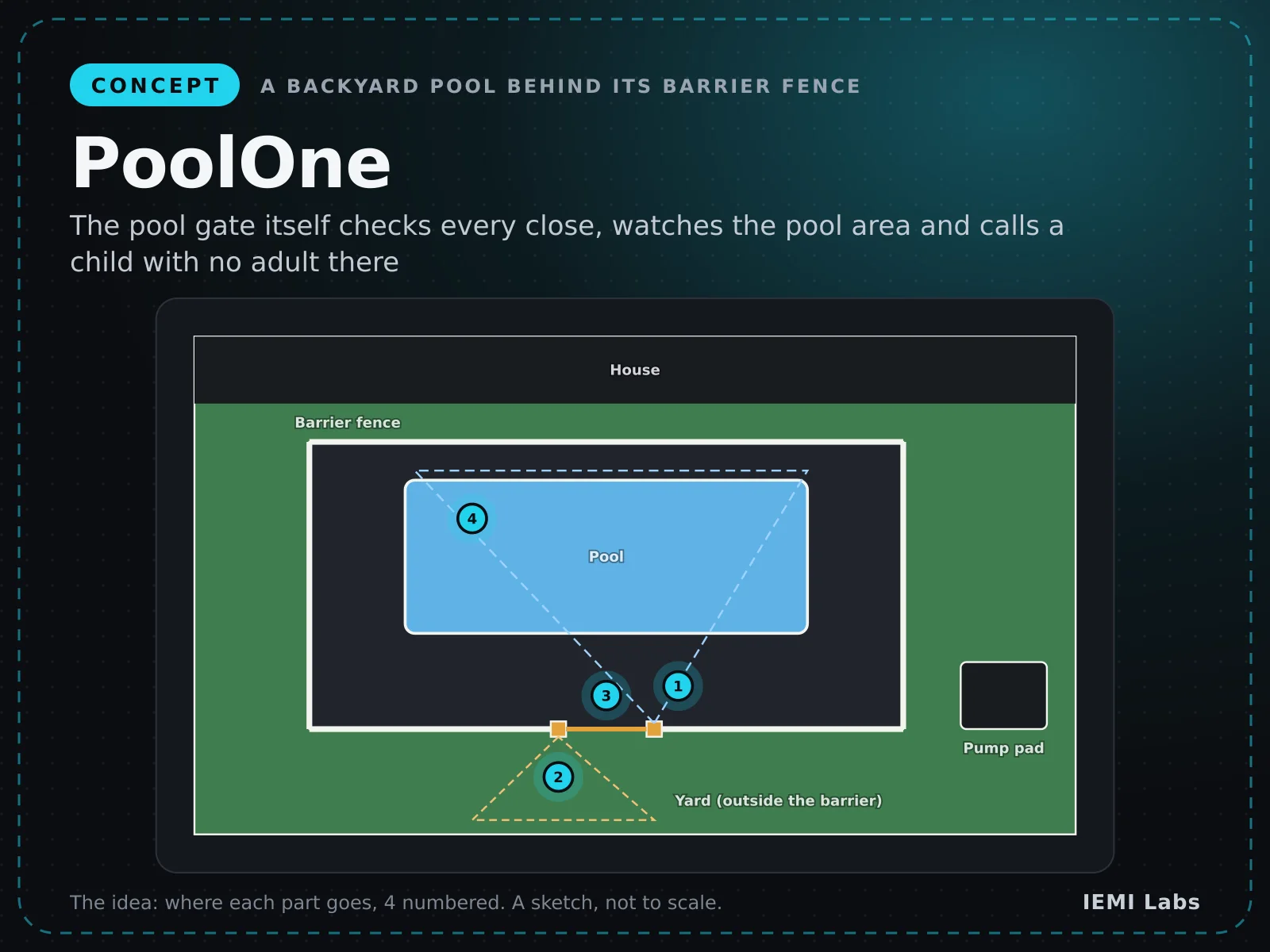
HousePoolPump padYard (outside the barrier)Barrier fence1234
  1. 1Latch post (the brain)Pool camera, radar, Hall sensor, call lights and tone: every close, a child with no adult, someone in after hours, fence climbed
  2. 2Hinge postOutside camera on the 900 mm strip: things left against the fence and a child at the gate; power comes in here
  3. 3Gate leafA magnet in the latch stile, so every close is read to a fraction of a millimetre: latched, bounced or ajar
  4. 4Pool and deckSeen from the latch post: who is in the area, child or adult, and anyone in the water after hours
A backyard pool behind its barrier fence, drawn to show where each part goes (not to scale).

How the parts connect

PoolOne, wired up

Every part, what links it to the brain, and how the data reaches your phone. A solid line is a cable; a dashed line is a radio link.

Gate close sensorGap to the magnet, 100 times a second…Analog, through a 12-bi…Pool cameraVideo, 2 frames a second analysed, ne…CSI-2 ribbon to the bra…Tracking radarx, y and speed of each person, 10 tim…UARTOutside camera (hinge post)Strip change and person events, with…Its own Pi Zero 2 W, wi…Call lights and toneLight colour and toneOne data wire + PWM pinSecure element, tamper switch…Signatures, tamper flag, powerI²C + GPIO; 5 V in the…THE BRAINRaspberry Pi Zero 2 W (in…runs poolone-fwPython 3 with a C Hall-sampling…IEMI cloudvia Home Wi-Fi (WPA3) · MQTT over TLSFamily phonesvia Push and SMS
Drawn from the PoolOne parts list. The 3D view above is built separately, from the CAD.

The program

What controls PoolOne

Runs on
Raspberry Pi Zero 2 W
Written in
Python 3 with a C Hall-sampling helper
System
Raspberry Pi OS Lite (64-bit), secure boot
AI model
An int8 person detector on the camera frames with height from the camera's known mounting; LD2450 tracks fused with the detections; a close-curve model on the Hall samples; every call carries a confidence, and below the line it says unsure
  1. 1Every 100 ms: read the radar tracks and the Hall gap
  2. 2On a gate move: sample the close at 100 Hz and call latched, bounced, ajar or propped
  3. 3Twice a second: detect people in the pool camera, size them, fuse with the radar
  4. 4Child with no adult, someone in after hours or a climb: red light, tone, alert
  5. 5Sign each call and send it; unsure calls go to the app only
poolone-fw.pymain loop
while True:
    tracks = ld2450.read()                  # up to 3 people, x/y/speed
    gap = hall.gap_mm()                      # 0.0 when latched
    if gate.moving(gap):
        calls += gate.close_call(hall.sample(hz=100))
    if tick.half_second():
        people = size(detect(poolcam.frame()), tracks)
        calls += area_step(people, gap, hours, outside.events())
    for c in calls:
        if c.conf < c.line: c.kind = 'unsure'   # never guess
        atecc.sign(c); light_and_tone(c); mqtt.publish(c)
    calls.clear()

To your phone

How the data reaches PoolOne home app

Family phones (Android and iPhone); a read-only gate log link for a pool inspector or insurer if the family shares it

  1. Pool gate
  2. IEMI cloud
  3. Family phones

What you see in the app

One screen for each job PoolOne does.

  • No adult there modeA summer Saturday. The family is in the house and the yard; nobody is watching the pool area. The gate watches it alone, makes every call itself and messages only when a call needs someone.

  • Gate did not latchA child runs through and lets the gate swing back on its own. It hits the latch and bounces open 40 mm. The latch post turns red with a fast tone, and after 10 s the family phones say the gate is open.

  • Child with no adultA four-year-old slips into the pool area behind an older child who then leaves. The radar and the pool camera see one small person and no adult. The gate sounds loudly and every family phone rings at once.

  • After hours and fence climbedLate at night someone climbs the side fence to swim. The gate never opened, but the radar sees a new person inside the area during closed hours. Red light, tone and an alert with a clip.

  • Gate health and the fence stripOver a month the hinge springs relax and closes get slower, while a garden chair is left against the fence outside. The gate shows the trend before it stops latching from part-open and photographs the chair each evening.

App screens with sample data. The interface is in development.

What the app gets

Data PoolOne sends to the app
Gate closes43 closes today, 42 latched, 1 bounced at 16:05 (closed again in 6 s)Each close
Hinge springsClose time 2.9 s, up 21 % in 4 weeks: adjust the hingesWeekly
Child with no adultChild in the pool area, no adult for 4 sEach call
After hoursSomeone on the deck at 23:40, pool closedEach call
Fence stripA chair against the fence 0.8 m left of the gateEach evening
Gate healthBoth posts sealed, backup cells 100 %, signed log up to dateDaily

Video stays in the gate: only signed calls and 10 s clips around calls leave it, kept 30 days; the outside camera is masked to the family's own yard.

CAD design · Design rev A, 28 Oct 2026: smart pool gate that makes the pool area's calls itself (7 calls, 5 alone, 2 assist), call lights and tone, ATECC608 and tamper switches inside; 15 sensor views checked in the CAD; not built

Designed in code, checked in 3D

  • 3 printed parts, each a single closed solid
  • Every bought part fitted inside and checked for collisions
  • Assembled exactly as shown in the 3D CAD view (the button on the picture at the top)

Key specs

PoolOne hardware
AI processorOne board of our own up the latch post: Rockchip RV1126B (3 TOPS), the only brain; one board of our own up the hinge post with an ESP32-S3 module that runs the outside camera and sends its frames over the wired link. The bench set uses a Raspberry Pi Zero 2 W in each post until the boards arrive
SensorsSony IMX415 8 MP camera chip on a head tilted 20° down at the pool, and an OV2640 camera chip in the hinge post looking out at the 900 mm strip outside the fence · TI IWRL6432AOP 60 GHz radar chip behind a PC radome slot in the latch post: who is in the pool area, adult or child, still or moving · TI TMAG5273 3D Hall chip at the gate-face edge and a magnet in the leaf: latched, bounced, ajar, propped, or a second magnet held to the post · Call lights on both faces and a sounder in the latch post, a security chip and a tamper switch on every board
ConnectivityWi-Fi (WPA3), MQTT over TLS · Wired link between the posts
Power12 V from a listed plug-in supply on the pump pad GFCI outlet through a buried lead; about 3.0 W watching (est.); two 18650 cells soldered on the latch-post board and one on the hinge-post board with their own chargers: about 11.5 h and 15.3 h in a power cut, counted with cells aged to 80 % and cold (est.)
EnclosureThe gate's own 50 x 50 aluminium posts with sealed printed ASA caps
DimensionsLeaf 1,046 x 1,200 mm; posts 50 x 50 mm, 1,250 and 1,600 mm
WeightAbout 0.4 kg more than the plain gate (est.)
Ingress ratingIP65 design target, not tested
All target specifications

Jobs

Jobs target specifications
GateEvery close: latched, bounced, ajar, propped
SpringsWeekly close-time trend
Pool areaChild with no adult, after hours, climbs
FenceClimbable things by the gate
RecordSigned gate log

Legal at the barrier

Legal at the barrier target specifications
Height1,200 mm leaf (1,250 mm option)
Gaps84 mm pickets, 75 mm under the leaf
LatchRelease at about 1,520 mm; latch and hinges marked to AS 1926.1:2024
NotA barrier, pool alarm or drowning detector

Targets for production units; they may change during development.

Pricing

Hardware: $699 per smart pool gate with its posts

Software: $3 per month (family alerts and the gate log)

Target pricing for the gate with its posts; fitting by the fence installer is extra, as for a plain gate. Bought separately, a pool gate (about $500, est.), a MagnaLatch ALERT (about $150), our PoolDeck kit ($249) and an outdoor camera (about $100, est.) add up to about $999. Parts cost about $424 per gate at qty 1 (prices checked 28 Oct 2026; leaf and posts est.).

Smart pool gate

$699 + $3/month

Every gate and pool-area job in the gate itself.

  • Every close read
  • Hinge trend
  • Child with no adult
  • After hours and climbs
  • Signed gate log

Indicative launch pricing in USD, excluding taxes and shipping. Final pricing is confirmed before any balance is charged.

Community

What do you think of PoolOne?

PoolOne is in development. Rate the idea, tell us what to change about the features, specs or price, and we'll build it with your feedback.

How much people want it

–

No ratings yet

  1. 50
  2. 40
  3. 30
  4. 20
  5. 10

Follow PoolOne

Get build updates and first access when pre-orders open.

Leave feedback

Your rating of the idea

Feedback on a product concept in development, not a review of a shipped product. Posts may be moderated; links and contact details are held for review. See our community guidelines and privacy policy.

Comments

    No comments yet. Tell us what you'd want from PoolOne.

    Questions

    Ask about PoolOne

    Tell us what this would save you, or ask anything. We reply within two business days.

    We use your details only to respond to this request. See our privacy policy.

    From the product lab · ideation phase

    Lab updates for PoolOne

    All lab updates
    1. LatestA family buys PoolOne as the self-closing, self-latching pool gate its barrier needs (ISPSC Section 305 and AS 1926.1: a gate at least 1,200 mm high, gaps under 100 mm, the latch release at 1,500 mm or more), so the electronics must be boards an assembly house makes and tests the same way every time, inside the gate's own 50 mm aluminium posts, with nothing plugged together inside, and still seeing the deck, the water and the strip outside the fence from there.
      • What we designed: one rigid-flex board of our own up each gate post, shaped as a narrow spine that stands in the 46 mm bore. The latch-post board, 8 layers, carries the RV1126B with a copper block to the post wall (the aluminium post is the heat sink), memory, Wi-Fi and Bluetooth, the security chip, a 3D Hall chip that reads the leaf magnet through the wall, two soldered cells with their charger, eight call lights on each face and the sounder. A head tilted 20 degrees down holds the 8 MP pool camera chip just inside the pool window; a second head lies flat behind the radar window with the 60 GHz radar chip and the Wi-Fi antenna; a tab under the cap holds the tamper switch and the microSD card with our software. The hinge-post board, 4 layers, carries the ESP32-S3 module, the outside camera chip on a head tilted 35 degrees down, one cell, the 12 V input from the buried lead and the link to the latch post. It replaces two Pi Zero 2 W boards, two camera modules, the radar module and the Adafruit and Pololu boards. See /build/poolone-boards
      • How we checked it: the boards are written as code and opened in KiCad (0 design-rule violations). The code places 56 parts at their sizes and checks each sits on its board inside the post bore with no overlaps; that the lights, sounder, radar and antenna sit on their openings; in 3D, that both camera heads and lenses stay inside the posts and clear of the spines; that every call in the design (the pool corners, someone in the water at the far corner 10.3 m away, the deck inside the gate, the fence line, the strip outside) is inside its sensor's view; and that each lens's widest ray clears the edge of its window. Design review with the shared rules: 18 pass, 1 fixed, 7 to prove, 0 fail. A 3D model shows the boards in see-through posts or laid flat, and the quote pack and design files are on the board page
      • What we learned: the first gate design put the radar behind a 1 mm aluminium skin, and a 60 GHz radar cannot see through metal at all. The slot now goes right through the pool face with a clear 1.5 mm radome bonded in (the rev T post design), and the Wi-Fi antenna shares it, since the post is otherwise a metal tube. The outside lens was chosen from its calls: cropping its rows keeps the view down to the strip inside what the window's edge leaves (the window lesson from DockOne). Black pool fence posts get hot, so the boards call for a heat-reflective black finish and keep the cells low in the post (est. 56 degrees C in full sun, to prove). About $105 a gate in electronics at 1,000 gates (est.)
      • What is next: the rev T post CAD with the boards inside, every part checked in 3D; Wi-Fi range from the radome slot; the Hall field at each gate position; and the next product's board, ClassOne

      See it in 3DFull research and design

    2. New pool barriers in Australia move to AS 1926.1:2024 as the states adopt NCC 2025 (Victoria and the ACT from 1 May 2026, NSW, Queensland and South Australia from 1 May 2027), with revised gate latch and hinge requirements and guidance on keeping objects and plants out of the non-climbable zones (Standards Australia, SPASA). In the US the 2027 pool code reorganises its gate and door section (ICC).
      • Market and rules check (DESIGN.md): AS 1926.1:2024 through NCC 2025 with each state's adoption date (Western Australia keeps the 2012 edition for private pools), the 500 mm boundary barrier rule, the 2025 supplement, the ISPSC 2027 gate section and three competitors, each with what it changes in PoolOne
      • Gate hardware: the gate's own self-closing hinges and magnetic latch are bought marked to AS 1926.1:2024, and setup asks which edition the state applies; no CAD change, nothing sits in the latch path
      • Assist call widened: the outside camera now also notes plants or branches growing into the 900 mm strip by the gate, with the chairs and bins it already photographs each evening; no new part or camera view
      • Rules: two new rule lines in equipment.json, AS 1926.1:2024 by NCC 2025 and the ISPSC 2027 edition (final gate wording to re-check before US sale)
      • Competitors: the Trident Safe Signal magnetic latch (about $237, alarm after 15 s unlatched) is now the closest alarm latch beside the MagnaLatch ALERT; no app-connected smart gate found for 2026. Price kept at $699
      • Product page https://iemilabs.com/products/poolone/ gains a 2026 pool fence rules FAQ, a latch spec line and the Trident latch in the price FAQ
      • Next: ask pool fence installers in Victoria in the phase 3 buyer review whether the marked hardware and a plants-in-the-strip note help at inspection; close-out C9 (recommend the first product to the owner) from 30 Oct 00:00

      See it in 3DFull research and design

    3. A family with a backyard pool needs to know at once when the gate did not latch or a child is in the pool area with no adult: CPSC's June 2026 report counts about 376 child pool and spa drownings a year, most under five and most at home, and today a gate alarm ($62) or an alarm latch ($150) only beeps at the gate.
      • Buyer check with sources: what families pay today for a gate, an alarm latch and a gate alarm, the June 2026 CPSC drowning figures, and the three closest products
      • What we learned: the cheapest thing a family buys instead is a $62 battery gate alarm (Poolguard GAPT) with no phone or log; the MagnaLatch ALERT is now about $150 at its maker's store, so the separate total fell from about $1,039 to about $999
      • Price kept at $699 per gate with its posts + $3 a month; the page now says plainly that the fence installer's fitting is extra, as for a plain gate
      • Power recounted: the brain post draws about 2 W, not 1 W, so a second backup cell now sits inside the latch post (CAD fit checked), and both posts keep watching for about 10 hours in a power cut (est.)
      • Parts list prices checked on shop pages today: $424 of parts per gate at qty 1; cost and margin table in the design notes (about 29 % at qty 1 and 47 % at qty 100, est.)
      • Product page: the first three FAQs answer the buyer's top questions (does it stop drowning, why not a gate alarm, do I have to replace my gate), and the power and price lines match the design

      See it in 3DFull research and design

    4. A family pool needs a gate that is known to be latched and someone told at once when a child is in the pool area with no adult. CPSC finds most child drownings at home happen outside swim time, and the pool code (ISPSC 305, AS 1926.1) relies on a self-closing, self-latching gate that families never check. Today they buy a gate, an alarm latch that only beeps at the gate (MagnaLatch ALERT, about $171-210) and cameras that do not know who is an adult.
      • New flagship PoolOne: the self-closing, self-latching pool gate made smart, at the same 50 mm posts, 1,200 mm leaf, hinges and latch (84 mm picket gaps, 75 mm under the leaf, latch release at about 1,520 mm, all asserted in the CAD)
      • Latch post: Pi Zero 2 W brain, Camera Module 3 Wide over the deck and water, LD2450 radar, DRV5055 Hall sensor, call lights on both faces, tone, ATECC608 secure element, tamper switch and a backup cell; hinge post: outside camera, its computer, 5 V buck, cell and tamper switch; a magnet in the leaf
      • Makes 7 pool-area calls (5 alone, 2 assist) and says unsure below a stated confidence, never a drowning call; equipment.json with ISPSC and AS 1926.1 rules, calls, impact and security; yard plan, 6 integration parts, 5 app screens with No adult there mode
      • Shared from PoolGuard (close states and the hinge-spring model) and PoolDeck (one brain, one app); dropped the LeafPod, PostTag, ClearZone pods, DeckHub and pad pucks; gaps listed: drowning detection (never claimed), the far fence, the pump pad (WaterLeak stays listed), water chemistry, house doors, commercial after-hours voice
      • CAD review: 16/16 parts fit with datasheet sizes, 15 camera and radar views checked, no collisions, no floating parts; page at /products/poolone/, $699 + $3/month vs about $1,039

      See it in 3DFull research and design

    5. One product for the home pool (owner decision, 27 Oct 2026).
      • Its jobs now run in PoolOne, the smart pool gate: /products/poolone/

      See it in 3DFull research and design

    6. One product for the home pool (owner decision, 27 Oct 2026).
      • Its jobs now run in PoolOne, the smart pool gate: /products/poolone/

      See it in 3DFull research and design

    Smart equipment · legal on the field

    PoolOne is the self-closing, made smart

    It replaces the pool's existing gate and its two posts (an aluminium pool gate with posts, self-closing hinges and a top-pull magnetic latch, about $400-700 installed, est.); the gate's own hinges and latch are kept, with every part built in. Everything inside the gate: brain, pool camera, radar, Hall sensor, call lights, tone, secure element, tamper switch and two backup cells in the latch post; the outside camera, its computer, the 5 V buck and a backup cell in the hinge post; a magnet in the leaf stile. Same 50 mm posts and leaf; about +0.4 kg (est.); no LeafPod, PostTag, ClearZone pods or DeckHub on the fence.

    Meets ICC International Swimming Pool and Spa Code (US) and Standards Australia: ISPSC Section 305 barriers (2024: gates open outward from the pool, self-closing and self-latching, latch release at least 54 in / 1,372 mm on a residential gate, openings under 4 in) and AS 1926.1 (1,200 mm barrier, gaps under 100 mm, latch release at least 1,500 mm)

    RuleLimitPoolOne
    Barrier and gate height (ISPSC 305 as adopted; AS 1926.1)at least 48 in (1,219 mm) in many US adoptions; at least 1,200 mm in Australia✓ leaf top at 1,200 mm and fence panels to match for AS 1926.1; a 1,250 mm leaf option for 48 in adoptions (same posts, est.)
    Openings in the gate and under itunder 4 in (101.6 mm) in the US; under 100 mm in Australia✓ 84 mm between pickets, 66 mm at the last gap, 75 mm under the leaf (asserted in the CAD)
    Self-closing and self-latching from any open position, opening away from the poolcloses and latches from any start position; opens outward✓ the gate's own tension hinges and magnetic latch are kept unchanged; the gate measures every close (Hall gap and time) and calls a close that did not latch
    Latch release heightat least 54 in (1,372 mm) residential (ISPSC 2024); at least 1,500 mm (AS 1926.1)✓ top-pull release on the 1,600 mm latch post at about 1,520 mm (asserted in the CAD)
    No climbable parts added to the barrierno new footholds or handholds on the outside face (AS 1926.1 non-climbable zone)✓ everything is inside the 50 x 50 posts and the leaf stile; windows and light slots are flush; the post profile is unchanged (asserted in the CAD)
    Low voltage near a pool (NEC Article 680 practice)no mains at the gate; listed supply on a GFCI outlet✓ 12 V from a listed plug-in supply at the pump pad's GFCI outlet through a buried low-voltage lead; 5 V inside the posts
    AS 1926.1:2024 called up by NCC 2025 for new pool barriers in Australia (Victoria and the ACT from 1 May 2026; NSW, Queensland, South Australia and Tasmania from 1 May 2027; Western Australia keeps AS 1926.1-2012 for private pools)revised marking and design requirements for gate latches and hinges; objects and plants kept out of the 900 mm non-climbable zones; boundary barriers keep the 500 mm clearance (NCC 2025 H7D2 variation)✓ the gate's own self-closing hinges and magnetic latch are bought marked to AS 1926.1:2024 and kept unchanged (nothing in the latch path); the outside camera already watches the 900 mm strip by the gate and now also notes plants growing into it; no part of the gate sits in the non-climbable zone
    ISPSC 2027 edition (ICC; adopted state by state from about 2027-28, est.)sections 305.3 and 305.4 reorganised into one framework for barrier openings, with new subsections for doors, gates and windows; the final gate and latch wording was not readable at this check✓ no change: outward opening, self-closing and self-latching, release at about 1,520 mm (above the 2024 54 in) and under-4 in gaps all kept; re-check the 2027 text before US sale

    Home use. Not a barrier, a pool alarm to ASTM F2208, a drowning detector or a lifeguard: the fence and the self-closing, self-latching gate stay the barrier, and adults stay the supervision. PoolOne makes the gate and pool-area calls, shows them on the gate and alerts. Radio certification and a check with a pool barrier inspector before sale.

    One piece of equipment does

    • ●Every close: latched, bounced, ajar or propped open
    • ●Hinge-spring trend: close time creeping up before the gate stops latching
    • ●A child in the pool area with no adult there
    • ●Someone in the water or on the deck after pool hours
    • ●Someone inside the fence with no gate opening (fence climbed)
    • ●Something climbable left against the fence outside the gate
    • ●Signed gate log for the family, a pool inspector or the insurer

    Not done by the equipment, and why

    • Drowning detection and a swimmer in trouble: never claimed; that is ISO 20380 lifeguard-system territory and adults stay the supervision
    • The far fence: the outside camera sees about 1.2 m either side of the gate; climbable things further along the fence are not seen
    • The pump pad (seal leak, freeze, run hours, PoolDeck's pad jobs): out of the gate's sight in most yards; WaterLeak stays listed for it
    • Pool water chemistry and temperature: a different item (the pool's own controller)
    • A house door or window opening straight onto the pool area: a door alarm is a separate, listed product
    • Commercial pools after hours with a PA voice warning: PoolGuard's rev A after-hours system stays a design for later, not in this home gate

    Makes the call itself

    With no adult in the pool area, the gate makes every pool-area call itself: it lights and sounds on the gate first, so whoever is in the yard or the house hears it, and tells the family's phones only if the call stands (gate still not latched after 10 s, a child still in the area with no adult). Calls it is unsure of go to the app as unsure, with a short clip, and never ring as an alarm.

    CallWho decidesHow it sees itHow players see the call · if unsure
    Gate did not latch: bounced, ajar or propped open< 10 s after the leaf stops · about 99 % (est.; gap read to about 0.1 mm)The equipmentHall sensor (leaf magnet gap), pool camera; Hall field against the latched value after the leaf stops; propped = open past 30 s with no person in the openingRed light on both faces and a fast tone at the gate, then a family alert if still open after 10 s. If the Hall reading and the camera disagree it says unsure and sends the clip
    Hinge springs weakeningweekly · flags a 20 % slower close (est., from PoolGuard Latch's gate model)The equipmentHall sensor, pool camera; close time from the leaf leaving the opening to latched, trended over 2 weeks against the first monthAmber light pulse on the outside face; app note to adjust the hinges. Too few closes in a week: no call
    A child in the pool area with no adult< 3 s · about 90 % child or adult by height (est.); untestedThe equipmenttracking radar, pool camera; people tracked by the radar, sized by the camera (head height and body length); a person under about 1.3 m with nobody over about 1.5 m in the area; int8 person detector on the Pi Zero 2 WRed light on the pool face, a loud tone at the gate and an immediate family alert. Under 85 % confidence (a crouching adult, someone in the water): unsure, clip to the app, no alarm; never a drowning call
    Someone in the water or on the deck after pool hours< 5 s · about 95 % on a lit or moonlit pool (est.)The equipmentpool camera, tracking radar; a person tracked inside the pool area during hours the family sets as closedRed light and tone, then the family alert. An animal or a floating toy: unsure, clip to the app
    Fence climbed: someone inside with no gate opening< 3 s · about 85 % (est.)The equipmenttracking radar, Hall sensor; a new track starting inside the area away from the gate while the leaf stayed latchedRed light and tone, then the family alert. A track starting at the house door is not a climb (the family marks the door in setup)
    Something climbable left against the fence outside the gateeach evening and after each gate close · about 85 % within 1.2 m of the gate (est.)Helps the officialoutside camera; change against the empty 900 mm strip each evening (chairs, bins, toys taller than about 30 cm) and, from the 29 Oct check, plants or branches growing into the strip (AS 1926.1:2024 non-climbable zone guidance)Amber light on the outside face, app note. App note with a photo; the family decides
    A child at the gate outside< 3 s · about 85 % (est.)Helps the officialoutside camera; a small person at the gate with no adult near, while the gate is latchedSoft chime and app note. Info to the app only; the call that matters is the child inside, which the gate makes alone

    Nothing added to the field

    The only things in play are the items the laws already put there:

    • ●The pool gate: hinge post, latch post and gate leaf (with its own hinges and latch)

    The fence panels, pool, deck and pump pad stay as they are; no fence cameras, gate pods, post tags, fence pods or hub box

    Built to take the hits

    • The gate slamming shut on its springs, thousands of times a year (leaf closing at up to about 1 m/s onto the latch post (est.), the latch maker's cycle rating; IEC 60068-2-27 shock for the electronics (to test)): ✓ parts are fixed inside the post on foam pads; the Hall sensor sits behind the post wall, not in the latch; the post profile and the latch are unchanged
    • Rain, sprinklers, pool splash and sun (water from any direction; UV and up to about 60 °C inside a dark post in summer (est.), IEC 60529 IP65 design target): ✓ sealed printed ASA caps with gaskets, bonded PC windows and opal slots, a gland for the buried lead; Pi Zero 2 W rated to 70 °C; cells charge only between 0 and 45 °C
    • A child or adult pushing, hanging on or climbing the gate (body weight on the leaf and posts, the barrier's own strength (AS 1926.1 strength tests)): ✓ the same aluminium posts and leaf; nothing added on the outside face, no new edges or footholds
    • A mower or a pool-cleaning pole hitting a post (knocks at the base): ✓ the electronics sit above 700 mm except the buck and the lead gland in the hinge post, which sit behind the 2 mm aluminium wall

    Secure by design

    Call record:
    Each call is signed in the ATECC608 with its time, Hall reading and track data, in an append-only log the family, a pool inspector or an insurer can verify
    Radio:
    WPA3 Wi-Fi and TLS 1.3 to the cloud; the hinge post talks to the latch post over a wired link in the buried lead, not radio
    Boot:
    Raspberry Pi secure boot with a signed boot image on both Pi Zero 2 W boards
    Updates:
    Signed updates with rollback, only during closed pool hours with the gate latched
    Tamper:
    An Omron D2F-01 under each post cap: opening a post outside service mode marks the log and alerts; no open debug port
    Privacy:
    Video stays in the gate; only signed calls and 10 s clips around calls leave it, kept 30 days; faces are not identified; the outside camera is masked to the family's own yard
    Theft:
    Paired to the home Wi-Fi and the owner's account; moved to another network it stops sending until the owner unlocks it

    PoolOne FAQ

    General FAQ
    Does it stop drowning?

    No, and we never claim it. The fence and the self-closing gate stay the barrier and adults stay the supervision. PoolOne calls a gate that did not latch and a child in the pool area with no adult, so someone can act sooner.

    Why not a $62 gate alarm or an alarm latch?

    A gate alarm (Poolguard GAPT, about $62-83), a MagnaLatch ALERT (about $150-210) or a Trident Safe Signal latch (about $237, alarm after 15 s unlatched) beeps at the gate when it opens or stays open. Neither tells your phone, knows whether an adult is in the pool area, sees a fence climb or keeps a log. PoolOne does all of that inside the gate itself.

    Do I have to replace my gate?

    Yes: PoolOne is the gate with its two posts, fitted by your fence installer like a plain gate, so it suits a new pool, a new fence or a gate due for replacement. Whether a kit for an existing gate is wanted is a question we take to families in our next design review.

    Which products does PoolOne replace?

    PoolGuard and PoolDeck, whose pages now link here. Their gate, fence and hub jobs run inside the gate. The pump pad leak jobs stay with WaterLeak, which stays listed.

    Is it legal on a pool barrier?

    It is the same gate: a 1,200 mm leaf (1,250 mm option), 84 mm picket gaps, 75 mm under the leaf and the latch release at about 1,520 mm, with nothing added to climb on. A pool barrier inspector checks the design before sale.

    Which pool fence rules does it follow in 2026?

    In Australia new pool barriers move to AS 1926.1:2024 as the states adopt NCC 2025 (Victoria and the ACT from 1 May 2026, NSW, Queensland and South Australia from 1 May 2027; Western Australia keeps the 2012 edition for private pools). PoolOne keeps a plain self-closing gate with a latch and hinges marked to the 2024 edition, and its outside camera notes chairs, bins and now plants growing into the 900 mm strip by the gate. In the US it is built to the ISPSC 2024 gate rules; the 2027 edition reorganises the gate section and we re-check its final text before US sale. A pool barrier inspector still checks every installation.

    What if it is not sure?

    It says unsure. Unsure calls go to the app with a short clip and never ring as an alarm.

    Is there video of my family?

    Video stays in the gate. Only signed calls and 10 s clips around calls leave it, kept 30 days, and the outside camera is masked to your own yard.

    What about a power cut?

    Three backup cells, two in the latch post and one in the hinge post, keep it watching for about 10 hours (est.). The lights and tone still work; phone alerts need your router on its own backup.

    Related products

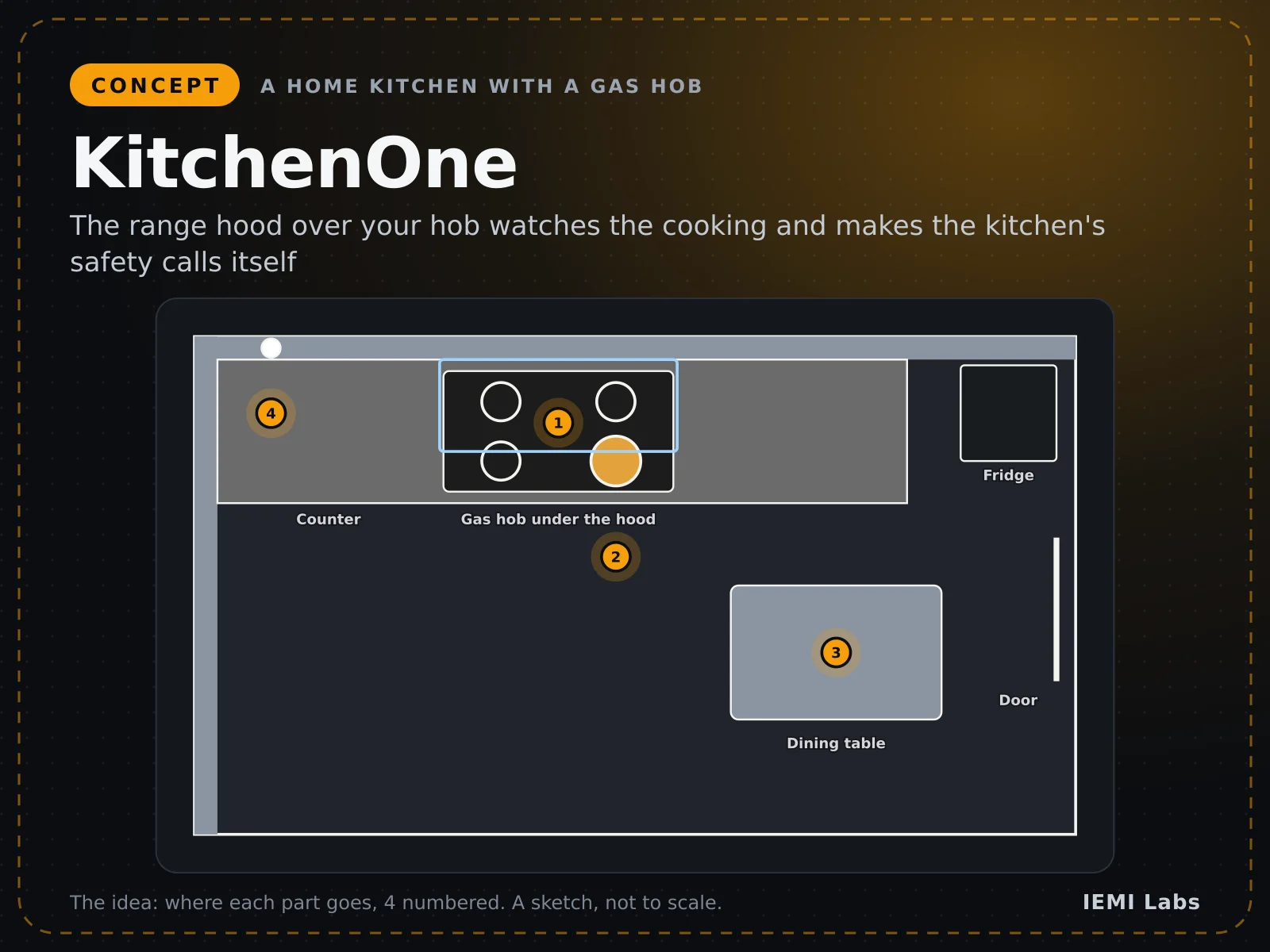
    KitchenOne concept: the idea and where each part goes
    HomeConcept

    KitchenOne

    IEMI's one product for the home kitchen: the chimney hood over the hob, made smart, with one brain and one app.

    • Calls a burner left on with nobody there
    • Calls dry pans, smoke, boil-overs and flares
    • Counts cooker whistles

    From $369 per smart 60 cm chimney hood

    Details
    BedsideOne concept: the idea and where each part goes
    HomeConcept

    BedsideOne

    IEMI's one product for an older parent's bedside: the bedside table and lamp, made smart, with one brain and one app.

    • Calls doses taken, missed or on the wrong day
    • Lights the floor at night and chimes for the walker
    • Calls a power cut with the oxygen cylinder's hours left

    From $349 per smart bedside table

    Details
    DampOne concept: the idea and where each part goes
    HomeConcept

    DampOne

    IEMI's one product for the bathroom, laundry and damp: the extractor fan in the ceiling, made smart, with one brain and one app.

    • Runs the fan until the cold wall is dry
    • Counts mould-risk hours
    • Calls water on the floor, taps and baths

    From $349 per smart 100 mm extractor fan

    Details

    PoolOne

    Concept · target $699

    I want this