VisionConcept
QualityCheck AI
A compact camera with its own light that mounts above a production line.
- Spots defects on every part
- Checks parts are fully assembled
- Verifies labels and barcodes
From $2,499 per station
DetailsIEMI's one product for a walk-in cooler: the walk-in's own door frame, made smart
Software: $29 per month per walk-in (app and LTE-M)
Concept, not for sale yet. Tell us if you want it; that decides what we build.
Rate this idea and tell us what to change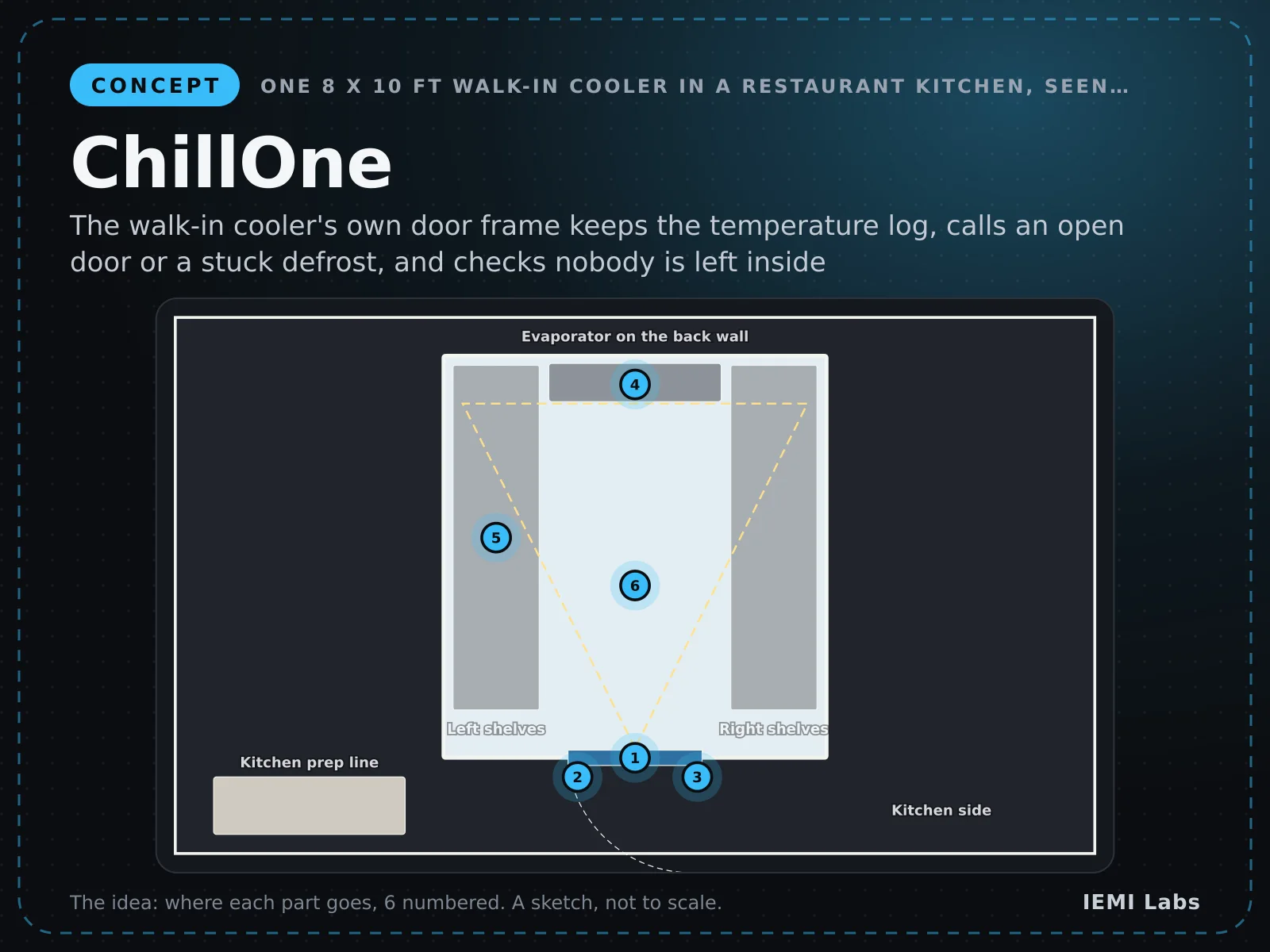
Drag to rotate · right-drag to move · scroll to zoom · click a part for its size and placeSwipe to rotate · pinch to zoom · two fingers to move · tap a part for its size
How it fits together
Scroll or tap a part. Press “See the 3D CAD design” to watch the model, built from our CAD, light each part up and show how it connects.
Real-time 3D render · drag to rotate · final design may varySwipe sideways to rotate
01
The whole ChillOne
The walk-in's door frame runs the cold room: a room camera, a heat camera and a radar in the header look into the box, a buffered probe and an air sensor keep the temperature log, the door contact times every opening, and the brain in the header turns that into door, temperature, power, defrost, floor, person and shelf calls on the frame's own lights and one app, over Wi-Fi or LTE-M.
02Brain
Raspberry Pi Zero 2 W (flat in the door frame header)
The brain: it runs the chillone-fw program
03
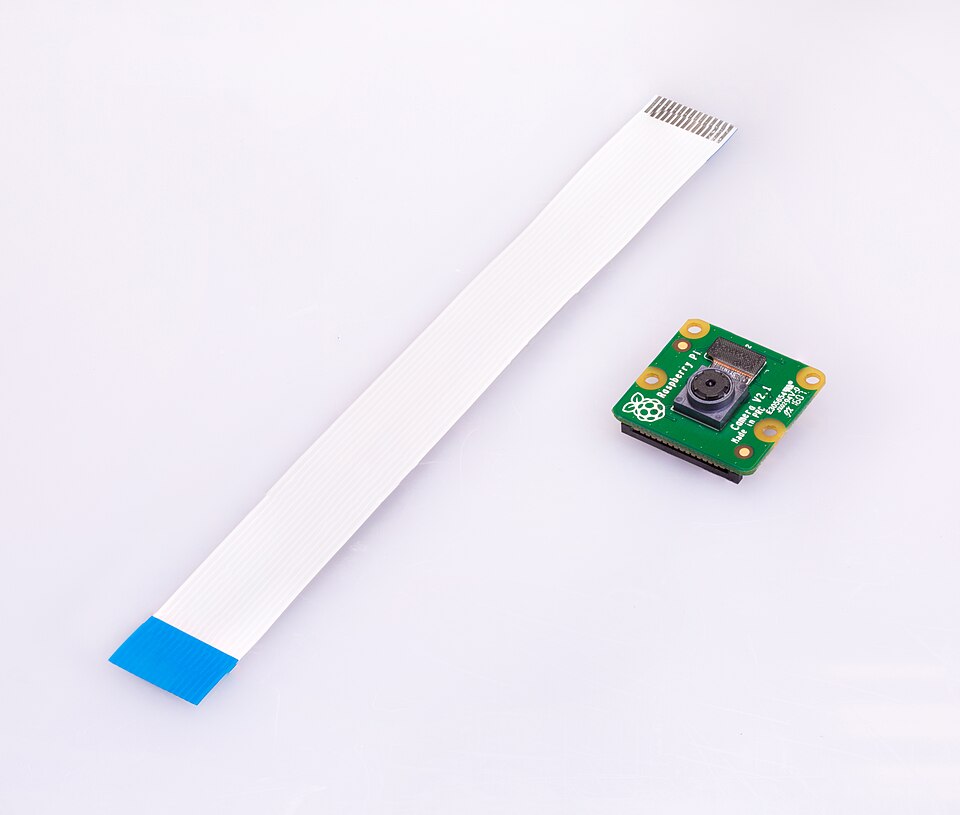
Room camera
Looks 35 degrees down into the walk-in from the header: both shelf runs, the floor and the middle of the room
Raspberry Pi Zero 2 W (flat in the door frame header) · CSI-2 ribbon (200 mm, inside the header) · A still frame on each door close and every 10 s while open; 10 s clips around calls
04
Heat camera
Looks level along the room: the evaporator coil and its defrost, warm product on the shelves and ice under the coil
Raspberry Pi Zero 2 W (flat in the door frame header) · I²C · 32 x 24 heat frames at 1 Hz
05
Presence radar and door contact
The radar finds a person inside even with the light off; the contact in the strike jamb times every opening
Raspberry Pi Zero 2 W (flat in the door frame header) · UART (radar) + GPIO (contact, 2 m lead down the strike jamb) · Presence and distance at 10 Hz; door open and close times
06
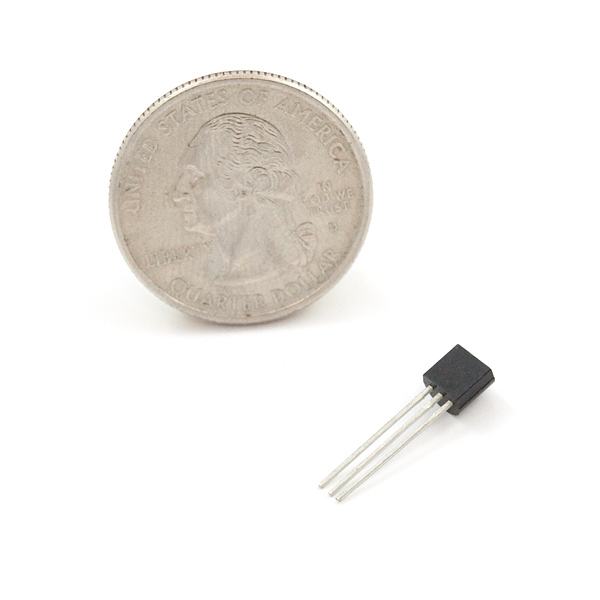
Product probe and air sensor
The DS18B20 in its glycol vial reads like product (the vaccine and food log); the SHT45 reads the air and humidity for door, defrost and compressor curves
Raspberry Pi Zero 2 W (flat in the door frame header) · 1-Wire (probe) + I²C (SHT45) · Probe and air every 10 s; logged every minute
07
Display, call lights, tone and secure element
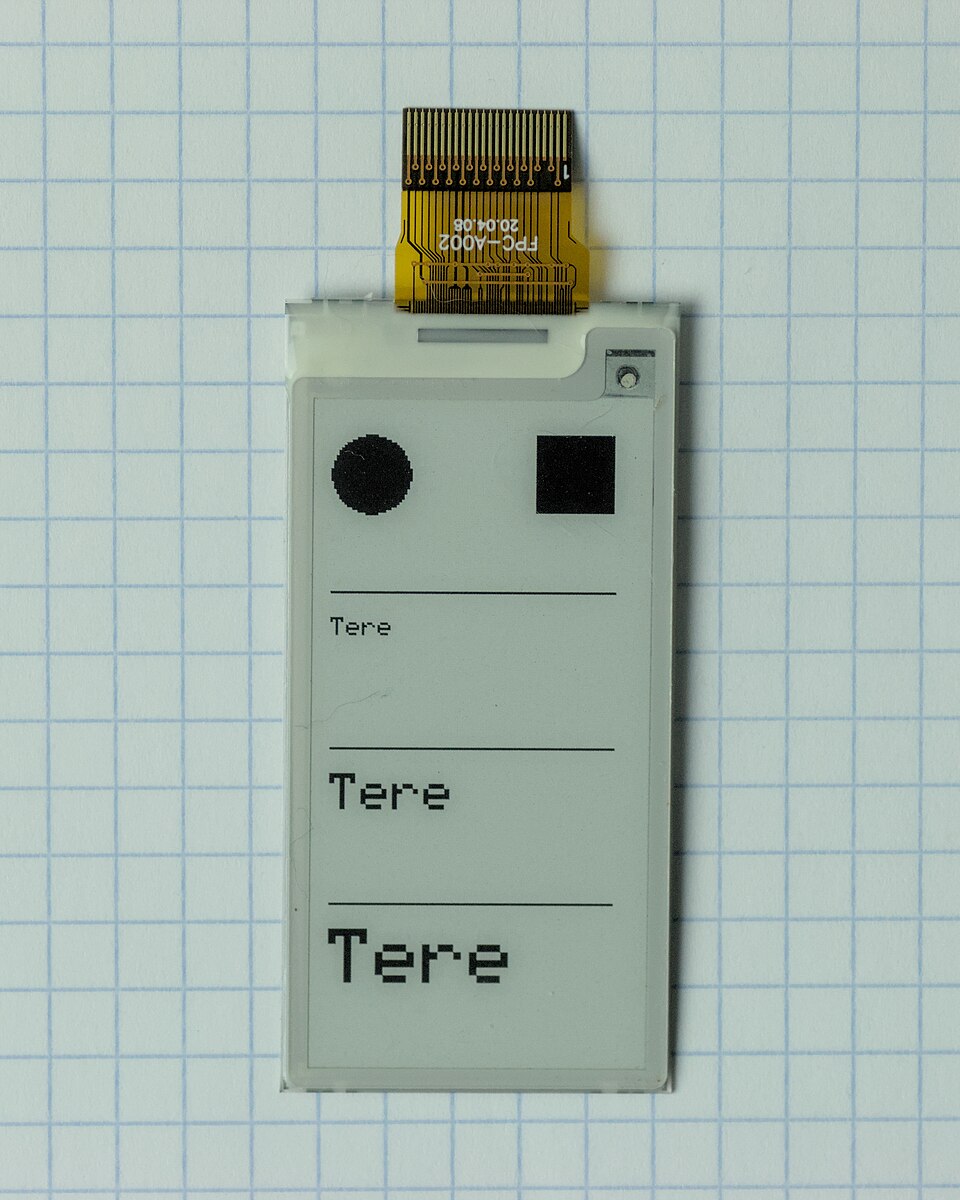
Now, min and max on the e-paper outside; amber, red, blue or white on the call lights with a tone; every call signed; the tamper switch marks the log if the header is lifted
Raspberry Pi Zero 2 W (flat in the door frame header) · SPI (e-paper) + one data wire (lights) + GPIO + I²C · Readings, light colour and flash, tone, signatures, tamper flag
08
Power, backup and LTE-M
5 V from the frame's own 120 V heater and light feed; a LiPo keeps the Walter board sending alarms over LTE-M when the power or the Wi-Fi is off
Raspberry Pi Zero 2 W (flat in the door frame header) · 5 V rail + UART to the brain · Power about 1.6 W (est.); alarms and the hourly log over LTE-M
09
All connected
7 key parts, one program, and your phone
Our circuit board · rev A-0
Every chip on one board we design, shaped to fit: the processor, cameras and sensors, Wi-Fi and Bluetooth, lights, sound and power. No plugs, ribbons or adapters. It is checked in our CAD against every part around it, and it arrives from the maker ready to run our software from a microSD card. Turn the model, or pick a part below to see where it sits.
Loading the 3D board…
Drag to turn · scroll to zoom · right-drag to move · click a partDrag to turn · tap a part
Every board-level number ChillOne's jobs depend on, checked against its target: camera pixels and frame rate, power and battery life, heat where it works, shock, radio and software. Every lesson from every one of our boards is a rule here, so this review runs again whenever any board teaches us something. Boards are ordered only when nothing fails and the items to prove are measured.
| Area | Check | Our board | Target | Status |
|---|---|---|---|---|
| Camera | Room camera: a case left on the floor at the back wall (0.3 m) at 3 m | 141.3 px | ≥ 30 px | passes |
| Camera | Room camera: frame rate the calls need | 2 fps at 2592 × 1944 | chip: 30 fps at 2592 × 1944 | passes |
| Camera | Room camera: data rate vs its 2-lane link | 0.1 Gbps (10-bit) | ≤ 80 % of 2 Gbps | passes |
| Camera | Heat camera: a case of warm product (0.4 m) on the far shelf at 2.5 m | 2.7 px | ≥ 2 px | passes |
| Camera | Image processor load, all cameras | 10 Mpx/s | ≤ 360 Mpx/s (RV1126B ISP) | passes |
| Camera | AI engine time per frame | 3 TOPS | floor, shelf and person models on one frame every 10 s, the heat frame at 1 Hz | to prove on the dev kit |
| Power | Supply | the frame's own 120 V heater and light feed, through a soldered Mean Well IRM-05-5 (5 W) | ≤ 70 % of the supply | passes |
| Power | Power cut | 1,200 mAh cell: about 40 h of 5-minute signed readings and LTE-M alarms with the power off (est.: RV1126B asleep between readings, about 0.08 W average) | ≥ 24 h (a weekend night cut found on Monday is still logged) | to prove on the dev kit |
| Heat | RV1126B temperature, a 40 °C kitchen beside the cook line | 63 °C | ≤ 85 °C (rated) | passes |
| Heat | Air chip away from warm parts | 56.2 mm or more from every warm part, on the slotted tongue at the vents | ≥ 30 mm | passes |
| Shock | Shock and vibration | 30 g (est.) | standard parts | passes |
| Software | Starts our software from the microSD card, no setup | microSD socket with a hinged, latched lid (Amphenol 101-00660 class), fitted on every board: our software starts from the card | card socket fitted on every board, latched | passes |
| Software | Card power switch and protection | 1 power switch and 1 ESD array for 1 card socket | every socket: switched card supply, ESD on all 6 lines | fixed by the review |
| Software | The card wins the start | eMMC shipped empty; our loader reads the card first | the processor starts from the card every time | fixed by the review |
| Software | Card grade | industrial pSLC microSD (Kingston Industrial or Swissbit S-56u), −40 to 85 °C | rated for the heat, cold and writes | to prove on the dev kit |
| Radio | Wi-Fi/BT module clock | 37.4 MHz MEMS oscillator (Y3) | 37.4 MHz next to the AP6256 | fixed by the review |
| Radio | Wi-Fi to the kitchen's access point | through the header’s FRP face | certified Wi-Fi 5 module | to prove on the dev kit |
| Radio | LTE-M from inside a building | power-loss and temperature alarms by SMS | BG95-M3 with a soldered eSIM | to prove on the dev kit |
| Moisture | Conformal coating | coated | coated, sensors, sockets and antennas masked | passes |
| Fit | Board inside the product CAD, every part checked in 3D | not yet in the product CAD | nothing touches | to prove on the dev kit |
| Camera | Room camera through its window, folded 35° down | axis 0.00 mm from the window centre; the 105° view needs a 24.5 mm window | Ø26 window (CAD rev B) | fixed by the review |
| Camera | Heat camera through its window | can 0.4 mm behind the inside face on a 10 mm lead spacer; needs a 9.7 mm window for 110° | Ø14 window (CAD rev A) | passes |
| Sensors | Door sensor | TMAG5273 3D Hall chip 10.9 mm from a Ø6 × 3 N52 magnet in the door's top edge: about 14 mT | ≥ 2 mT shut, its ±40 mT range | to prove on the dev kit |
| Sensors | Radar through the frame face | BGT60TR13C behind 3 mm of FRP, 35° down on the camera tab | a still person seen at the back corner and crouched by the shelves | to prove on the dev kit |
| Heat | Cold start in a freezer frame | header air about −5 °C behind a −25 °C inside face (est.) | every chip rated to that | to prove on the dev kit |
| Power | Mains on the board | push-in terminal, fuse and MOV, then the certified IRM-05-5 | 6.4 mm creepage from every low-voltage part (checked in the board code) | passes |
Before we order the first boards, we prove these on the RV1126B development kit or in the rev A tests:
Demo · 7 real-world moments
Short animated scenes of real moments: what happens today, what ChillOne does about it, and what lands on your phone. The same scenes play in the IEMI app.
Saturday night, the kitchen is closed and nobody comes back until Monday.
Use cases
A door left ajar or a power cut is found on Monday morning, with a warm box and a bin full of stock.
The frame times the door and calls it ajar with its own light and tone. When the power drops at 02:14, it keeps logging on its backup cell and texts the owner over LTE-M.
Someone finds the clipboard: two readings a day in different hands, a gap over the weekend, and nothing for the night the power went off.
The buffered probe at the door, the warmest spot in the box, is logged every minute and signed. The display on the jamb shows now, min and max, and a QR code opens the signed log.
The door stays open until somebody notices the box is warm; the strip curtain is tied back and the coil ices up.
The door contact times the opening: amber at 2 minutes, a tone at 3. The room camera sees a case of milk left on the floor by the door, and at close the radar checks that nobody is inside.
The closer shuts the door and the light switch is outside. Someone can be left in a cold, dark box until the morning shift.
The presence radar in the header works in the dark. A closed door with a person still inside is a call in under 30 s: the inside light blinks white, the outside light goes blue with a tone, and the manager's phone rings.
Nobody sees it until the box is warm at lunchtime; then it is an emergency callout and a bin of stock.
The heat camera in the header watches the evaporator coil through each defrost. Still at -14 °C after the cycle, with the air creeping up, it calls a stuck defrost. From the air curve it also flags the compressor short-cycling 3 times an hour.
Someone walks in with a clipboard, holds the door open while they count, and still misses the back rows.
Each time the door closes, the room camera in the header takes a still of every shelf front and marks the rows that are low or empty. Low shelves go to a person to confirm.
Hot food warms everything around it, and nobody knows until the next temperature check.
The heat camera sees a hot object on the shelf the moment the door closes. The inside light goes amber and the app asks the cook to cool it in an ice bath or the blast chiller first.
Demo scenes show how ChillOne and its app are designed to behave. ChillOne is in design; nothing here is recorded from real equipment yet.
What it is
IEMI's one product for a walk-in cooler: the walk-in's own door frame, made smart, with one brain and one app.
What it does
Who it's for
Kitchens, grocers, pharmacies and clinics.
The idea
The problem today
Kitchens, small grocers and pharmacies still write cold-holding logs by hand, find out about a door left open or a failed defrost when the food is already warm, and lose everything when the power goes off overnight. Today that takes a temperature alarm, a Wi-Fi gateway, a paper log, a camera pointed at the shelves and a vaccine data logger, each with its own app.
With ChillOne
Every walk-in already has a door frame with a thermometer and a light switch. ChillOne puts the brain, a room camera, a heat camera, a radar, the probe, LTE-M and a backup cell inside that frame, so it keeps the signed temperature log, calls the door, the defrost, power loss, product on the floor and a person still inside, and shows the shelves, on its own lights and in one app.
How the parts connect
Every part, what links it to the brain, and how the data reaches your phone. A solid line is a cable; a dashed line is a radio link.
The program
while True:
    door, near = contact.read(), radar.read()
    calls = door_rule(door, near) + person_rule(door, near)
    if due(10):
        t = log.add(probe.read(), sht.read())
        calls += temp_rule(t, door) + power_rule(psu.ok())
    if door.just_closed or due(1):
        h = mlx.frame(); f = cam.still() if door.just_closed else None
        calls += defrost_rule(h) + floor_rule(f, h) + shelf_rule(f)
    for c in calls:
        if c.conf < c.line: c.kind = 'check'   # never guess
        atecc.sign(c); frame.show(c); uplink.send(c)  # Wi-Fi, else LTE-M
    time.sleep(0.1)
To your phone
Kitchen manager, owner and the refrigeration contractor's phones; a tablet by the pass; a read-only QR page for the inspector (Android, iPhone, web)
One screen for each job ChillOne does.
No manager on site modeSaturday night, the kitchen is closed. The frame keeps the log, calls a door left ajar by the last cook, and texts the owner over LTE-M when the power drops at 02:14.
Temperature logThe inspector asks for the cold-holding log. The manager shows the QR code on the frame: a signed log with every minute, the min and max and each excursion with its reason.
Door and people11:52: a delivery is put away with the door propped. The frame goes amber at 2 minutes and sounds at 3. At close, the radar checks the room is empty.
Defrost and compressor05:30: the heat camera sees the coil stay frozen through a defrost. The contractor gets the heat picture and the air curve before the box warms, and books a daytime visit.
ShelvesBefore the produce order, the chef checks the shelf photos from the last door close instead of walking in with a clipboard.
App screens with sample data. The interface is in development.
| Temperature log | Probe 3.1 °C, air 2.4 °C; today min 2.6, max 4.4 °C | Every minute |
|---|---|---|
| Door | Opened 41 times today; longest 6 min at 11:52 (called) | Live |
| Power and uplink | Power off 02:14-04:40, probe peaked 6.8 °C; sent over LTE-M | Live |
| Defrost and compressor | Coil iced after a stuck defrost, 05:30; compressor short-cycling 3 times an hour | Live |
| Floor, product and people | Case of milk on the floor by the door; nobody inside | Live |
| Shelves | Left shelf 2: dairy row empty (photo) | Each door close |
No face recognition. People are only counted for the 'still inside' call. Shelf stills and clips around calls are kept 30 days in the site's own account; a staff notice label sits on the frame.
CAD design · Design rev A, 28 Oct 2026: smart walk-in door frame that runs the cold room (9 calls, 6 alone, 3 assist; EPA leak-repair record added 30 Oct), call lights, tone, display, ATECC608 and tamper switch inside; 11 camera and radar views checked in the CAD; not built
| AI processor | One rigid-flex board of our own inside the door frame: Rockchip RV1126B. The bench frame uses a Raspberry Pi Zero 2 W until the boards arrive |
|---|---|
| Sensors | Sony IMX335 5 MP colour camera chip and Infineon BGT60TR13C 60 GHz radar chip on a tab folded 35° down into the room · Melexis MLX90640ESF-BAA heat-camera chip, 32 × 24, 110°: the coil, warm product, ice · TI TMP117 ±0.1 °C probe in the glycol vial, Sensirion SHT45 air chip at the vents, TI TMAG5273 door sensor over the door · 16 call-light LEDs, a sounder, the e-paper display, a security chip and a tamper switch |
| Connectivity | Site Wi-Fi (WPA3), MQTT over TLS · LTE-M (Quectel BG95-M3 with a soldered eSIM) when the power or Wi-Fi is off · BLE for pairing |
| Power | The frame's own 120 V heater and light feed through a Mean Well IRM-05-5; soldered on the board in the hinge jamb; 1,200 mAh backup cell for about 40 h of signed readings and alarms (est.); about 1.6 W watching (est.) |
| Enclosure | The frame's own pultruded FRP header and jambs with flush bonded windows |
| Dimensions | 1,064 x 2,030 x 101.6 mm round a 34 x 76 in (864 x 1930 mm) opening |
| Weight | About +450 g over a plain frame (est.) |
| Ingress rating | IPX5 wash-down target |
| Log | Probe every minute, now / min / max |
|---|---|
| Door and power | Open time, power cut over LTE-M |
| Coil and floor | Iced coil, warm product, floor items |
| People and shelves | Still inside; low rows |
| Food | FDA Food Code 3-501.16, 4-204.112 |
|---|---|
| Vaccines | CDC data logger list |
| Door | 10 CFR 431.306 closer and strip kept; ADA 864 mm |
| Privacy | No face recognition; staff notice |
| Refrigerant | Signed top-up record and leak rate (EPA 40 CFR 84.106) |
| Frame | 1,064 x 2,030 x 101.6 mm, 34 x 76 in opening |
|---|---|
| Power | The frame's own 120 V feed; about 1.6 W watching |
| Power cut | About 24 h of alarms over LTE-M (est.) |
| Parts cost | $429 at qty 1 |
Targets for production units; they may change during development.
Hardware: $690 per walk-in (replaces its door frame)
Software: $29 per month per walk-in (app and LTE-M)
Target pricing. Bought separately per walk-in: CoolerCheck ($199 + $12/month), ColdChain Guard ($199 + $49/month), ShelfScan ($299 + $29/month) and a plain thermometer and light switch frame part (about $100): about $797 + $90/month (est.).
$690 + $29/month
Every cold room job in the walk-in's own door frame.
Indicative launch pricing in USD, excluding taxes and shipping. Final pricing is confirmed before any balance is charged.
Community
ChillOne is in development. Rate the idea, tell us what to change about the features, specs or price, and we'll build it with your feedback.
How much people want it
–
No ratings yet
Follow ChillOne
Get build updates and first access when pre-orders open.
No comments yet. Tell us what you'd want from ChillOne.
Questions
Tell us what this would save you, or ask anything. We reply within two business days.
A member of the IEMI Labs team will reply within two business days.
From the product lab · ideation phase
Smart equipment · legal on the field
It replaces the walk-in's plain door frame with its built-in thermometer and light switch (for example the Norlake NL508 thermometer and light switch in the frame), in the same panel cut-out, on the same 120 V heater-wire and light feed; the door leaf, its closer, gasket, strip curtain and inside safety release stay, with every part built in. Everything inside the plain door frame: brain, room camera, heat camera, radar, air sensor, product probe, LTE-M, backup cell, display, two call lights, tone, secure element, tamper switch and the door contact. About +450 g over a plain frame (est.); no shelf sensor, wall camera, gateway or ceiling hub.
| Rule | Limit | ChillOne |
|---|---|---|
| Automatic door closer and infiltration (10 CFR 431.306(a)(1) and (2)) | doors closed to within 1 in close firmly; strip doors or spring hinged doors limit infiltration | ✓ the door leaf, its closer and strip curtain are untouched; ChillOne only times how long the door stays open and calls it |
| Interior lights (10 CFR 431.306(a)(5)) | at least 40 lm/W, or off within 15 minutes of the walk-in being empty | ✓ the walk-in's own light stays; our two call lights are 0.3 W indicators, not room lighting; the radar tells staff when the light is on in an empty box |
| Cold holding (FDA Food Code 2022 3-501.16) | TCS food at 5 °C (41 °F) or below | ✓ air and buffered product probe logged every minute; out of band above the set line for 30 min (est.) is a call |
| Thermometer in each refrigerated unit (FDA Food Code 4-204.112, 4-203.12) | easily readable, in the warmest part, accurate to ±1.5 °C (±3 °F) | ✓ the e-paper at eye height outside shows now, min and max like the plain thermometer; DS18B20 ±0.5 °C from -10 to +85 °C; the probe vial sits at the door, the warmest part of the box |
| Vaccine and medicine storage (CDC Vaccine Storage and Handling Toolkit) | digital data logger with a buffered probe, ±0.5 °C (±1 °F), alarm, current / min / max display, low battery, logs at least every 30 minutes, a calibration certificate | ✓ DS18B20 in a glycol vial, ±0.5 °C; light, tone and app alarm; now / min / max on the e-paper; LiPo with low battery alarm; logs every minute; a calibration certificate per unit from an ISO/IEC 17025 lab before sale |
| Clear door width (ADA 2010 404.2.3) | 32 in (813 mm) minimum clear width | ✓ 864 mm (34 in), the plain frame's opening; the CAD asserts 864 x 1930 mm and that nothing enters the doorway |
| Same size and installation as the plain frame | 100 mm face, 4 in panel depth, 34 x 76 in opening (est., maker door sections) | ✓ 1,064 x 2,030 x 101.6 mm, checked in the CAD; same panel cut-out and 120 V feed |
| Electrical and food zone (UL 471, NSF/ANSI 7) | listed refrigeration equipment; cleanable, sealed surfaces | ✓ class II Mean Well IRM-05-5 on the frame's own 120 V feed; windows bonded flush in the FRP face; no part in the food zone; listing tests in the first build |
| Workplace cameras (New York Civil Rights Law 52-c, GDPR where it applies) | written notice to staff, stated purpose, data minimised | ✓ notice label on the frame and in the app; no face recognition; still frames of the shelves and clips around calls only, 30 days |
| EPA refrigerant leak repair, 40 CFR 84.106 (AIM Act Emissions Reduction and Reclamation rule), from 1 January 2026 for appliances with 15 lb or more of HFC refrigerant (or a substitute above GWP 53) | a leak rate calculation each time refrigerant is added; commercial refrigeration above 20 % must be found and repaired within 30 days, with initial and follow-up verification tests, then a yearly leak inspection (15-500 lb) until a year under the line; records kept three years | ✓ the walk-in's own condensing unit and its technician keep the duty; ChillOne keeps a signed refrigerant record: the technician enters the full charge and each top-up in the app, ChillOne works out the leak rate (annualizing method), counts down the 30 days, reminds the verification tests and the yearly inspection, keeps it three years, and adds the coil and air curve from before the top-up (a record aid; it never detects or claims to detect a leak) |
| FDA Food Traceability Rule (FSMA 204, 21 CFR part 1 subpart S), not enforced before 20 July 2028 under the Continuing Appropriations Act 2026 | key data elements kept for listed foods at receiving, transformation and shipping | ✓ out of scope for a door frame: lot codes stay with the store's receiving system; ChillOne's signed temperature log can be exported beside them for listed foods held in the walk-in |
| Radio (FCC Part 15 / RED, carrier certification) | certified modules | ✓ Wi-Fi on the Raspberry Pi Zero 2 W's certified module; LTE-M on the certified Walter module |
Walk-in coolers and freezers in restaurants, school and care-home kitchens, small grocers, pharmacies and clinics. Listing, radio and calibration before sale. ChillOne monitors and alerts; it does not cool, and the door's own inside release keeps anyone inside safe.
One piece of equipment does
Not done by the equipment, and why
Makes the call itself
With no manager in the kitchen (nights, weekends, a closed clinic), the frame runs the walk-in: it times the door and calls it open, logs the cold-holding and vaccine temperatures, alarms on power loss over LTE-M, calls a stuck defrost, an iced coil, warm product and product or ice on the floor, and calls a person still inside after the door closes. Compressor trouble, the refrigerant top-up record and low shelves go to a person to confirm.
| Call | Who decides | How it sees it | How players see the call · if unsure |
|---|---|---|---|
| Door left open or ajarafter 2 min open (est., settable) · about 99 % (est.) | The equipment | door contact, presence radar; open time against the set line, with or without a person inside | Outside call light amber, then a tone every 30 s. Contact and radar disagree: 'check' with a still frame |
| Temperature out of band (food 5 °C / 41 °F, vaccines 2-8 °C)after 30 min out (est., settable) · ±0.5 °C (DS18B20 datasheet) | The equipment | DS18B20 buffered probe, SHT45 air; probe band with door-open and defrost allowances | Outside light red with a tone; e-paper shows the reading and the max. Probe and air disagree by more than 3 °C: 'check probe' |
| Power lost to the walk-in< 1 min · about 99 % (est.) | The equipment | IRM-05-5 output, PowerBoost, Walter; supply loss rule | App and SMS over LTE-M; e-paper shows 'power off since'. LTE-M down too: logged and sent when back |
| Evaporator iced or defrost stuck< 2 h (one defrost cycle) · about 85 % (est.) | The equipment | MLX90640 heat camera, air curve; coil temperature pattern against the learned defrost cycle | Outside light amber; app note for the refrigeration contractor. Coil out of view or a cart in the way: 'check' |
| Compressor short-cycling or struggling< 24 h · about 75 % (est.) | Helps the official | SHT45 air curve, probe; pull-down and cycle shape classifier | App only. Always sent to the contractor as a curve to judge |
| Refrigerant top-up record and leak rateat each top-up entry; reminders 7 and 2 days before the 30-day deadline and for the yearly inspection · exact arithmetic on the entered figures; the pull-down trend flags a slow loss about 70 % of the time (est.) and is only a hint | Helps the official | the technician's entry in the app (full charge and pounds added), the SHT45 air curve, the buffered probe and the MLX90640 coil picture; none for the judgement (the technician decides); the EPA annualizing leak rate from the entered charge and top-ups, a 30-day repair countdown and a slow pull-down trend before each top-up | App only: a signed refrigerant record per walk-in, exported for the owner's three-year records. No charge entered: no leak rate, only a reminder to enter it; the technician and the owner decide what to repair |
| Warm product loaded, product on the floor, water or ice on the floor< 1 min · about 85 % (est.) | The equipment | room camera, heat camera; warm-object and floor-item detector | Inside light amber; app task with the photo. Under 80 % confidence: 'check' with the still frame |
| Person still inside after the door closed< 30 s · about 95 % (est.) | The equipment | presence radar (works in the dark), room camera, door contact; presence after close | Inside light white blink, outside light blue with a tone. Under the line: 'check' to the manager; the door's inside release always opens it |
| Shelf rows low or emptyon each door close · about 80 % (est.) | Helps the official | room camera; row fill estimate on still frames | App only. Always a list with photos for the person ordering |
Nothing added to the field
The only things in play are the items the laws already put there:
The door leaf, closer, gasket, strip curtain, inside release, shelves, evaporator and light stay as they are; no shelf sensor, wall camera, gateway or ceiling hub
Built to take the hits
Secure by design
A walk-in kit (about $449, ThermoWorks) or a food-safety platform logs temperature, and a vaccine data logger (about $312-337) meets the CDC list. None of them calls a propped door, an iced coil, warm product, things on the floor or a person left inside, and most go quiet when the power and Wi-Fi are off. ChillOne does all of it from the door frame the walk-in already has, and sends over LTE-M.
$690 for the smart door frame plus $29 a month for the app, the signed log and LTE-M (target). A $449 kit, a $312 logger and a door alarm already cost more up front, and our separate products would be about $797 + $90 a month (est.). Fitting by your refrigeration contractor is extra.
It is designed to the CDC data logger list: a buffered probe at ±0.5 °C, an alarm, now / min / max, low battery and a log every minute, with a calibration certificate per unit before sale. It monitors and alerts; it does not cool.
ColdRoom: its door, defrost, temperature record and shelf jobs now come from the walk-in's own door frame. ColdChain Guard stays listed for reefer trucks in transit, and AisleOne covers store display cases.
A backup cell keeps logging and the LTE-M board texts the owner, even with the site Wi-Fi off. The log shows the peak and how long it lasted.
The door's own inside release always opens it. ChillOne adds a check: if the radar finds a person after the door closes, the frame lights blue outside with a tone and alerts the manager.
No. People are only counted for the 'still inside' call. Shelf stills and clips around calls are kept 30 days, and a staff notice label sits on the frame.
It keeps the record; your technician keeps the duty. Since 1 January 2026, refrigeration with 15 lb or more of HFC refrigerant needs a leak rate worked out every time refrigerant is added, and above 20 % the leak must be repaired within 30 days, with verification tests and three years of records (EPA, 40 CFR 84.106). The technician enters the full charge and each top-up in the ChillOne app; the frame works out the leak rate, counts down the 30 days, reminds the tests and the yearly inspection, and signs it all with the coil picture and air curve from before the top-up. It does not detect leaks; that needs a gas sensor at the coil.
A Kitchen Brains Modularm 75LC alarm ($438.49 at WebstaurantStore) sounds on temperature, a door ajar and a power failure on the walk-in wall, with no log or remote alert in the box. ChillOne does that from the door frame itself, keeps the signed food and vaccine log, sends over LTE-M when the power is off, and also calls an iced coil, warm product, things on the floor and a person left inside, for $690 + $29 a month.
A compact camera with its own light that mounts above a production line.
From $2,499 per station
Details
A palm-sized edge box that plugs into your existing parking cameras.
From $499 per edge box
Details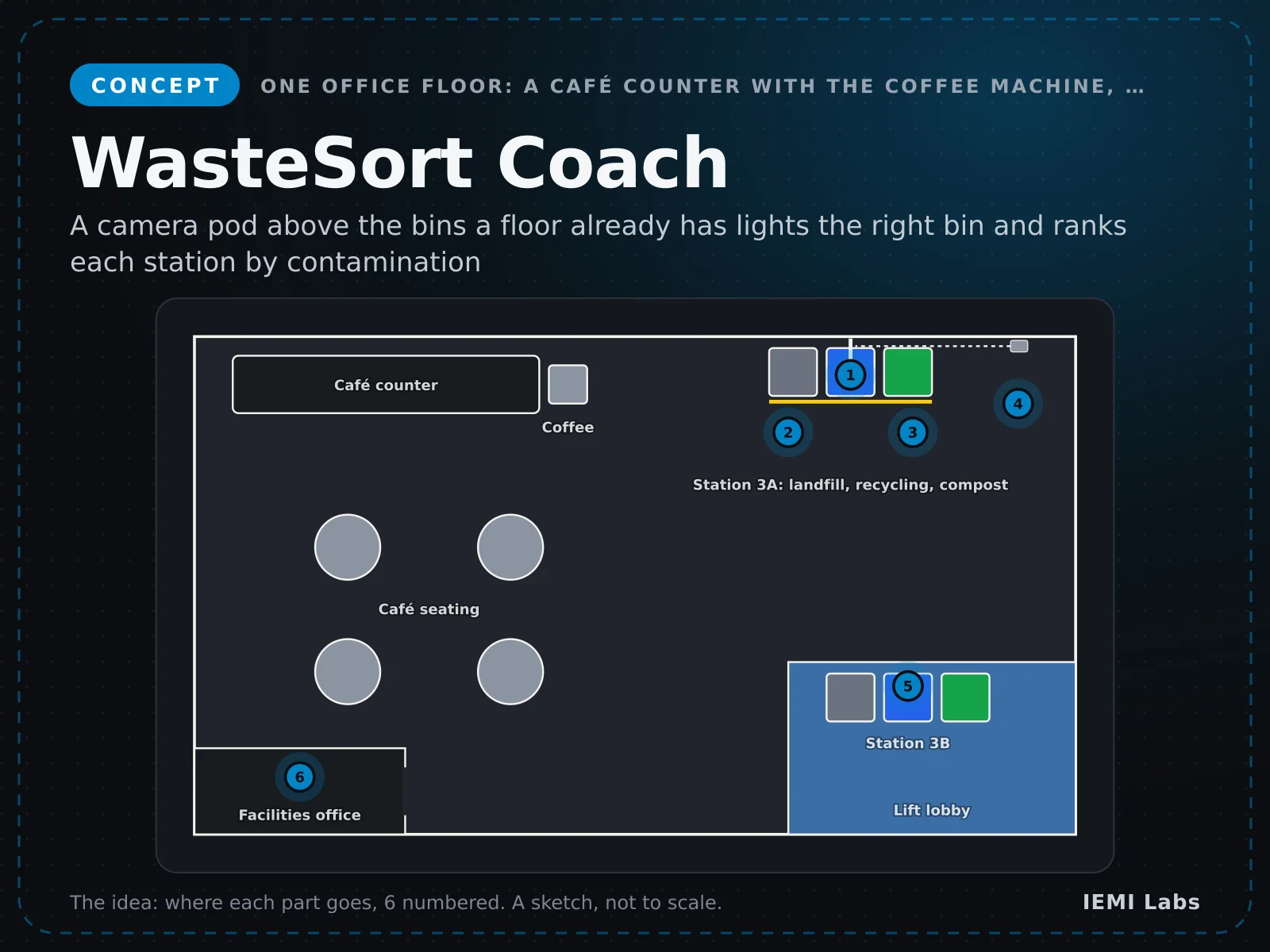
A clip-on camera coach for the recycling bins you already have.
From $299 per 3-bin station
DetailsChillOne
Concept · target $690