VisionConcept
ParkSense AI
A palm-sized edge box that plugs into your existing parking cameras.
- Counts free bays in real time
- Flags overstays and wrong parking
- Guides drivers to open spaces
From $499 per edge box
DetailsIEMI's one product for a store aisle: the aisle's own shelving, made smart
Software: $15 per month per aisle (staff app and tasks)
Concept, not for sale yet. Tell us if you want it; that decides what we build.
Rate this idea and tell us what to change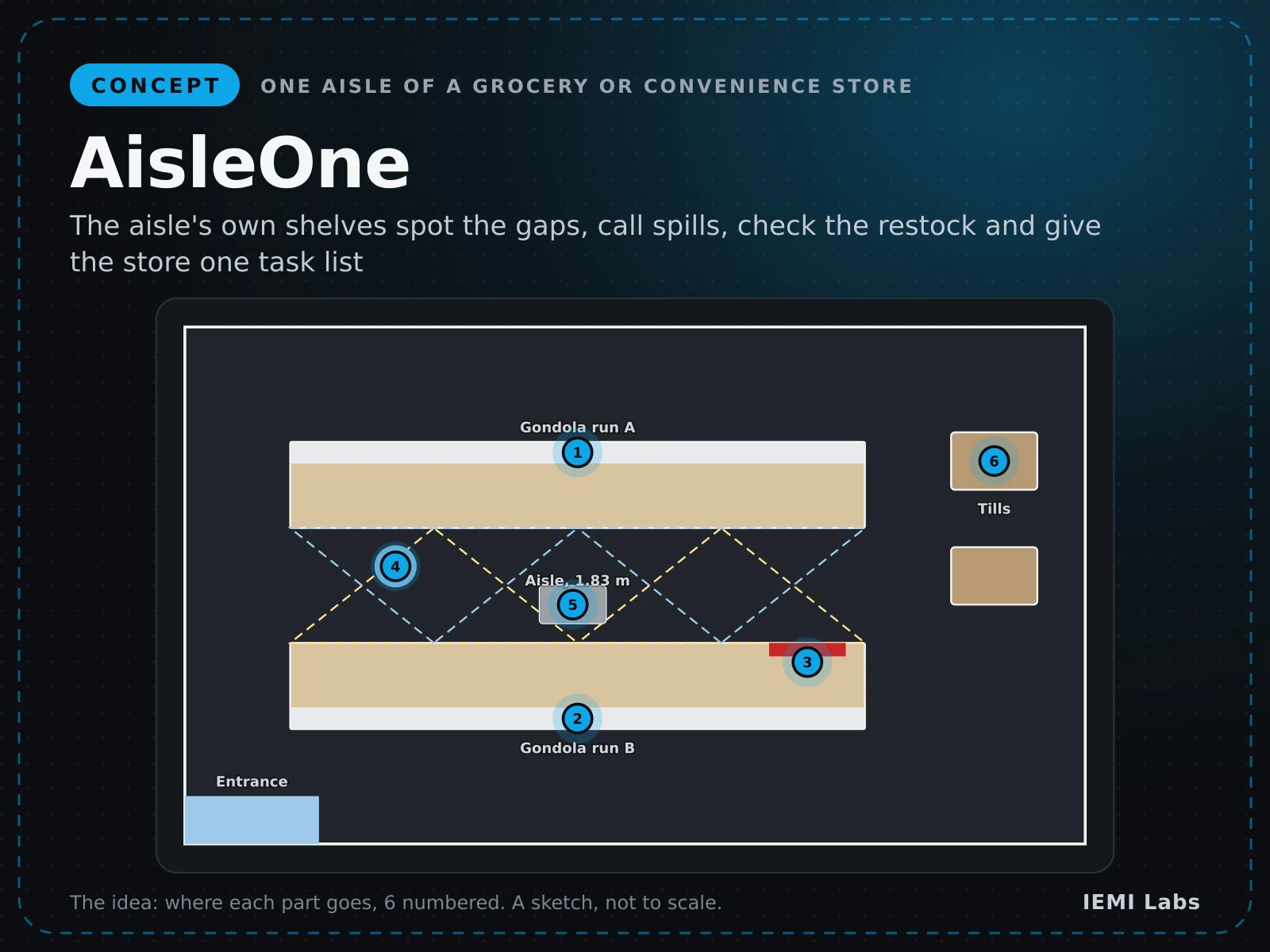
Drag to rotate · right-drag to move · scroll to zoom · click a part for its size and placeSwipe to rotate · pinch to zoom · two fingers to move · tap a part for its size
How it fits together
Scroll or tap a part. Press “See the 3D CAD design” to watch the model, built from our CAD, light each part up and show how it connects.
Real-time 3D render · drag to rotate · final design may varySwipe sideways to rotate
01
The whole AisleOne
The aisle's two gondola runs are the aisle's own helper: two cameras in each top canopy watch the shelves opposite and the floor between them, and the brain in run A turns that into restock, spill, label and blocked-aisle calls on the canopy lights and one staff task list.
02Brain
Raspberry Pi 5 (in run A's top canopy)
The brain: it runs the aisleone-fw program
03
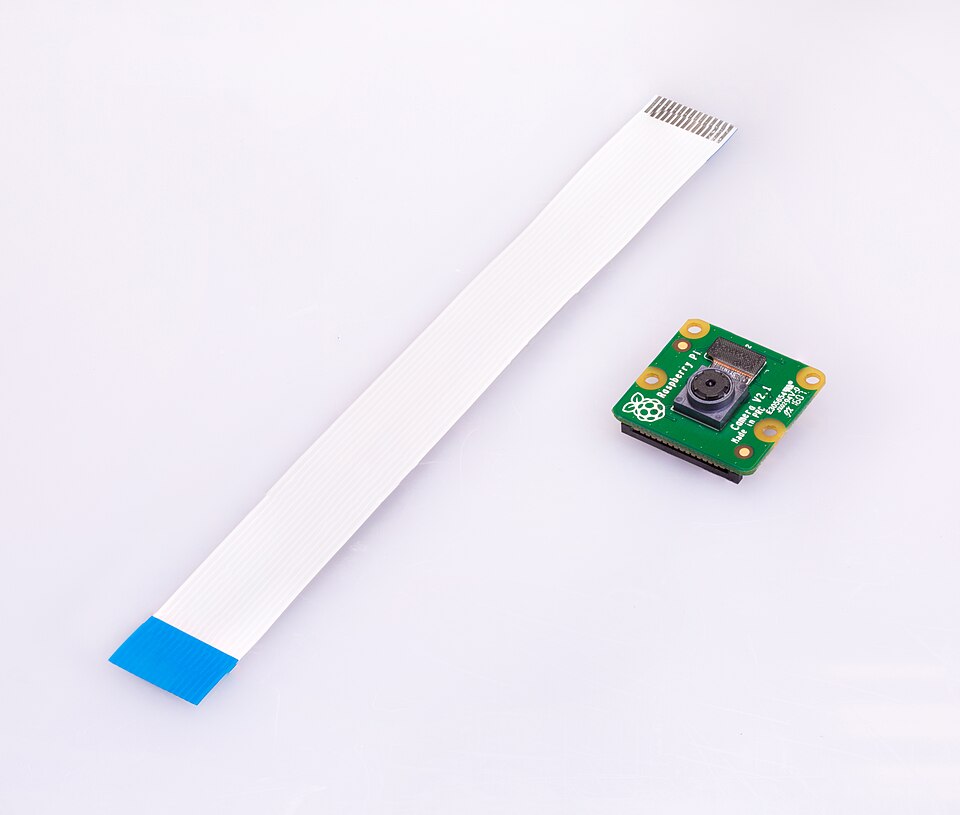
Run A aisle cameras
Two cameras in run A's canopy watch run B's shelves (gaps, labels, restock) and the floor from the aisle centre to run B
Raspberry Pi 5 (in run A's top canopy) · 2 x CSI-2 ribbon · A 12 MP shelf still every 10 min with people blanked; 2 fps floor frames, checked on the brain, never stored
04
Run B canopy
The facing run's own Pi 5 and two cameras watch run A's shelves and the other half of the floor, and drive run B's lights
Raspberry Pi 5 (in run A's top canopy) · Encrypted Wi-Fi link (WPA3, TLS 1.3) across the aisle · Run B's gap, label, spill and traffic results; light and tone commands back
05
Call lights and tone
Amber over a shelf gap, red with a tone over a spill or a person down, in both canopies
Raspberry Pi 5 (in run A's top canopy) · One data wire + GPIO · Call colour, position along the run, tone
06
Secure element and tamper switch
Signs every call; marks the log and turns the cameras off if a canopy cover is opened
Raspberry Pi 5 (in run A's top canopy) · I²C + GPIO · Signatures, tamper flag
07
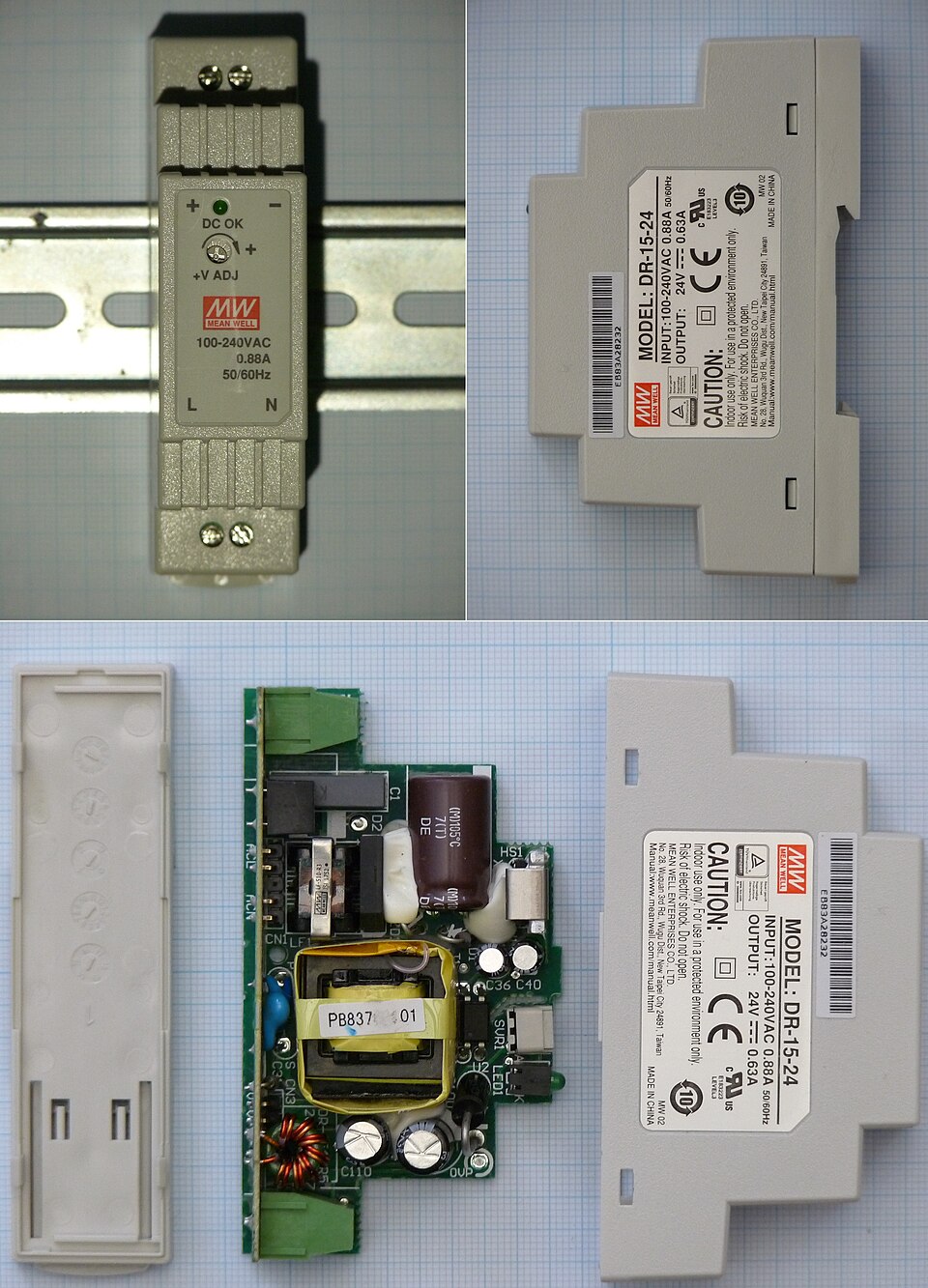
Power from the canopy light feed
Turns the canopy's own lighting feed into 5 V inside the closed canopy
Raspberry Pi 5 (in run A's top canopy) · 5 V rail · Power, about 6.5 W per run (est.)
08
All connected
6 key parts, one program, and your phone
Our circuit board · rev A-0
Every chip on one board we design, shaped to fit: the processor, cameras and sensors, Wi-Fi and Bluetooth, lights, sound and power. No plugs, ribbons or adapters. It is checked in our CAD against every part around it, and it arrives from the maker ready to run our software from a microSD card. Turn the model, or pick a part below to see where it sits.
Loading the 3D board…
Drag to turn · scroll to zoom · right-drag to move · click a partDrag to turn · tap a part
Every board-level number AisleOne's jobs depend on, checked against its target: camera pixels and frame rate, power and battery life, heat where it works, shock, radio and software. Every lesson from every one of our boards is a rule here, so this review runs again whenever any board teaches us something. Boards are ordered only when nothing fails and the items to prove are measured.
| Area | Check | Our board | Target | Status |
|---|---|---|---|---|
| Camera | Left aisle camera: a price label's digits (8 mm) on the opposite top shelf at the aisle end at 2.71 m | 8.6 px | ≥ 8 px | to prove on the dev kit |
| Camera | Left aisle camera: frame rate the calls need | 2 fps at 4056 × 3040 | chip: 30 fps at 4056 × 3040 | passes |
| Camera | Left aisle camera: data rate vs its 4-lane link | 0.25 Gbps (10-bit) | ≤ 80 % of 6 Gbps | passes |
| Camera | Right aisle camera: a price label's digits (8 mm) on the opposite top shelf at the aisle end at 2.71 m | 8.6 px | ≥ 8 px | to prove on the dev kit |
| Camera | Right aisle camera: frame rate the calls need | 2 fps at 4056 × 3040 | chip: 30 fps at 4056 × 3040 | passes |
| Camera | Right aisle camera: data rate vs its 4-lane link | 0.25 Gbps (10-bit) | ≤ 80 % of 6 Gbps | passes |
| Camera | Image processor load, all cameras | 49 Mpx/s | ≤ 480 Mpx/s (RK3576J ISP) | passes |
| Camera | AI engine time per frame | 6 TOPS | a floor check from both views twice a second, and a shelf-gap and label pass on a still every 10 min | to prove on the dev kit |
| Power | Supply | the canopy's own light feed (120 or 230 V) into a push-in terminal on the power board, a PCB-mount Mean Well IRM-20-5 (5 V 4 A, 20 W) | ≤ 70 % of the supply (14 W) | passes |
| Power | Power cut | no cells: a power cut stops the board; every call and the task list are written to eMMC as they happen and signed | no lost call or task in a power cut | to prove on the dev kit |
| Heat | RK3576J temperature, the top of a store aisle in summer (28 °C) under the store lights | 50 °C | ≤ 85 °C (rated) | passes |
| Heat | Camera chips away from the processor | left camera 86 mm, right camera 72 mm from the RK3576J | ≥ 30 mm | passes |
| Shock | Shock and vibration | 50 g (est.) | standard parts | passes |
| Software | Starts our software from the microSD card, no setup | microSD socket with a hinged, latched lid (Amphenol 101-00660 class), fitted on every board: our software starts from the card | card socket fitted on every board, latched | passes |
| Software | Card power switch and protection | 1 power switch and 1 ESD array for 1 card socket | every socket: switched card supply, ESD on all 6 lines | fixed by the review |
| Software | The card wins the start | eMMC shipped empty; our loader reads the card first | the processor starts from the card every time | fixed by the review |
| Software | Card grade | industrial pSLC microSD (Kingston Industrial or Swissbit S-56u), −40 to 85 °C | rated for the heat, cold and writes | to prove on the dev kit |
| Software | Clip buffer for an unsure call | 33.2 s of 8-bit 2 fps video in 40 % of the 2 GB memory | ≥ 3 s | passes |
| Radio | Wi-Fi from inside an aluminium canopy | Wi-Fi 6 module on the light strip, its chip antenna 4 mm behind the opal cover, between the canopy's top and floor | certified Wi-Fi module, the store's WPA3 Wi-Fi; run B to run A across the aisle | to prove on the dev kit |
| Moisture | Conformal coating | coated | coated, sensors, sockets and antennas masked | passes |
| Fit | Board inside the product CAD, every part checked in 3D | not yet in the product CAD | nothing touches | to prove on the dev kit |
| Camera | Camera chip and lens for the farthest price label | Sony IMX577 12.3 MP (4:3) under an 80° × 64.4° lens: 50.7 px per degree | the label digits at the far aisle end ≥ 8 px, every call inside the view | fixed by the review |
| Camera | Every gap, label, spill, sign and person-down call in a camera view | Left aisle camera: worst 34.8° / 28.5°; Right aisle camera: worst 34.8° / 28.5° | inside the 80 × 64.4° view | passes |
| Camera | Cameras a short flex from the processor | both camera chips at the middle of the run, turned 30° out to the aisle ends and 30° down, on 35 mm flex hinges (needs 31.1 mm) | MIPI on the board, no camera ribbons | fixed by the review |
| Camera | Camera windows in the canopy cover | left view reaches 19.2 mm out from its axis (steepest 71° from the cover); margins 2.5 and 2.5 mm | rev T windows 33 × 34, x ±49 to ±82 | passes |
| Fit | Camera tabs on their brackets | Left aisle camera: holder 0.3 mm behind the cover, barrel 7.1 mm, hinge 31.1 mm, lowest corner 1865.5 mm; Right aisle camera: holder 0.3 mm behind the cover, barrel 7.1 mm, hinge 31.1 mm, lowest corner 1865.5 mm | holder ≥ 0.3 mm off the cover, hinge within the flex, clear of the canopy floor and the light strip | to prove on the dev kit |
| Light | Call lights behind the opal cover | 48 RGB LEDs at 12.8 mm pitch across the middle 614 mm and 12 on each end board at x ±1,400, 4 mm behind the cover | the call seen from both aisle ends; amber and red told apart; never glaring | to prove on the dev kit |
| Fit | Leads along the canopy floor | L1 about 0.47 m of 18 AWG, 0.05 V drop at 2.4 A; L2 and L3 about 1.39 m of 24 AWG, 0.09 V drop at 0.4 A | L1 ≤ 0.15 V; L2 and L3 ≤ 0.3 V (the LEDs need 4.5 V or more, est.) | passes |
| Power | Mains on the power board | push-in 3-pole terminal, 1 A slow-blow fuse and varistor, PCB-mount IRM-20-5 (Class II), 2 mm milled slot and 6 mm keep-out between the mains and 5 V sides | creepage and clearance per IEC 62368-1 (est. 6 mm reinforced at 250 V); the store's electrician wires the light feed | to prove on the dev kit |
| Security | Cover tamper sensor | DRV5032 Hall switch on the light strip 4 mm behind the canopy cover, held by a Ø6 × 3 magnet bonded in the cover | cover opened = logged and signed | to prove on the dev kit |
| Fit | Flex length | F1 70 mm up to the light strip | routed and held in the rev T CAD | to prove on the dev kit |
Before we order the first boards, we prove these on the RV1126B development kit or in the rev A tests:
Demo · 6 real-world moments
Short animated scenes of real moments: what happens today, what AisleOne does about it, and what lands on your phone. The same scenes play in the IEMI app.
Tuesday morning. A popular line on run B, shelf 3, sells out while staff are busy on the tills.
Use cases
Nobody notices the empty shelf until a shopper asks, or a manager walks the aisle hours later; the sale is lost.
Every 10 minutes the cameras in run A's canopy take a still of the shelves opposite, with people blanked out. A 60 cm gap on shelf 3 raises a restock task with the photo and lights run B's canopy amber over the bay; the next still checks the restock and times it.
The spill sits there until someone reports it, and the next shopper may slip on it. Nobody can say later when it happened or when it was cleaned.
All four canopy cameras see the floor from the aisle centre to the opposite base deck. In under 30 s run B's canopy turns red over the spot with a tone and the nearest staff phone gets a floor crop. While the wet-floor sign is out the lights turn amber; when the floor matches the clean picture and the sign is gone, they go off.
Shoppers find the mismatch at the till, staff override the price, and a weights-and-measures check could find it first.
Each morning the cameras in run B's canopy read every shelf-edge label on run A, and run A reads run B, and check them against the store's price file. A mismatch or an unreadable label becomes a task with the crop. A person always decides a price.
The pallet sits there as the store fills up; shoppers with carts and wheelchairs turn back, and it is a trip hazard.
All four canopy cameras watch the aisle floor. A pallet, cage or cart left in the aisle is called after 10 minutes as an amber light over the spot and a task to the duty manager.
The aisle is empty, so it can be minutes before another shopper finds her and runs to the tills for help.
All four cameras watch the floor. Someone lying on the aisle floor is called in under 30 s: the lights over the spot turn red with a tone and the duty manager gets an urgent 'check now'. With any doubt it is still sent; a person always goes and takes over.
The aisle runs itself badly: gaps stay empty, and the manager walks it once an hour with a clipboard.
The gondolas run the aisle: they raise restock tasks with photos, call spills and check the wet-floor sign, call a blocked aisle or a person down, and confirm each restock. Price mismatches and a person down go to a person to decide.
Demo scenes show how AisleOne and its app are designed to behave. AisleOne is in design; nothing here is recorded from real equipment yet.
What it is
IEMI's one product for a store aisle: the aisle's two gondola runs, made smart, with one brain and one app.
What it does
Who it's for
Independent grocers, convenience stores and regional chains.
The idea
The problem today
Independent grocers run about 6.6 % out of stock, and gaps are found only on the next shelf walk. A spill can lie on the floor until a shopper slips, and the claim turns on who walked the aisle when. Shelf cameras, spill cameras and footfall counters are sold as separate systems with their own boxes on the ceiling and their own apps, priced for chains.
With AisleOne
Every aisle already has its two facing gondola runs. AisleOne puts two cameras, call lights, a tone and the brain inside each run's top canopy, so each run watches the shelves opposite and the floor between them. The aisle raises restock tasks with a photo, calls a spill with red lights and a tone, checks the wet-floor sign and the restock, and sends the store one task list.
How the parts connect
Every part, what links it to the brain, and how the data reaches your phone. A solid line is a cable; a dashed line is a radio link.
The program
while True:
    for cam in cams: floor = floor_change(cam.frame(lowres=True), clean[cam])
    if tick(600) and no_shopper(): gaps, labels = score_still(cam.still(), prices)
    calls = spill_rule(floor) + sign_rule(floor) + gap_rule(gaps) + label_rule(labels)
    calls += blocked_rule(objects) + down_rule(pose) + runb.calls()
    for c in calls:
        if c.conf < c.line: c.kind = 'go and look'   # never guess
        atecc.sign(c); canopy(c.run).show(c); staff.task(c)
    time.sleep(0.5)
To your phone
Staff phones and the manager's tablet (Android and iPhone)
One screen for each job AisleOne does.
No staff in the aisle modeSaturday 11:40, two staff on the tills. The aisle raises two restock tasks, calls a spill with red lights and a tone, and checks the wet-floor sign.
Shelf gapsThe 10:00 still shows a 60 cm gap on run B, shelf 3. The task goes to Sam with the photo; the 10:20 still closes it.
SpillsA jar breaks at 11:42. Run B's canopy turns red over the spot with a tone; the nearest phone gets a floor crop.
Labels and pricesThe morning still reads every shelf-edge label in aisle 4 and checks it against the price file.
Blocked aisleA pallet is left in the aisle after the morning delivery; at 14 minutes the duty manager gets a task.
App screens with sample data. The interface is in development.
| Shelf gaps | Aisle 4, run B, shelf 3: 60 cm gap (photo) | Every 10 min |
|---|---|---|
| Restock | Gap filled in 22 min | Each task |
| Labels | Shelf 2: $3.49 on the label, $3.29 in the price file | Daily |
| Spills | Possible spill 11:42, sign out 11:44, clear 11:51 | Live |
| Blocked aisle and person down | Pallet left 14 min | Live |
| Aisle report | 1,240 passes, 38 s average stop | Weekly |
No face recognition. People are masked out of shelf stills and spill crops; no live video leaves the store; crops are kept 30 days in the store's own account.
CAD design · Design rev A, stage 2 ready (29 Oct 2026): smart gondola pair that runs the aisle itself (9 calls, 6 alone, 3 assist), canopy call lights and tone, ATECC608 and tamper switch inside; 28 camera views checked in the CAD; parts $704 per aisle at qty 1; not built
| AI processor | Boards of our own in each run's top canopy: Rockchip RK3576J processor with 2 GB memory on the main board at the middle of the run; run A's merges the aisle. The bench aisle uses a Raspberry Pi 5 per canopy until the boards arrive |
|---|---|
| Sensors | Two Sony IMX577 12 MP camera chips per run on tabs at the middle of the canopy, lenses in the cover, turned 30° out to the aisle ends and 30° down (people masked out of every still, never faces) · 72 call-light LEDs per run behind the opal cover (a middle strip and a light board at each end), a piezo call tone over the canopy floor's tone holes, the security chip and a Hall tamper switch |
| Connectivity | Store Wi-Fi (WPA3), MQTT over TLS · Encrypted link between the two runs · BLE for admin pairing only |
| Power | The canopy's own light feed into a power board with a soldered Mean Well IRM-20-5 (5 V, 20 W); about 5.5 W per run in open hours and 9.5 W at peak in a spill call (est., design review) |
| Enclosure | The gondolas' own aluminium top canopies with printed opal covers |
| Dimensions | Two 3,660 mm runs, 1,830 mm uprights, canopy 460 x 80 mm, top at 1,910 mm; aisle 1,830 mm clear |
| Weight | About +1.1 kg per run over a plain lit canopy (est.) |
| Ingress rating | Indoor; nothing electronic below 1.83 m |
| Shelves | Gaps, restock, labels |
|---|---|
| Floor | Spills, wet-floor sign |
| Aisle | Blocked, person down |
| Report | Passes and dwell |
| Clear width | 1,830 mm (ADA minimum 915) |
|---|---|
| Protrusion | Canopy behind the base deck (ADA 307.2) |
| Privacy | No face recognition; people and staff masked; no staff scores |
| Not | A safety device; it does not prevent falls |
| Power | 6.5 W per run open, 3 W closed (est.) |
|---|---|
| Canopy | 3,660 x 460 x 80 mm, top at 1,910 mm |
| Parts | $704 per aisle at qty 1 |
Targets for production units; they may change during development.
Hardware: $920 per aisle (two smart canopies)
Software: $15 per month per aisle (staff app and tasks)
Target pricing (stage 2, 29 Oct 2026; was $690). Bought separately per aisle: two ShelfScan cameras ($598 + $58/month), a share of a SpillGuard system (about $100 + $33/month) and a plain lit canopy pair (about $240): about $938 + $91/month (est.). Parts about $704 per aisle at qty 1.
$920 + $15/month
Every aisle job in the two runs' top canopies.
Indicative launch pricing in USD, excluding taxes and shipping. Final pricing is confirmed before any balance is charged.
Community
AisleOne is in development. Rate the idea, tell us what to change about the features, specs or price, and we'll build it with your feedback.
How much people want it
–
No ratings yet
Follow AisleOne
Get build updates and first access when pre-orders open.
No comments yet. Tell us what you'd want from AisleOne.
Questions
Tell us what this would save you, or ask anything. We reply within two business days.
A member of the IEMI Labs team will reply within two business days.
From the product lab · ideation phase
Smart equipment · legal on the field
It replaces the aisle's existing two gondola runs (or their top canopies on the same uprights), at the same place on the store floor, with every part built in. Everything inside the two top canopies: in each, a Raspberry Pi 5, two aisle cameras, four call lights, a tone, a secure element, a tamper switch and a potted supply. About +1.1 kg per run over a plain lit canopy (est.); no ceiling camera, shelf-edge camera, floor robot or wall box.
| Rule | Limit | AisleOne |
|---|---|---|
| Accessible route through the aisle (ADA 2010 Standards 403.5.1) | clear width at least 915 mm (36 in) | ✓ 1,830 mm between the base decks; nothing added to the aisle floor (the CAD asserts the width) |
| Protruding objects (ADA 2010 Standards 307.2) | objects with a leading edge 685 to 2,030 mm above the floor may protrude no more than 100 mm into the route | ✓ the canopy front stays 120 mm behind the base deck front, over the shelves (the CAD asserts it never passes the base deck) |
| Electrified store fixture (UL 962; electronics to IEC 62368-1) | listed supply, mains only where the canopy lighting already has it, no exposed live parts | ✓ a potted Mean Well IRM-20-5 on the canopy's own lighting feed, inside the closed canopy; 5 V everywhere else; listing tests in the first build |
| No facial recognition of shoppers (FTC Rite Aid order, Dec 2023; GDPR Article 9) | no biometric identification of customers without safeguards and consent | ✓ the cameras look at shelves and the floor; people are found only to be masked out, counted or seen lying down; no face is stored or matched |
| Video in a shop (UK GDPR, ICO video surveillance guidance) | signs, a stated purpose, data minimised, set retention | ✓ aisle signs on the canopy end; shelf stills with people blanked, spill crops of the floor only, kept 30 days; no live video leaves the store |
| Same size and installation as the plain gondola | same footprint, upright height and shelf positions | ✓ 3,660 mm run, 1,830 mm upright, canopy top 1,910 mm, shelves unchanged (the CAD asserts the outline) |
| Radio (FCC Part 15 / RED) | certified modules | ✓ Wi-Fi and BLE on the Raspberry Pi 5's certified radio |
| NIST Handbook 130 (2026 edition) Section V, Examination Procedure for Price Verification, used by US state and local weights and measures inspectors | a store passes an inspection when at least 98 % of the sampled shelf and advertised prices match the price charged at checkout; any error found should still be corrected, and state law decides penalties | ✓ AisleOne never sets or changes a price: it reads the shelf-edge labels it can see and matches them with the store's own price file, then gives the manager a weekly per-aisle match rate against the 98 % guide and a list of labels to fix (new assist call, 29 Oct check) |
| EU AI Act Article 5(1)(f), in force 2 February 2025: no AI system that infers the emotions of people in the workplace from biometric data (except medical or safety reasons) | no emotion or intention reading of staff from faces, voices or body movement; GDPR still applies to any staff image | ✓ staff restocking the aisle are masked exactly like shoppers; restock times are kept per aisle and bay, never per person; no emotion, intention or productivity score of any person; no microphone |
Indoor store use. UL 962 and radio tests to be done before sale. It is a store helper: spill calls tell staff to go and look; it does not prevent falls, and it makes no safety claim.
One piece of equipment does
Not done by the equipment, and why
Makes the call itself
With no staff in the aisle, the gondolas run it themselves: they raise restock tasks with a photo, turn the canopy lights red and sound a tone over a possible spill, ask for the wet-floor sign and check it is taken back, call a blocked aisle and a person down to the duty manager, and confirm each restock. Price mismatches, the weekly price-accuracy figure and a person down go to a person to decide.
| Call | Who decides | How it sees it | How players see the call · if unsure |
|---|---|---|---|
| Shelf gap: restock needed< 10 min · about 92 % of gaps over 10 cm wide (est.) | The equipment | the two cameras in the facing canopy; row-fill segmenter (int8) on a 12 MP still every 10 min, taken with no shopper in view | Amber canopy light over the bay and a task with the photo on the staff phone. View blocked or under 80 % confidence: 'check this bay' task instead of a gap |
| Restock done< 10 min after the restock · about 92 % (est.) | The equipment | the two cameras in the facing canopy; the same segmenter on the next still | Amber light off; task closed with the time it took. Unsure: the task stays open with the new photo |
| Shelf-edge label missing or price mismatch< 10 min · about 85 % of labels read (est.) | Helps the official | the two cameras in the facing canopy; label finder + text reader on the still, matched with the store's price file | Task with the crop on the staff phone. Unreadable: 'check label' task; a person always decides a price |
| Possible spill< 30 s · about 85 % of liquid spills over 20 cm on matte floors (est.) | The equipment | all four cameras (each sees the floor from the aisle centre to the opposite base deck); floor-change detector (int8) on 2 fps floor frames against a clean-floor picture, people masked out | Canopy lights red over the spot, a tone, and a floor crop to the nearest staff phone. Glare or a moving shadow: 'go and look' at lower priority, never ignored |
| Wet-floor sign out and taken back< 30 s · about 95 % (est.) | The equipment | all four cameras; sign detector (yellow A-frame by colour and shape) | Red lights turn amber while the sign is out, then off when the floor is clear and the sign is gone. Not seen within 5 min of a spill call: reminder to the staff phone |
| Aisle blocked (pallet, cage or cart)10 min · about 90 % (est.) | The equipment | all four cameras; object detector (int8) for pallets, cages and carts left still over 10 min | Amber light and a task to the duty manager. Unsure: logged only |
| Person down on the aisle floor< 30 s · est.; not field-tested | Helps the official | all four cameras; pose classifier (lying on the floor for over 20 s) | Lights red, tone, and an urgent alert to the duty manager. Any doubt: still sent as 'check now'; a person always goes |
| Aisle traffic and dwellhourly · about 95 % of passes (est.) | The equipment | all four cameras; person counter as boxes only, no pictures kept | Weekly report. None needed (report only) |
| Weekly price-accuracy checkonce a week, before opening · a match rate within about 2 points of a hand check when 85 % or more of labels are read (est., until the label-size tests) | Helps the official | the two cameras in the facing canopy (the label reads already taken for the label call), the store's price file; share of readable shelf-edge labels in the aisle that match the price file over the week, against the 98 % guide of the NIST Handbook 130 price verification procedure; unreadable labels are counted apart, never as a match | Weekly report in the staff app with the labels to fix; no light or tone. Fewer than 85 % of the aisle's labels read: no figure, only the list of labels to check by hand; a person always decides a price |
Nothing added to the field
The only things in play are the items the laws already put there:
The aisle floor, end caps, ceiling and shelf edges stay as they are; no ceiling camera, shelf-edge camera, robot or sign post
Built to take the hits
Secure by design
Shelf cameras (Focal Systems, Vusion Captana) and robots (Simbe Tally, Badger) are sold to chains on contracts with no public price, and each covers shelves or spills, not both. AisleOne is the aisle's own shelving: shelf gaps, labels, spills, the wet-floor sign and a blocked aisle from one pair of canopies, with nothing added to the floor.
No. The cameras look at shelves and the floor. People are found only to mask them out, count them as boxes or see someone lying down. No live video leaves the store.
$920 per aisle plus $15 a month for the staff app, against about $938 plus $91 a month for two shelf cameras, a share of a spill-camera system and a plain lit canopy pair. That is about $1,100 against $2,030 in the first year (target prices, est.).
It helps you find wrong labels before they do. US inspectors use the NIST Handbook 130 price verification procedure, where a store passes when at least 98 % of the sampled prices match the till. Each week AisleOne gives the share of the aisle's readable shelf labels that match your price file, and a list of labels to fix. It never changes a price, and it is a check aid, not a pass: inspectors check the till, and every error should still be fixed.
No. Staff restocking the aisle are masked out like shoppers. Restock times are kept per aisle and bay, never per person, and it reads no emotions and gives no staff scores. Emotion reading at work has been banned in the EU since February 2025 (AI Act Article 5), and AisleOne has no microphone.
StoreEye, ShelfScan and SpillGuard: shelf gaps, restock checks, spills, the wet-floor sign and the aisle report now come from the aisle's own shelving. Door counts (StoreSense), till queues (FlowCount), cold rooms (ColdRoom) and the back door (DoorPost) are other zones and stay listed.
No. AisleOne replaces the top canopies on your existing gondola uprights and uses their light feed.
No. It calls a possible spill fast and logs the sign and the clean-up; staff still go and look. It makes no safety claim.
It says 'go and look' and keeps the crop for staff. A person always decides prices and a person down.
A palm-sized edge box that plugs into your existing parking cameras.
From $499 per edge box
Details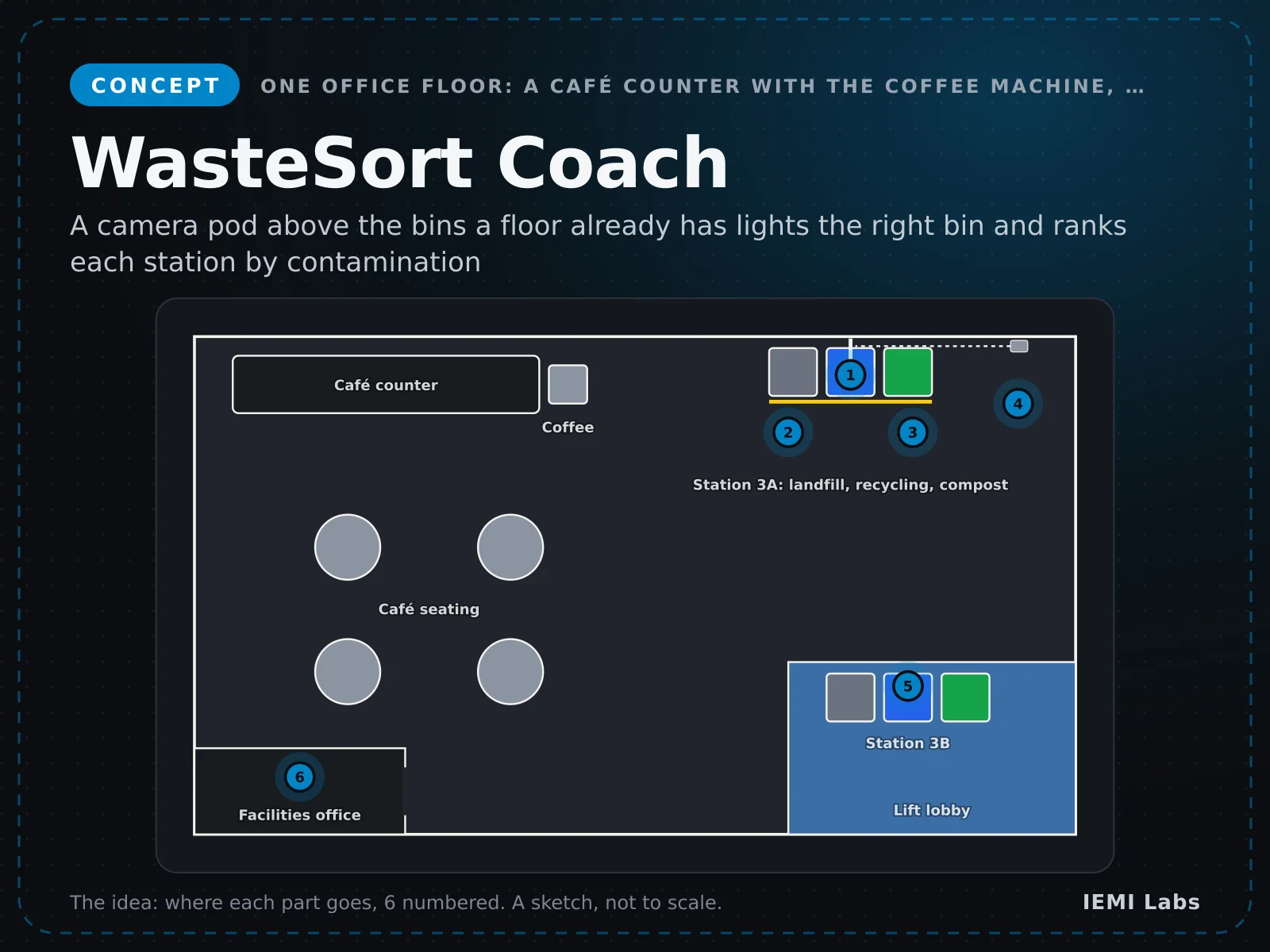
A clip-on camera coach for the recycling bins you already have.
From $299 per 3-bin station
Details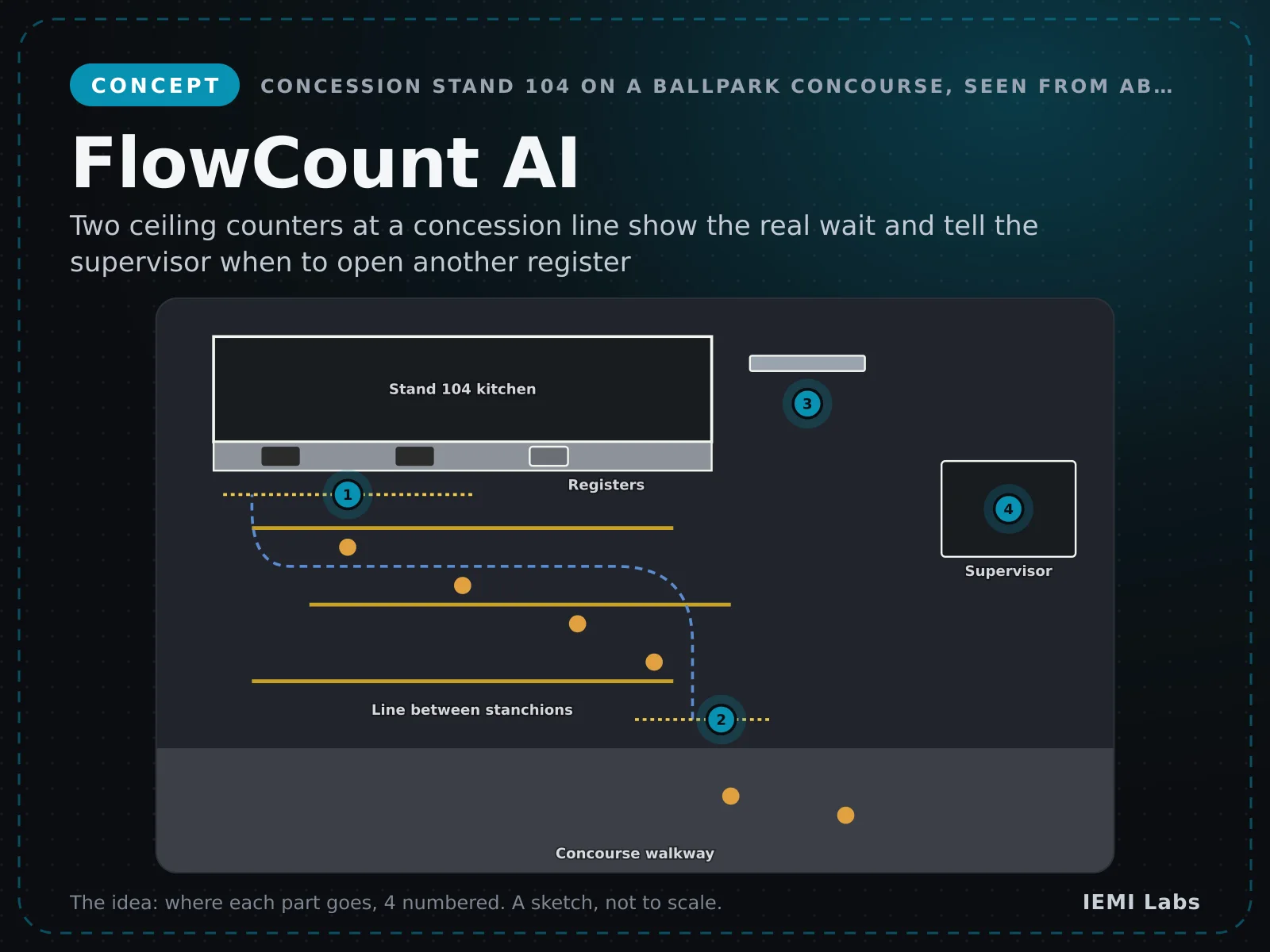
A small white ceiling sensor with two lenses that counts people without sending images.
From $899 per sensor
DetailsAisleOne
Concept · target $920