IEMI Labs plans a small Austin micro-factory that one operator can run, with Claude agents doing most of the design work. Agents turn each product spec into parametric enclosure CAD, KiCad board files, firmware and test scripts. Machines print the enclosures, build and sign the firmware, and flash and test each unit. A desktop cobot handles bed unloading and jig loading where that is reliable. The operator assembles, does the final checks, packs and ships. Bare boards and PCB assembly go to JLCPCB/PCBWay-class suppliers. The aluminium vision boxes, sports equipment and robots are prototyped here but built by contract manufacturers. The plan targets 100 to 1,000 ESP32-class units a month.
Live 3D concept · drag to look aroundLive 3D concept · swipe sideways
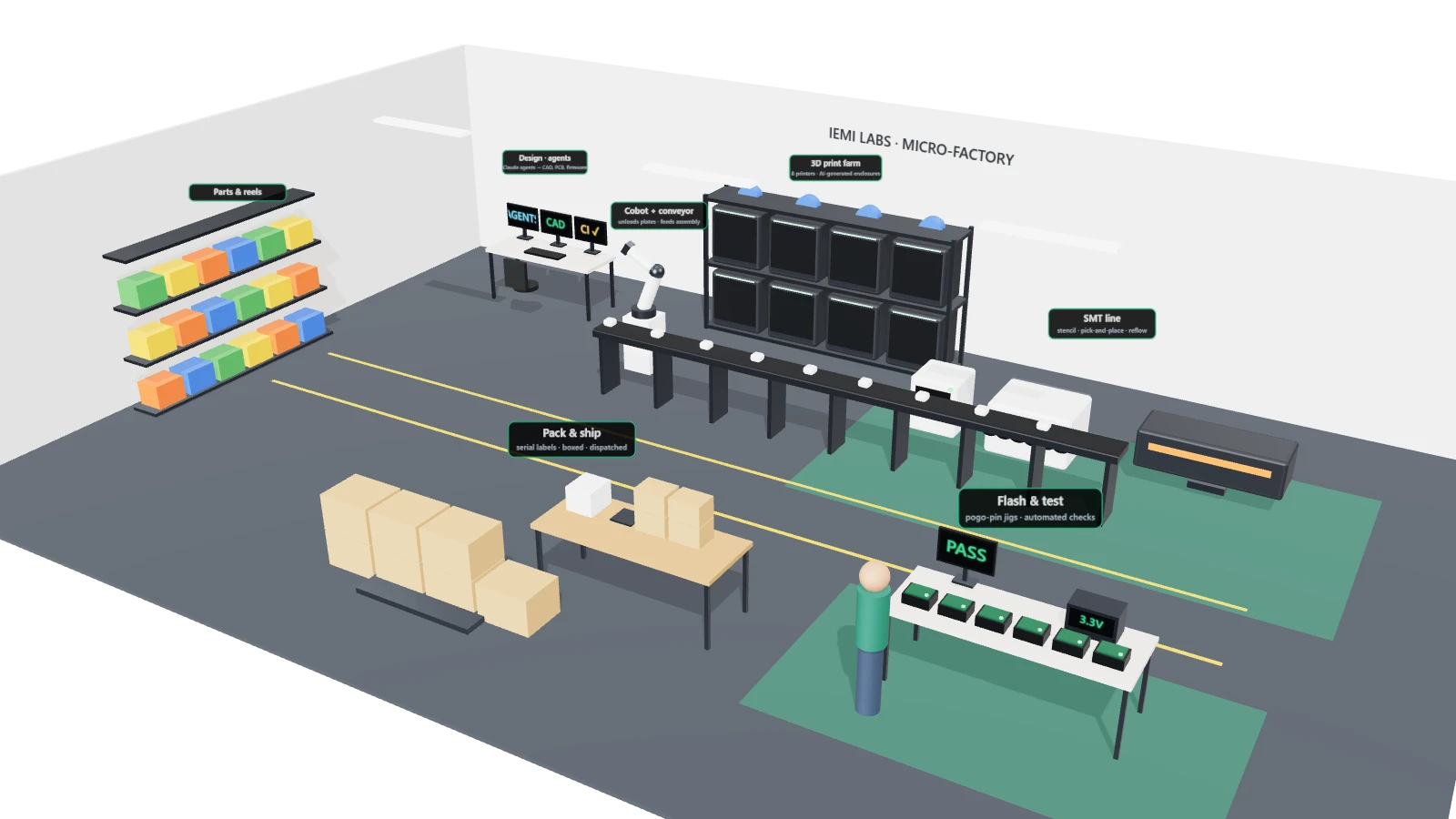
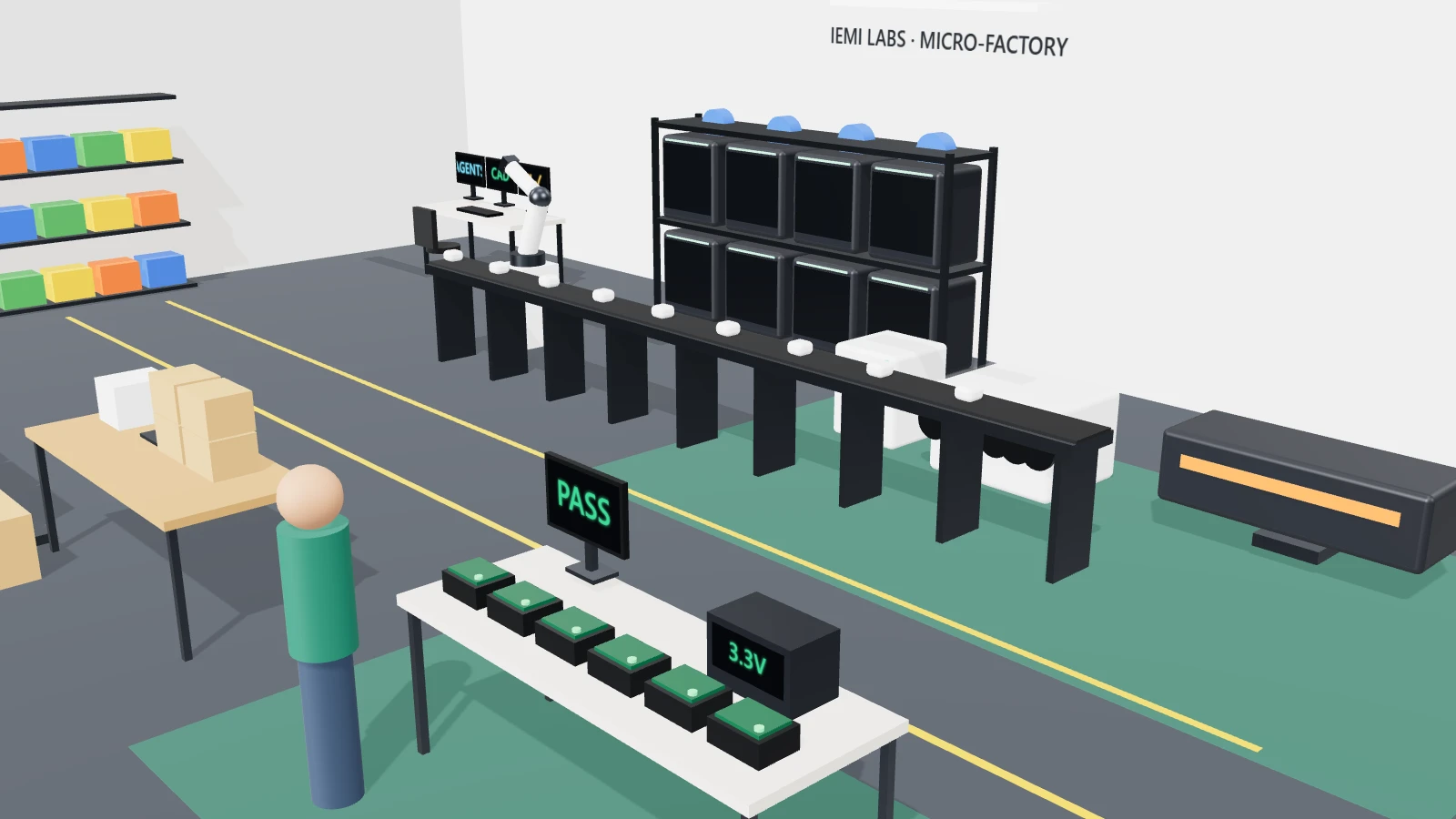
Concept render of our planned lab, not a photograph. Machines are generic stand-ins for the equipment listed below.
From spec to shipped box
The automated pipeline
Agents write the designs and code, machines make and check them, a cobot handles the repetitive moves, and the operator makes the decisions that need a person: reviews, payments, signing keys and final quality.
01AI agent
Spec to design brief
An agent reads the product JSON and writes the enclosure, PCB and firmware requirements.
ClaudeGitHub
02AI agent
Parametric enclosure CAD
An agent generates build123d/CadQuery code and exports STEP and STL files.
build123dCadQueryOpenSCAD
03Machine
Automated geometry checks
CI checks wall thickness, PCB and radar clearances and fit before any print.
build123dGitHub Actions
04Machine
Slice and dispatch prints
The CLI slicer makes plates, and jobs go to printers over LAN/MQTT or the farm-software API.
Bambu Studio CLIOrcaSlicer CLIPrusaSlicer CLISimplyPrint
05Robot
Print monitoring and plate clearing
AI cameras flag failed prints, and a cobot or the operator clears the plates.
ObicoBambu Farm ManagerxArm Lite 6
06AI agent
PCB design and fab outputs
Agents script KiCad, and KiBot outputs Gerbers, BOM, CPL and DRC reports.
KiCadkicad-cliKiBot
07Operator
PCBA order
The operator reviews the DFM report and pays for the JLCPCB/PCBWay order.
JLCPCBPCBWay
08Machine
Firmware CI, signing and OTA
The ESP-IDF Docker build runs on each tag, and the operator-held key signs it for Secure Boot v2 and OTA.
ESP-IDF Dockeresp-idf-ci-actionSecure Boot v2
09AI agent
On-device ML
Agents train in the cloud, quantise to int8 and embed the model with ESP-DL or TFLM.
ESP-DLTensorFlow Lite MicroEdge ImpulseLambda GPU
10Machine
Flash, provision and end-of-line test
Pogo jigs flash images and unique certificates, run the functional tests and write results to the database.
esptoolesp_secure_cert_mgrpytest
11Operator
Final assembly and QC
The operator presses in inserts, fits the board, closes the enclosure and checks the QC camera verdict.
Insert pressQC camera
12Operator
Label, pack and ship
Serial/QR and shipping labels print automatically; the operator packs and hands the parcels to the carrier.
Brother QLZebra ZD421ShipStationShippo
Concept render: conveyor, print farm, SMT line and the flash and test bench.
Equipment
What the lab needs, station by station
Example models and current list prices, so the plan can be costed. Quantities are for the pilot-scale lab.
Design & IT
≈ $1,267
Workstations, network, storage and compute where agents and the founder design enclosures, boards, firmware and models.
Automation:Claude agents write the CAD-as-code, KiCad scripts, firmware and test code and open pull requests; the operator reviews, approves and signs releases.
Inspects, reworks and hand-finishes boards, which arrive assembled from JLCPCB/PCBWay.
Automation:Agents export Gerbers, BOM and CPL with KiBot and prepare the PCBA order; the operator approves the order, then inspects and reworks boards.
Flashes signed, encrypted firmware and unique device credentials onto every board.
Automation:GitHub Actions builds and signs the images, and an esptool script flashes several boards at once; the operator only loads and unloads the jigs.
Makes fixtures and small machined parts, and takes repetitive handling off the operator.
Automation:A desktop cobot unloads print plates and loads test jigs on scripted paths; the operator does the inserts, final assembly and anything the cobot cannot do reliably.
Labels, bags, boxes, weighs and ships each unit with its serial number and QR code.
Automation:Paid orders trigger labels automatically through the shipping API, and serial/QR labels print from the test database; the operator packs and hands the parcels to the carrier.
Price tags: V = read on the official page; S = official source seen via search; U = retail or press price. Prices change; we re-check before buying. Allowances are planning estimates, not quotes.
In the real world
What these stations look like
Print farms, SMT lines, reflow ovens, test benches and desktop robot arms in labs today: the equipment our lab is built around.
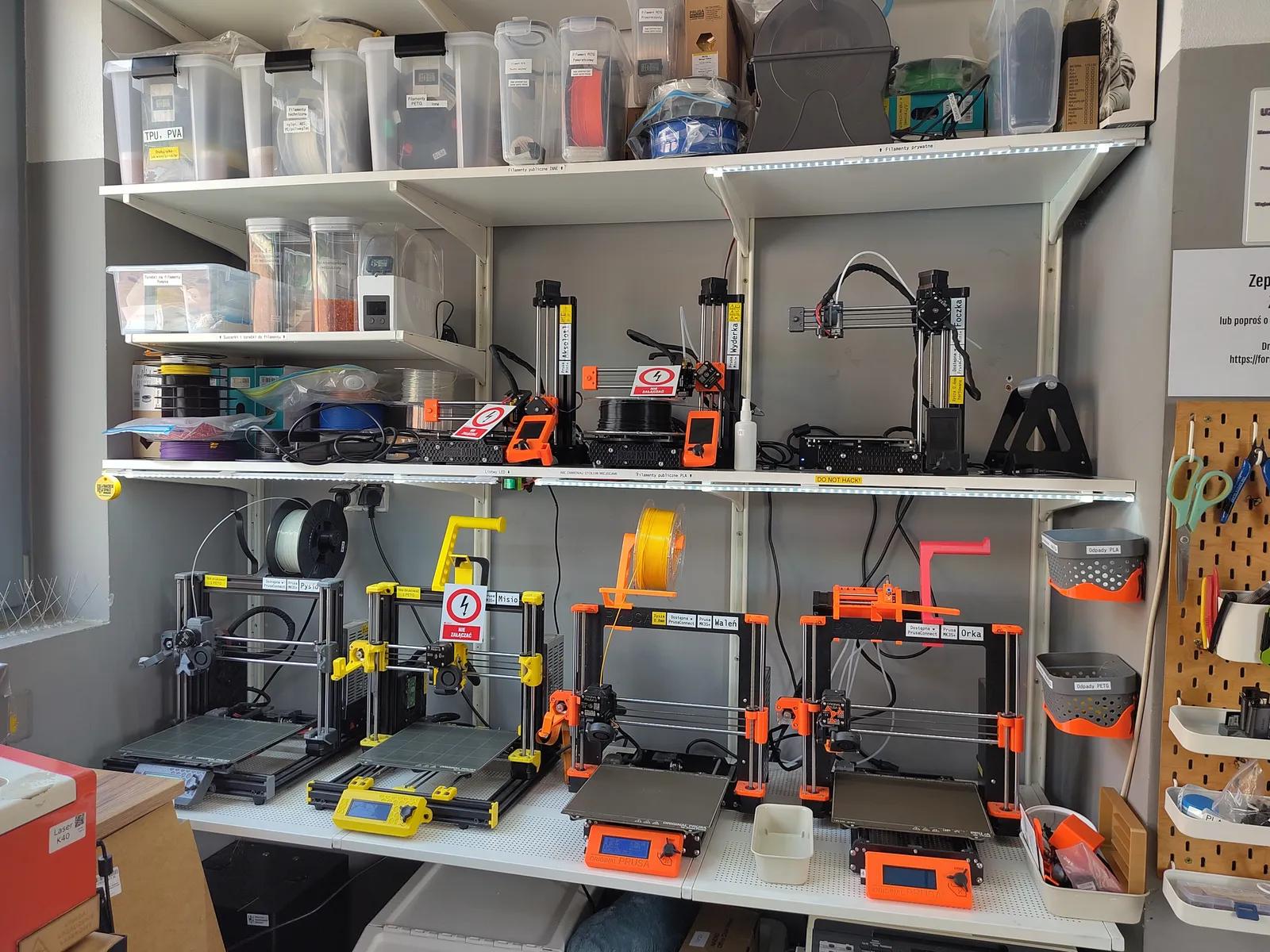
A small print farm of desktop printers: the scale our print farm starts at.Photo: Majabojarska, CC BY 4.0, via Wikimedia Commons
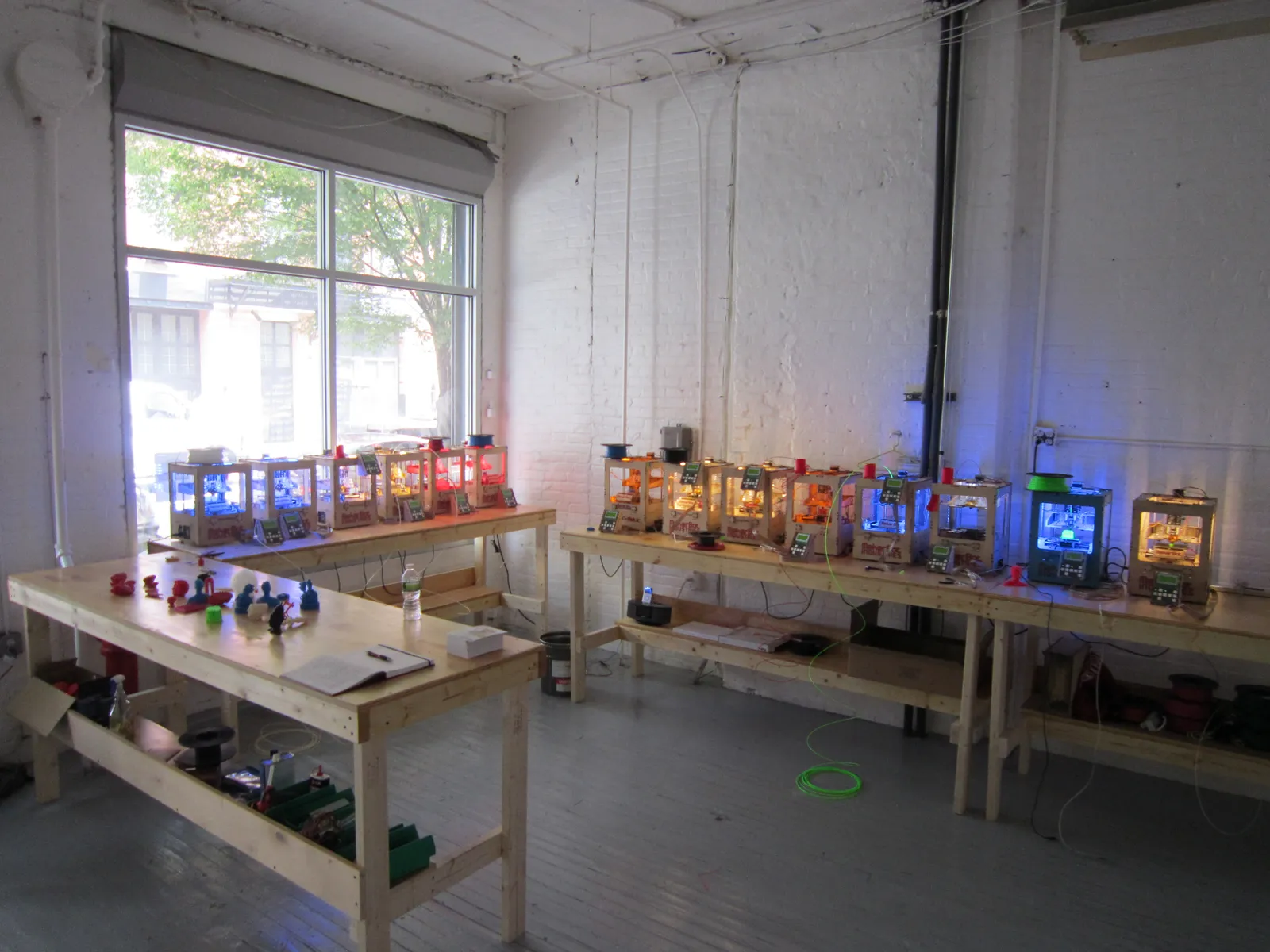
A row of desktop printers running a long batch overnight.Photo: syvwlch, CC BY 2.0, via Wikimedia Commons
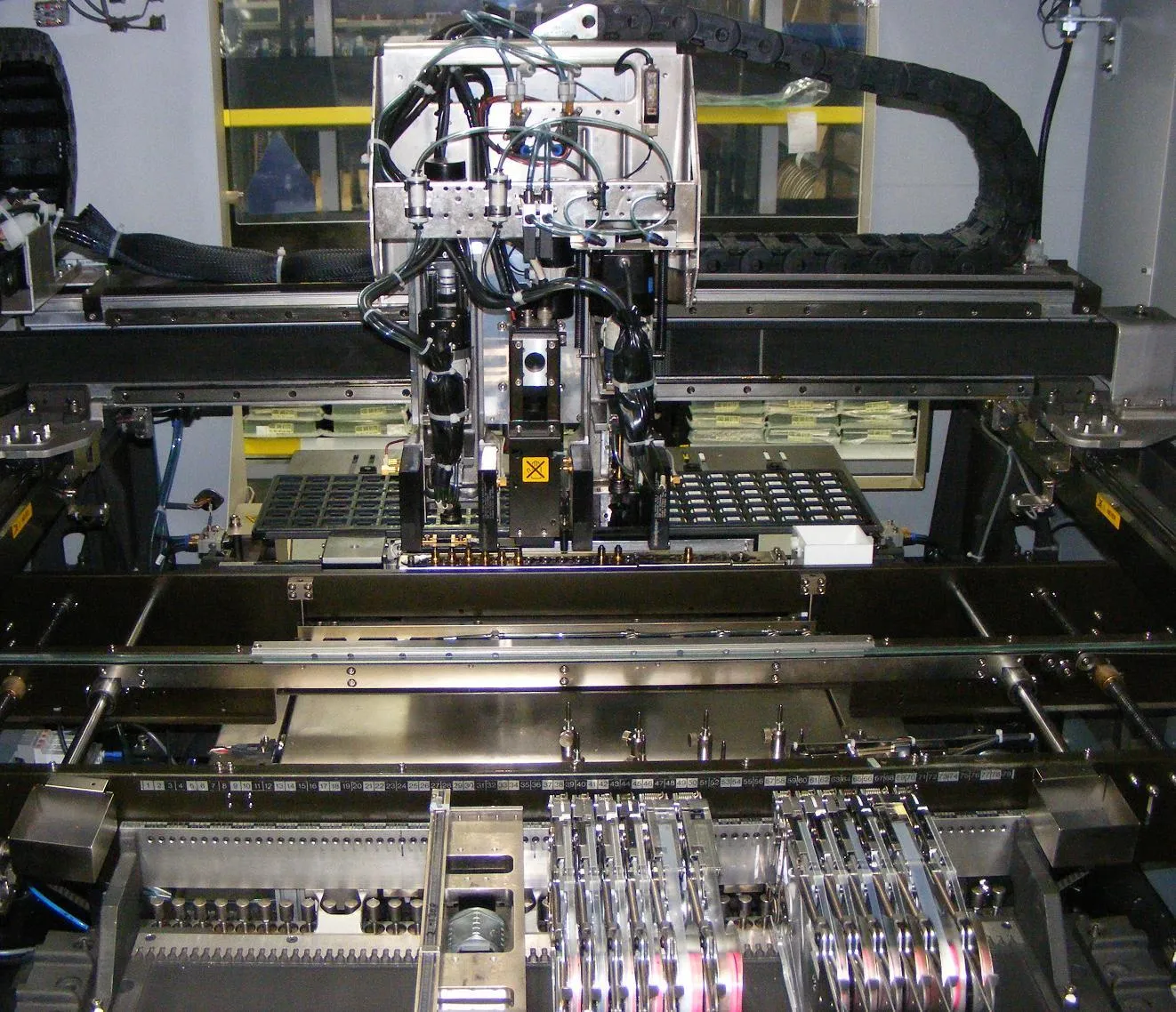
Inside a pick-and-place machine: placement heads putting components on a circuit board.Photo: Peripitus, CC BY-SA 3.0, via Wikimedia Commons
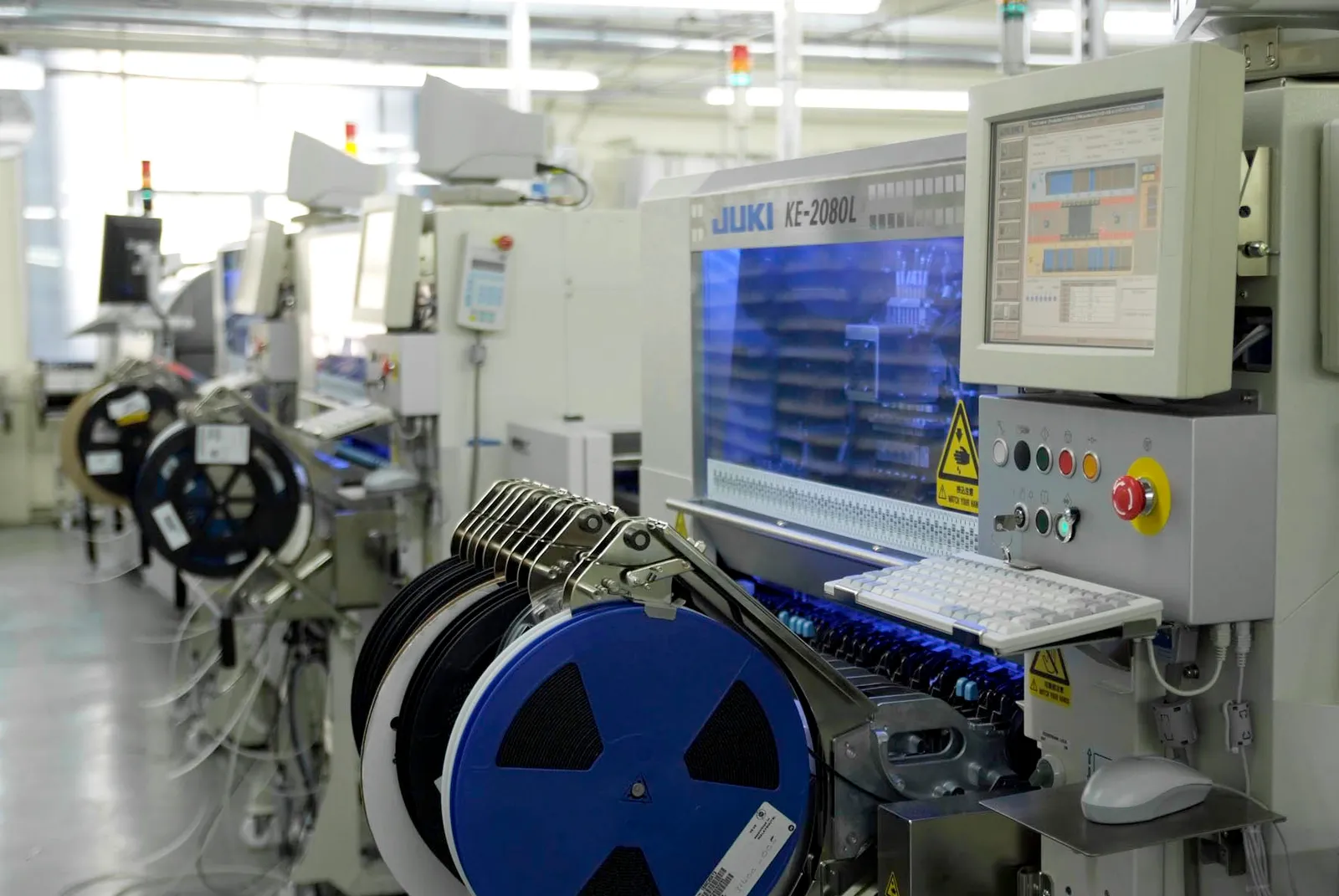
A surface-mount placement machine on an electronics production line.Photo: Megger Ltd., CC BY 3.0, via Wikimedia Commons
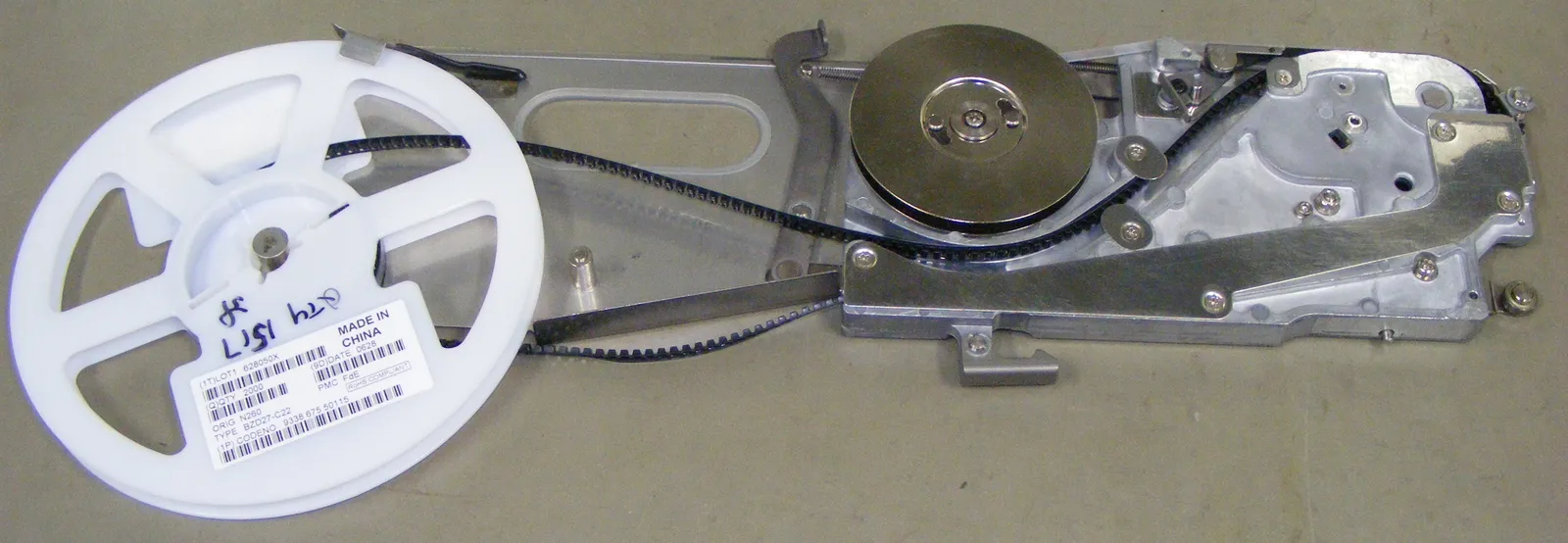
A tape-and-reel feeder that loads parts into a pick-and-place machine.Photo: Peripitus, CC BY-SA 3.0, via Wikimedia Commons
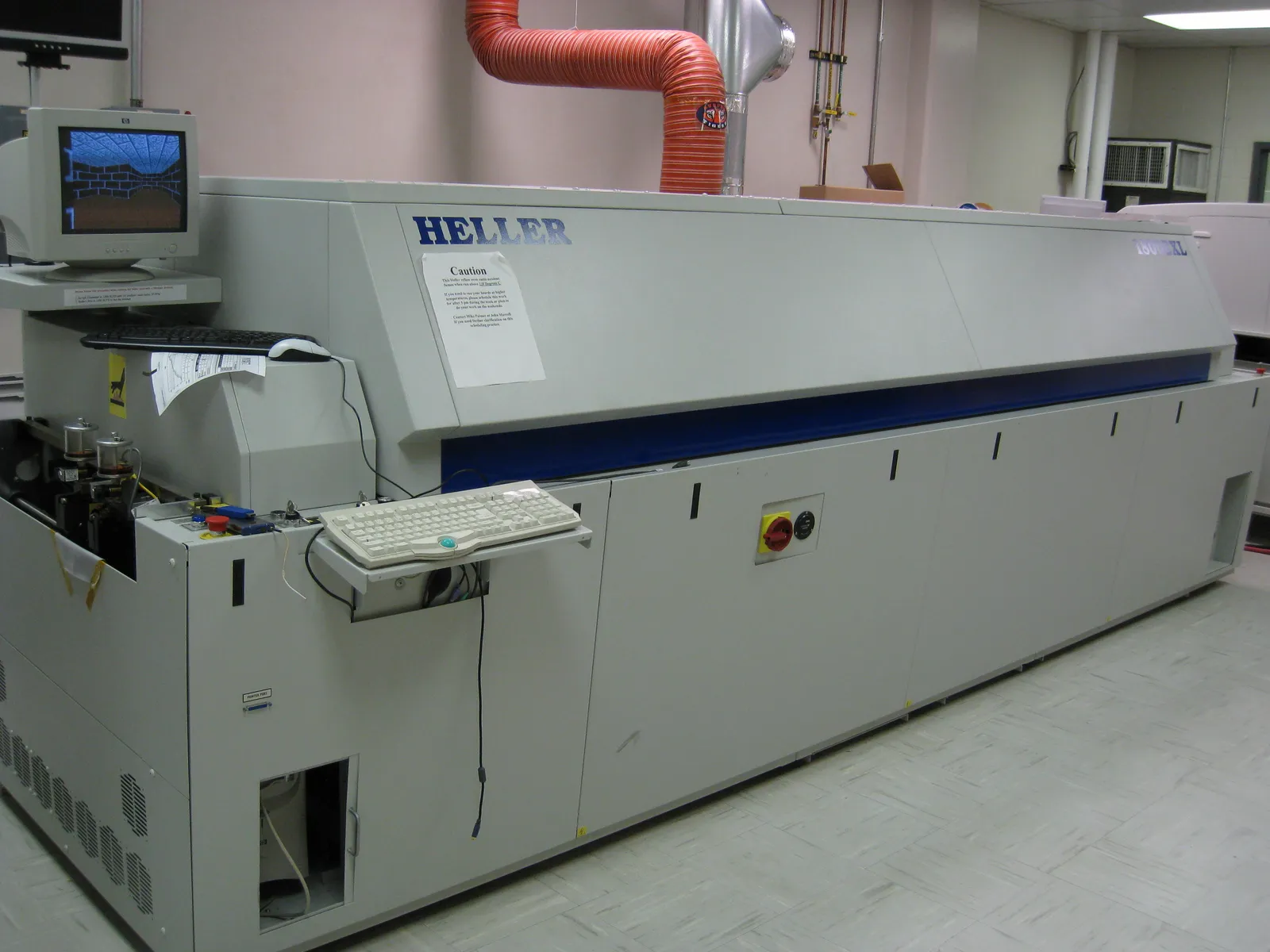
A conveyor reflow oven that solders surface-mount boards.Photo: Nelatan, CC BY-SA 3.0, via Wikimedia Commons
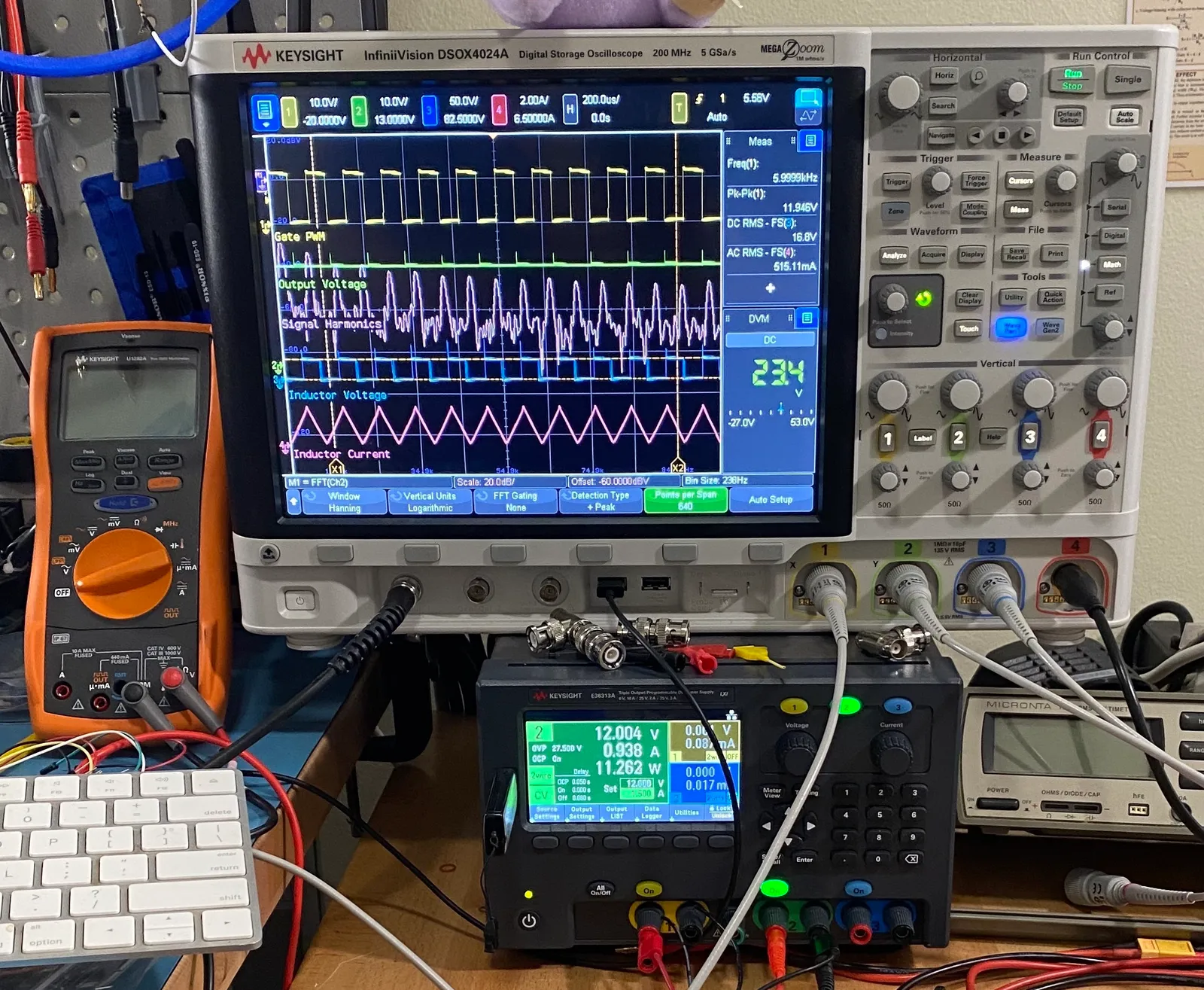
An electronics test bench: oscilloscope, multimeter and bench power supply.Photo: Radarvector, CC BY-SA 4.0, via Wikimedia Commons
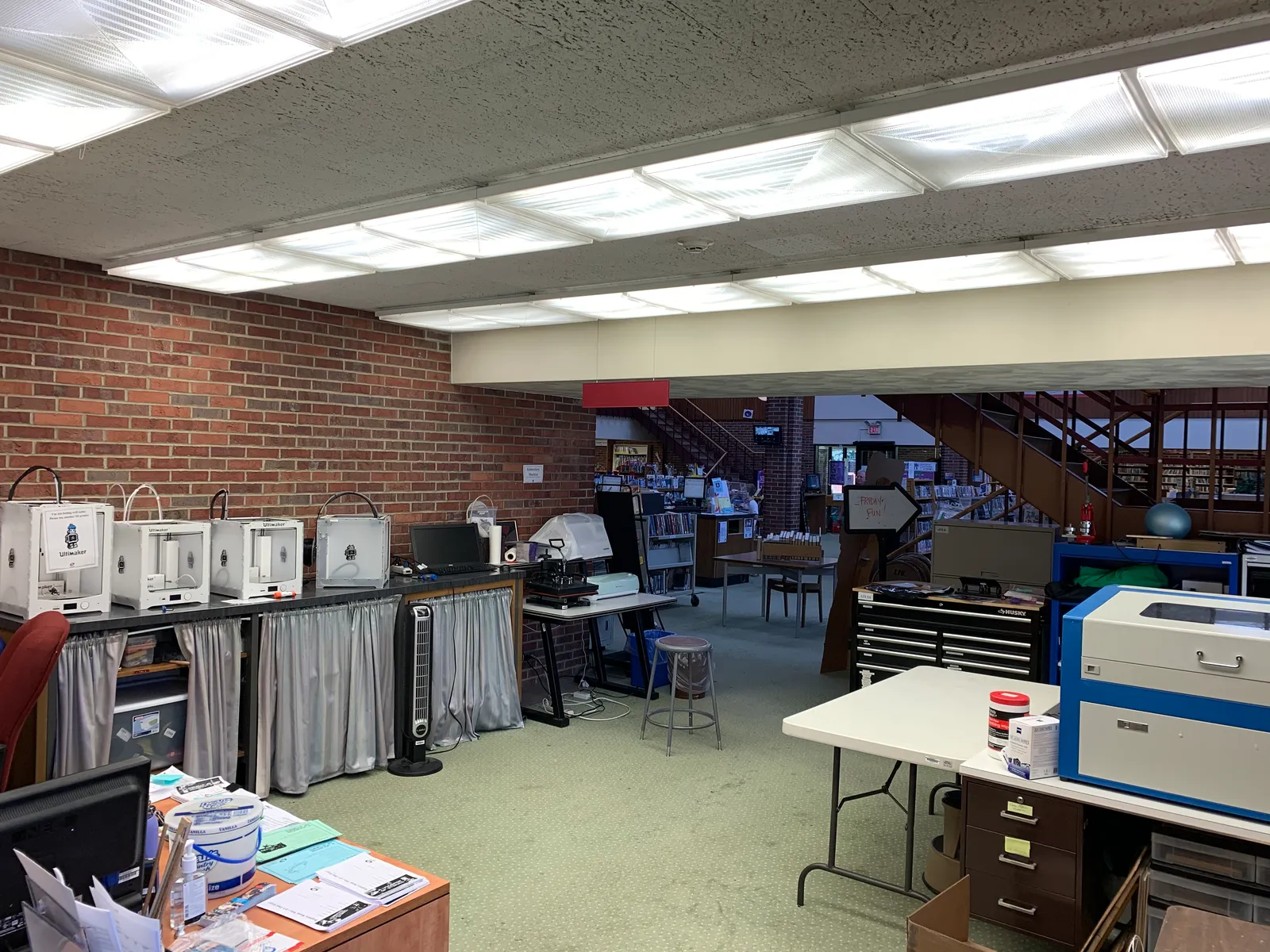
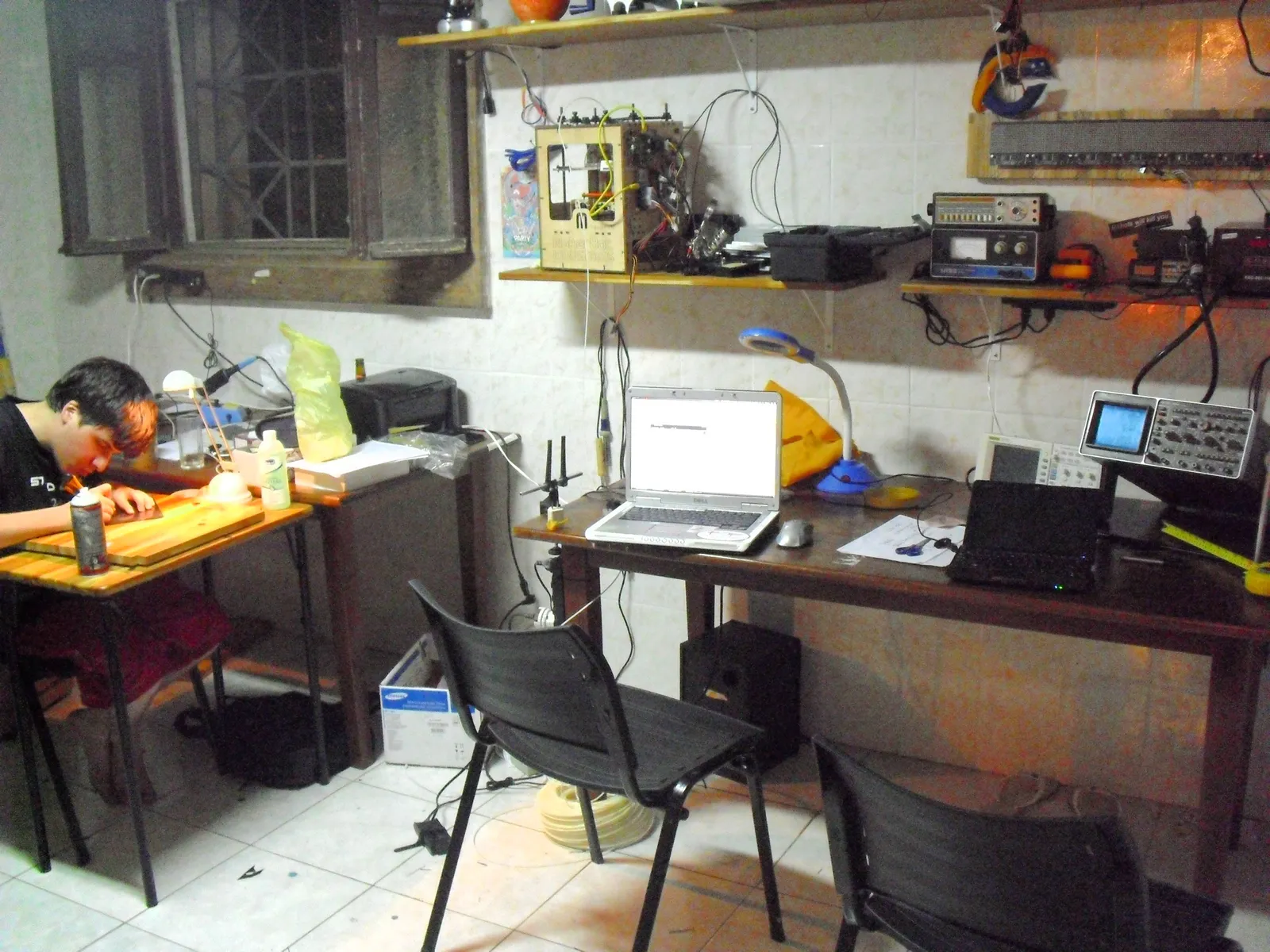
A hands-on electronics workbench in a community hackerspace in São Paulo.Photo: Aylons Hazzud, CC BY-SA 3.0, via Wikimedia Commons
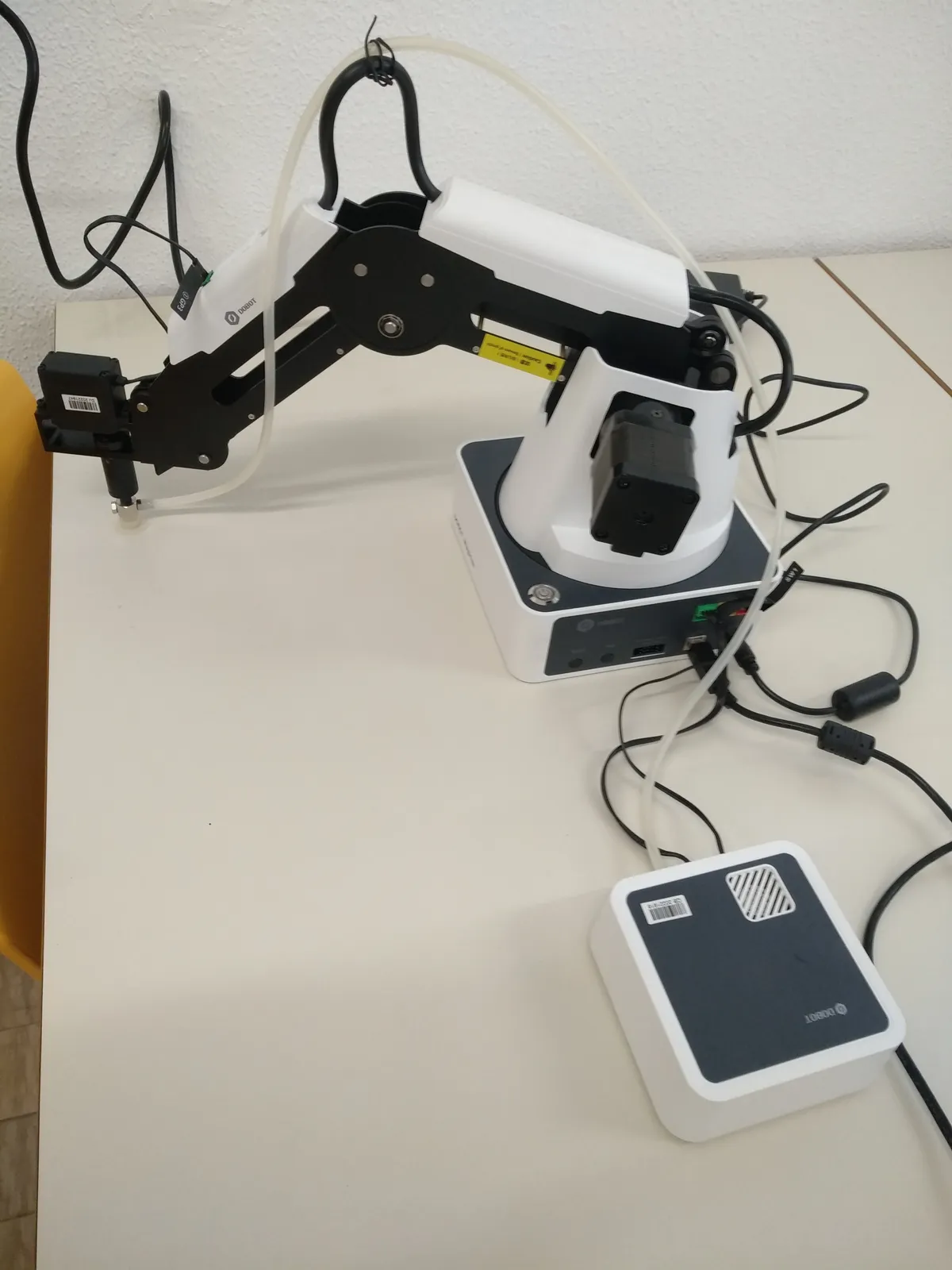
A desktop robot arm in a robotics lab: the class of arm we plan for repetitive handling.Photo: Giacomo Alessandroni, CC BY-SA 4.0, via Wikimedia Commons
Real photos of other labs and production lines, shown to illustrate the equipment we plan to use. They are not photos of IEMI Labs. Full credits on the photo credits page.
Budget
Three stages of the lab
Equipment only. Rent, inventory, outsourced board assembly, mould tooling and certification are budgeted separately.
Excludes rent, inventory, injection-mould tooling and FCC/CE certification
One-person operations
A day in the lab
About 25 units/week at Pilot and up to about 250 units/week at Production (≈7–10 operator-minutes per unit), with PCBA outsourced and the print farm running mostly unattended. 250/week is the practical limit for one person.
08:00Check the overnight print, CI and test dashboard; clear failed jobs
08:30Clear plates (or check cobot runs) and start the day's print queue
09:30Review and merge agent pull requests for CAD, firmware and tests
10:30Flash and test batch on pogo jigs; triage failures
PCBA, and injection moulding once a design is stable and volume passes roughly 1,000/month
Sensing
Design & IT, 3D printing farm, Electronics assembly, Firmware & flashing, Test & measurement, Packing & shipping
PCBA; IP-rated or solar enclosures and LoRa/LTE certification testing
Industrial
Design & IT, 3D printing farm, Firmware & flashing, Test & measurement
PCBA, metal/IP67 housings, thermal cameras and ultrasonic arrays, plus contract assembly beyond pilots
Vision
Design & IT, 3D printing farm, Firmware & flashing, Test & measurement
Aluminium CNC or extruded enclosures, carrier boards and box assembly (Raspberry Pi 5 + Hailo)
Sports
Design & IT, 3D printing farm, Firmware & flashing, Test & measurement
Stumps, goals and backboards with embedded electronics; prototypes only in-house
Robotics
Design & IT, 3D printing farm, Firmware & flashing
Whole-system builds (WasteSort bin, SmartLine robot, Gecko) to a contract manufacturer after the prototype
Premises
We're looking for a small space in Austin.
About 1,200–2,000 sq ft (≈110–185 m²); about 800 sq ft is the minimum for the Starter lab sq ft of flex or light-industrial space with dedicated circuits and outside venting. Know a landlord, broker or shared workshop that fits?
Design desks and IT rack · Print farm with vented enclosures · Resin corner (vented, nitrile gloves, IPA) · ESD electronics bench and rework · Flash and test bench with pogo jigs and IR/radar rigs · Cobot cell and assembly table · Mechanical corner (laser + CNC, vented) · Packing, shipping and goods-in · Parts store and lithium-battery cabinet
Power
Plan on two to three dedicated 120 V/20 A circuits for the printers, separate circuits for the laser and CNC, one 240 V circuit if a reflow oven is ever added, and a UPS for the network and NAS. An electrician must confirm the loads.
Ventilation
Exhaust the laser and resin areas to outside, add fume extraction at the solder bench, use enclosed printers with filters or room extraction, and keep the space air-conditioned so the printers stay stable.
Zoning
In City of Austin staff reports, LI (Limited Industrial Services) is described as a district for commercial services and limited manufacturing, and 'Light Manufacturing' is a named industrial use. Confirm the exact LI, IP or CS permissions in the Land Development Code (Chapter 25-2) use tables, or get a zoning verification from the City, before signing a lease.
Plan updated 2026-10-23. The lab is planned, not yet built; we will post photos on the build log as it comes together.