VisionConcept
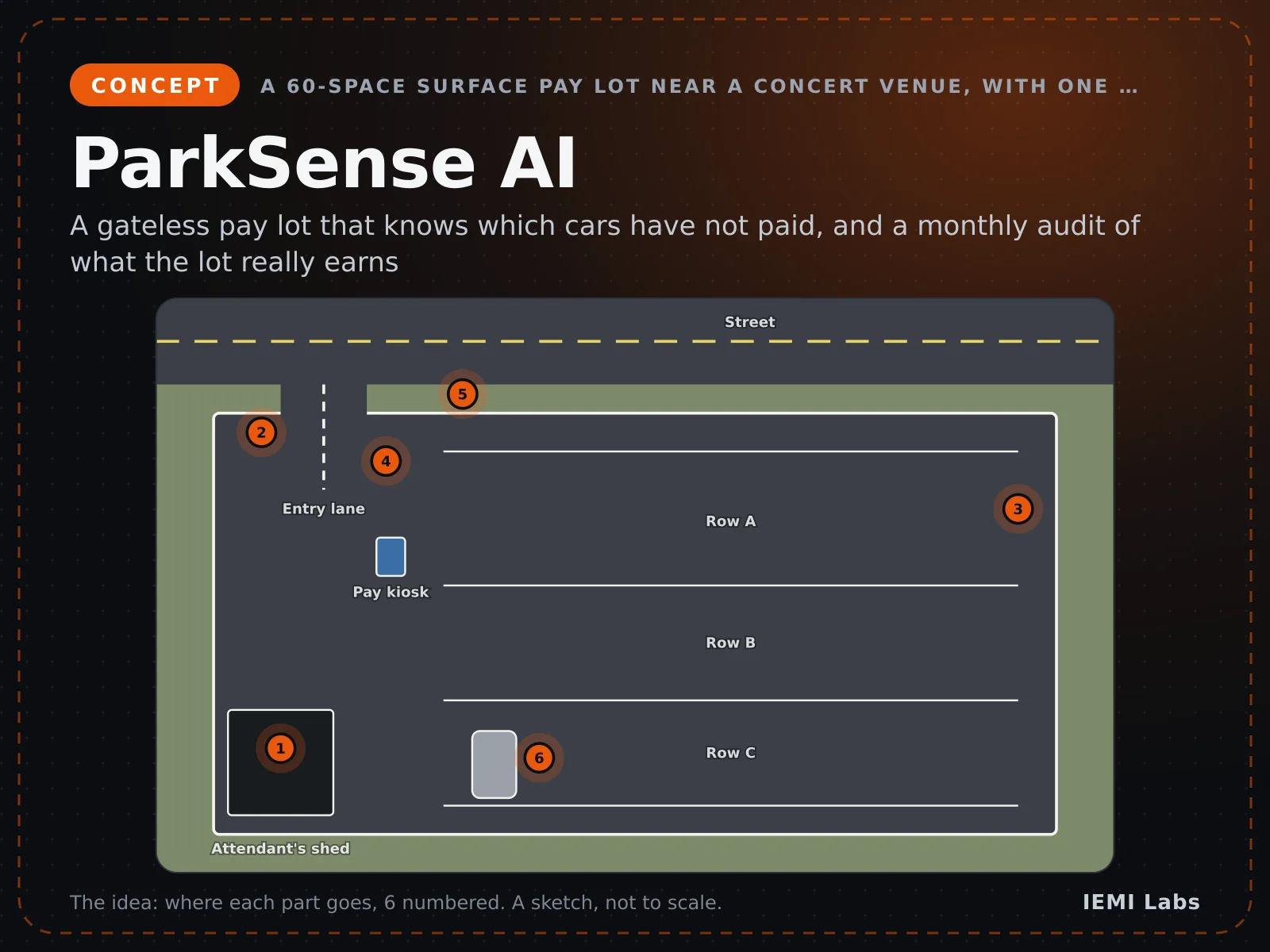
ParkSense AI
A palm-sized edge box that plugs into your existing parking cameras.
- Counts free bays in real time
- Flags overstays and wrong parking
- Guides drivers to open spaces
From $499 per edge box
DetailsLive queue length and wait times, without a single image leaving
Software: $39–$79 per month per sensor
Concept, not for sale yet. Tell us if you want it; that decides what we build.
Rate this idea and tell us what to change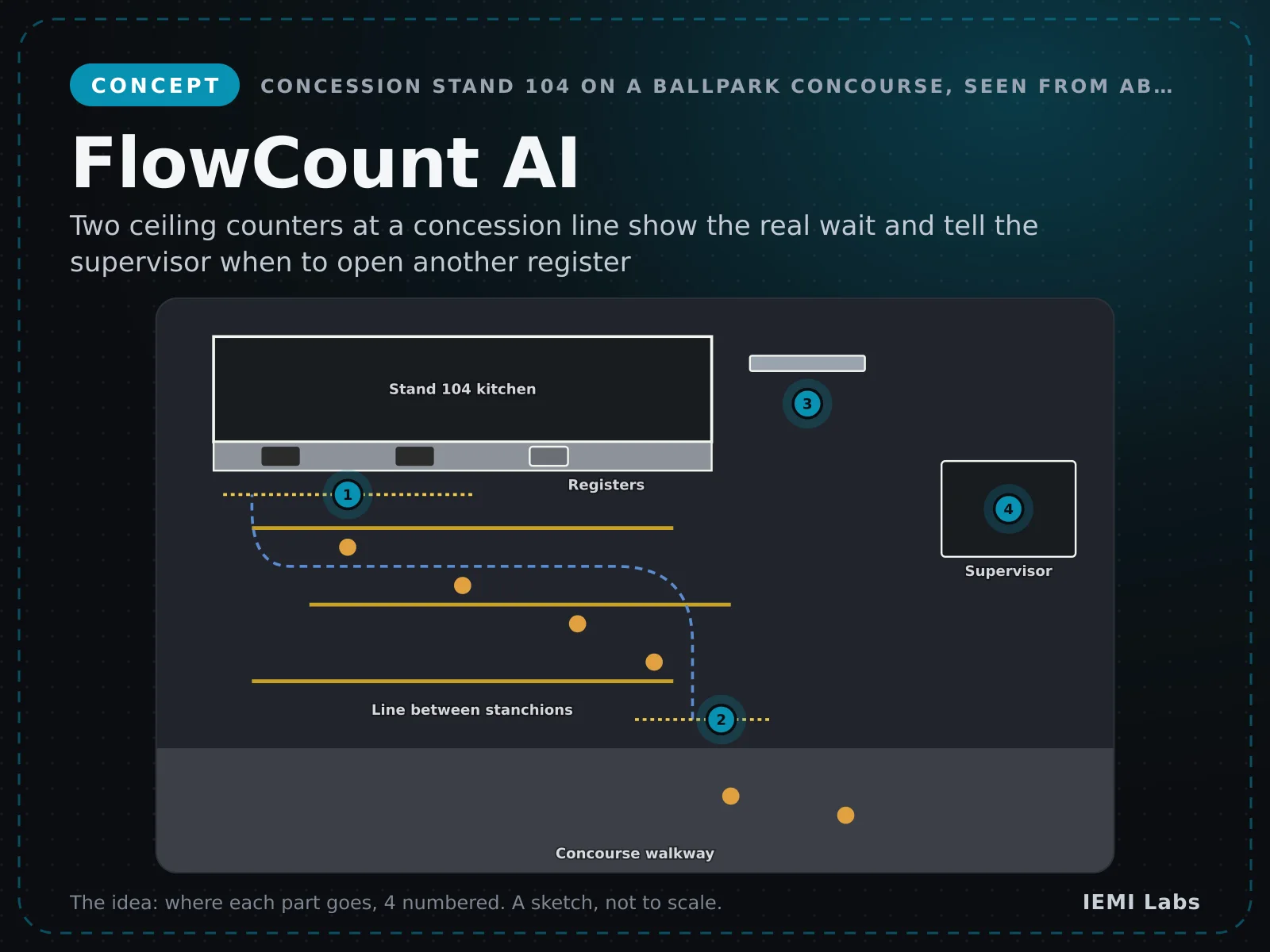
Drag to rotate · right-drag to move · scroll to zoom · click a part for its size and placeSwipe to rotate · pinch to zoom · two fingers to move · tap a part for its size
How it fits together
Scroll or tap a part. Press “See the 3D CAD design” to watch the model, built from our CAD, light each part up and show how it connects.
Real-time 3D render · drag to rotate · final design may varySwipe sideways to rotate
01
The whole FlowCount AI
Ceiling cameras count people at a queue mouth and a service point; counts alone give the queue length and a posted wait time.
02Brain
Raspberry Pi Zero 2 W
The brain: it runs the flowcount-node program
03
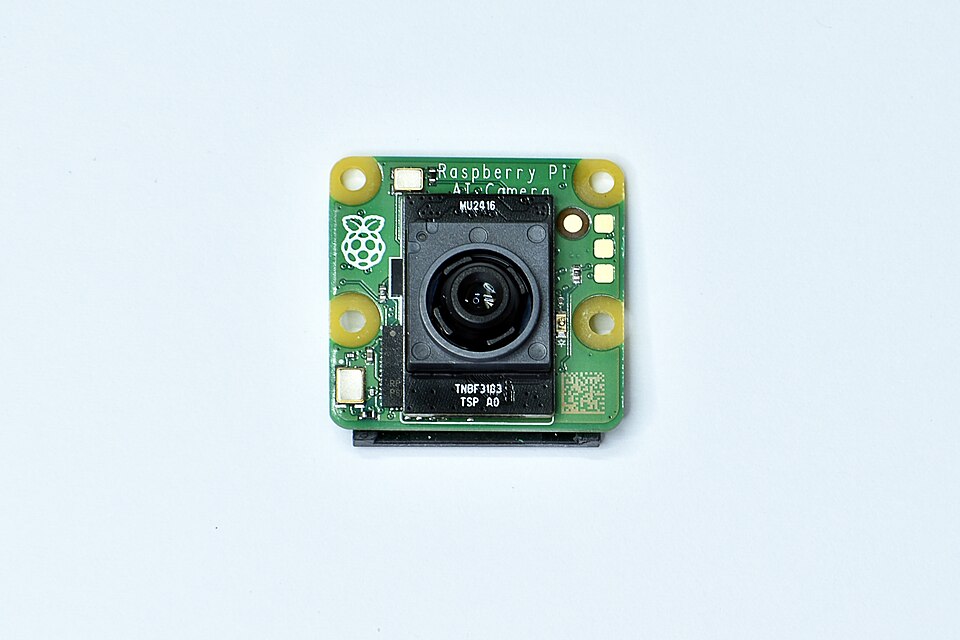
AI Camera (IMX500)
Finds people in each frame on the sensor itself
Raspberry Pi Zero 2 W · CSI-2 ribbon cable · Detection boxes, no images
04
Lens window
Gives the camera a clean, replaceable view down
Raspberry Pi Zero 2 W · Optical path · Light onto the sensor
05
Status light
Steady means counting; blinking means no uplink
Raspberry Pi Zero 2 W · GPIO 17 pin · LED on and off
06
USB Ethernet adapter
Sends counts over a wired link
Raspberry Pi Zero 2 W · USB OTG (micro-USB) · Counts every 5 s
07
PoE splitter
Powers the node from the one ceiling cable
Raspberry Pi Zero 2 W · 5 V micro-USB lead · 5 V power
08
All connected
6 key parts, one program, and your phone
What it is
A small white ceiling sensor with two lenses that counts people without sending images.
What it does
Who it's for
Airports, transit stations, venues, stores and campuses with queues or crowds.
The idea
The problem today
At a ballpark, zoo or museum stand, nobody knows how long the line really is until fans walk away. Airport-grade queue systems need many stitched sensors and an integrator, and a stereo counter costs about $899 a sensor.
With FlowCount AI
One counter at the line's mouth and one at the registers count people in and out, with the AI on the camera chip and only numbers sent. The wait engine reads each person's real wait from the two counts, the TV shows it, and the supervisor gets 'open register 3' before the line spills onto the concourse.
How the parts connect
Every part, what links it to the brain, and how the data reaches your phone. A solid line is a cable; a dashed line is a radio link.
The program
while True:
    req = picam2.capture_metadata()          # no image saved, tensor only
    boxes = imx500.get_outputs(req)          # x, y, w, h, score
    people = [b for b in boxes if b.score >= 0.45]
    tracks = tracker.update(people)          # IDs live in memory only
    for line in lines:
        d = line.crossings(tracks)           # needs 5 frames past the line
        counts[line.id].add(d)
    if now() - last_pub >= 5:
        mqtt.publish(f'{base}/line/{line.id}', json.dumps(counts.flush()))
        last_pub = now()
    if now() - last_reset >= 600:
        tracker.reset()
To your phone
Manager's laptop or phone browser, venue TV page
One screen for each job FlowCount AI does.
Wait alertBetween innings at a ballpark stand the line grows fast. The supervisor's phone buzzes to open another register before it reaches the concourse.
Posted waitA screen by the museum ticket desk shows the measured wait, so visitors can decide before they join the line.
All linesBefore the evening rush, the ops manager checks every stand on one map and moves staff to the lines that are building.
App screens with sample data. The interface is in development.
| Queue length | 14 people | Every 5 s |
|---|---|---|
| Predicted wait | About 7 min | Every 5 s |
| Service rate | 2.1 per min | Every 5 s |
| Wait alert | Stand 104 over 6 min | Over threshold |
| Node health | 12.4 fps, 58 °C | Every 60 s |
No images are stored or sent. Only counts leave the node; track IDs reset every 10 minutes.
CAD design · Design complete (stages 1–6), not built
| AI processor | 2× Sony IMX500 intelligent vision sensors (on-sensor AI) + low-power ARM host for stereo fusion |
|---|---|
| Camera | Dual-lens stereo, 2× 12.3 MP IMX500; metadata-only output (no images transmitted) |
| Sensors | Ambient light sensor · Tamper / tilt accelerometer |
| Connectivity | Ethernet (PoE 802.3af) · Optional Wi-Fi 6 · MQTT, REST API and webhooks |
| Power | PoE (802.3af), under 6 W (target) |
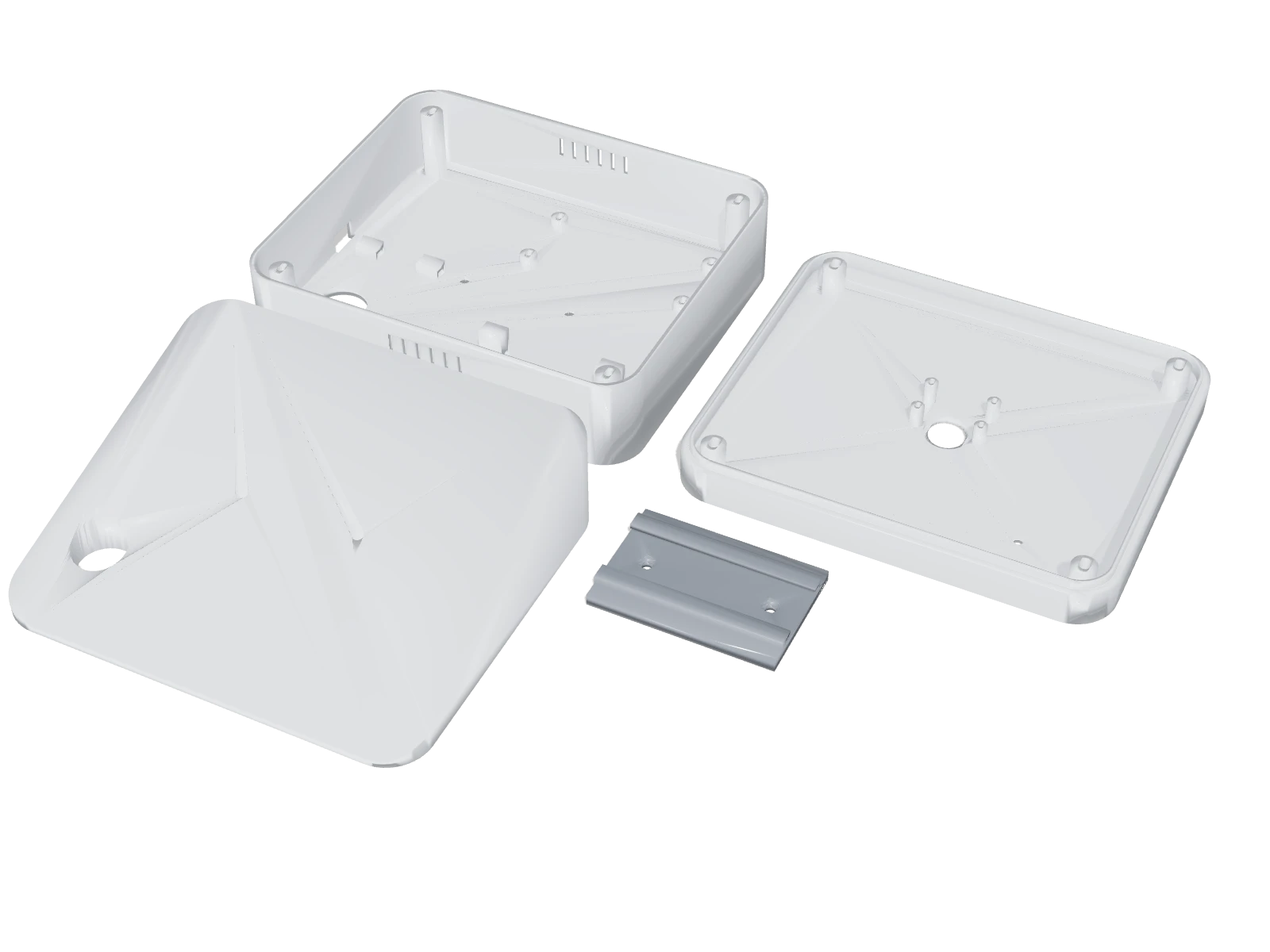
| Enclosure | White rounded-square polycarbonate ceiling housing with two lenses, flush or surface mount |
| Dimensions | 13 × 13 × 4 cm |
| Weight | ~380 g |
| Ingress rating | IP42 (indoor) |
| Sensors | 2× Sony IMX500, stereo baseline |
|---|---|
| Output | Metadata only (counts, positions) |
| Mount height | 2.5–6 m |
| Coverage | Up to ~6 × 6 m per sensor at 4 m |
| Counting accuracy | ≥95% at line crossings (target) |
|---|---|
| Update rate | Wait time every 5 s |
| Multi-sensor | Stitch sensors across long queues |
| Outputs | Dashboard, displays, API, alerts |
| Power | PoE 802.3af, < 6 W |
|---|---|
| Size | 13 × 13 × 4 cm |
| Rating | IP42 indoor |
| Operating temp. | 0 °C to 45 °C |
| Images | Never stored or transmitted |
|---|---|
| Biometrics | No face templates, no identity |
| Data residency | EU / US hosting options |
| Updates | Signed OTA updates |
Targets for production units; they may change during development.
Hardware: $899 per sensor
Software: $39–$79 per month per sensor
Target pricing. Large airport projects are quoted per terminal and may be delivered with an integrator.
$39/mo per sensor
People counting and occupancy for doors and rooms.
$79/mo per sensor
Queue length and predicted wait times.
Custom
For airports, rail hubs and multi-site operators.
Indicative launch pricing in USD, excluding taxes and shipping. Final pricing is confirmed before any balance is charged.
Community
FlowCount AI is in development. Rate the idea, tell us what to change about the features, specs or price, and we'll build it with your feedback.
How much people want it
–
No ratings yet
Follow FlowCount AI
Get build updates and first access when pre-orders open.
No comments yet. Tell us what you'd want from FlowCount AI.
Questions
Tell us what this would save you, or ask anything. We reply within two business days.
A member of the IEMI Labs team will reply within two business days.
From the product lab · ideation phase
No. The Sony IMX500 sensors run the person detector on the sensor chip and output only metadata such as counts and positions. Images are not stored or transmitted, and no faces or identities are processed. A one-time calibration view during setup is shown locally and not saved.
Mount the sensor on the ceiling above the queue at 2.5–6 m and run one PoE cable. Zones and count lines are drawn in the setup app. Long queues use several sensors stitched together.
A PoE Ethernet port and an internet connection for the dashboard, or a local MQTT/API connection if you prefer to keep data on-site. Wi-Fi is optional.
Wait times and counts are available through a REST API, webhooks and MQTT, so they can feed displays, apps and operational tools. Large projects may be delivered with an integrator.
No. FlowCount AI is a new concept in development. Specifications are target specifications. It is a concept: we are not taking orders, reservations or deposits, and it has no ship date yet.
We are planning a 2-year limited hardware warranty covering manufacturing defects. Final terms will be published before shipping begins.
A palm-sized edge box that plugs into your existing parking cameras.
From $499 per edge box
Details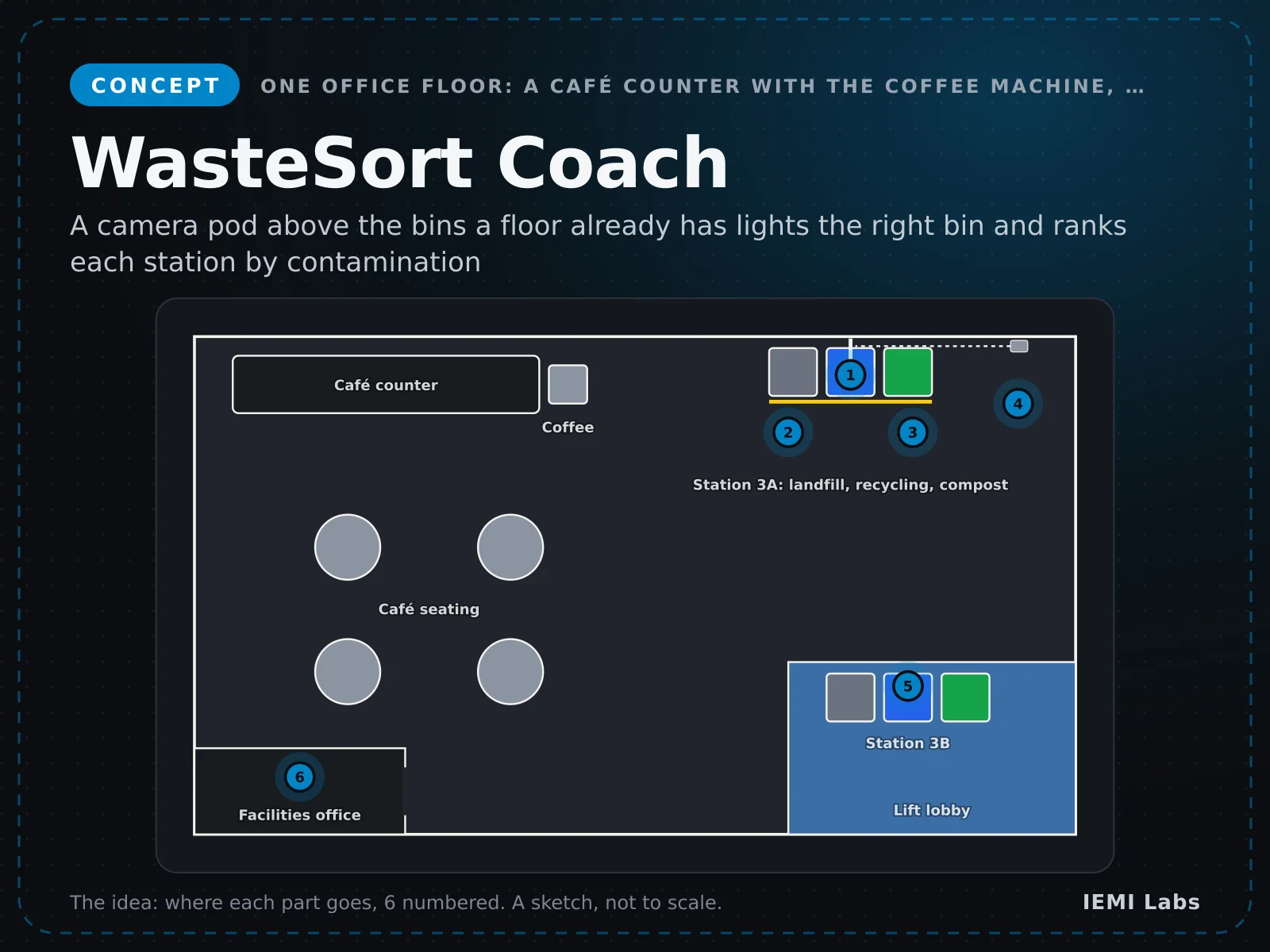
A clip-on camera coach for the recycling bins you already have.
From $299 per 3-bin station
Details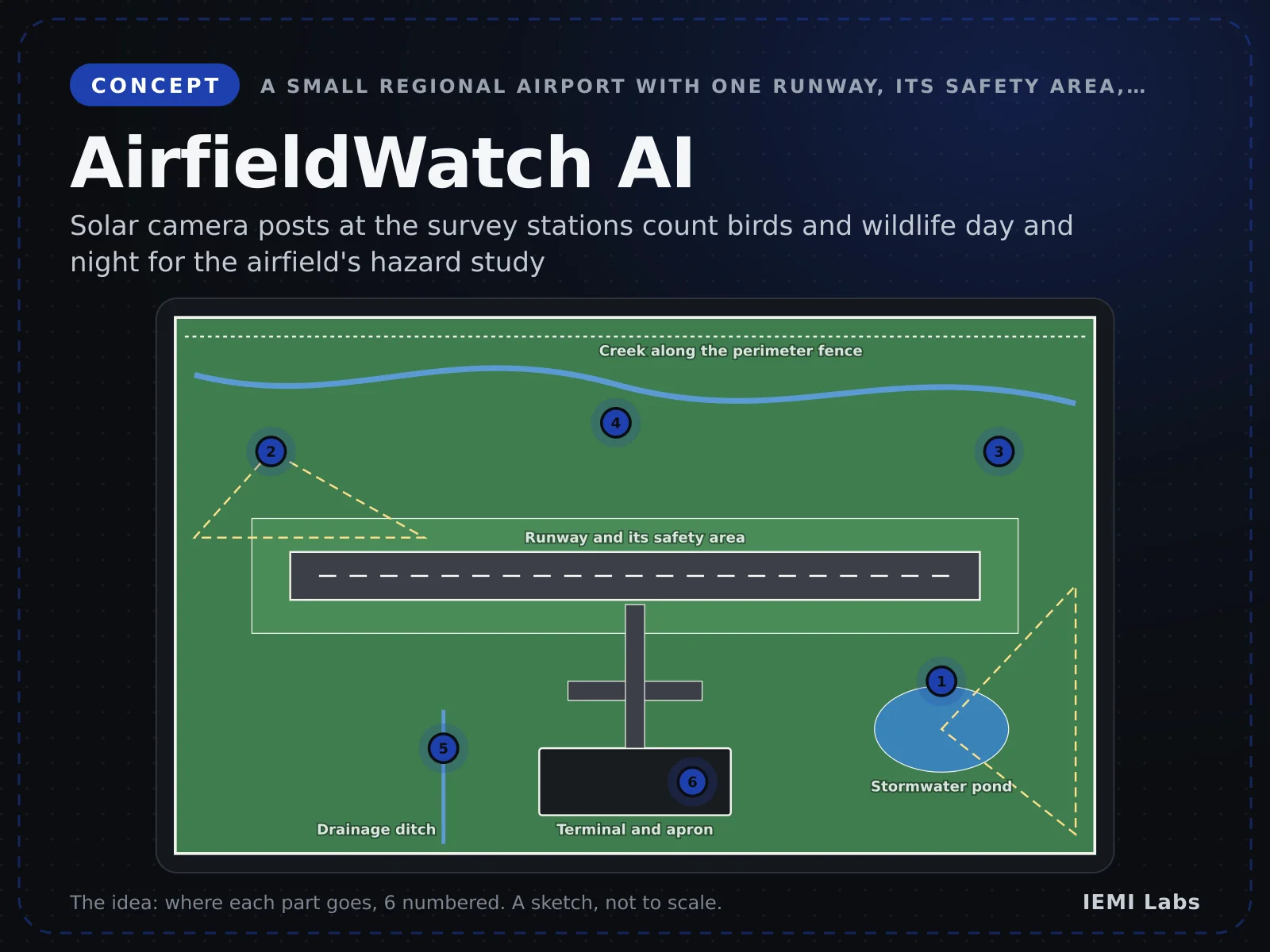
A thermal and visible camera turret on a mast that spots birds and wildlife near runways.
From $8,900 per turret
DetailsFlowCount AI
Concept · target $899