VisionConcept
ParkSense AI
A palm-sized edge box that plugs into your existing parking cameras.
- Counts free bays in real time
- Flags overstays and wrong parking
- Guides drivers to open spaces
From $499 per edge box
DetailsIEMI's one product for a classroom: the whiteboard, made smart
Software: $4 per month (teacher app and summaries)
Concept, not for sale yet. Tell us if you want it; that decides what we build.
Rate this idea and tell us what to change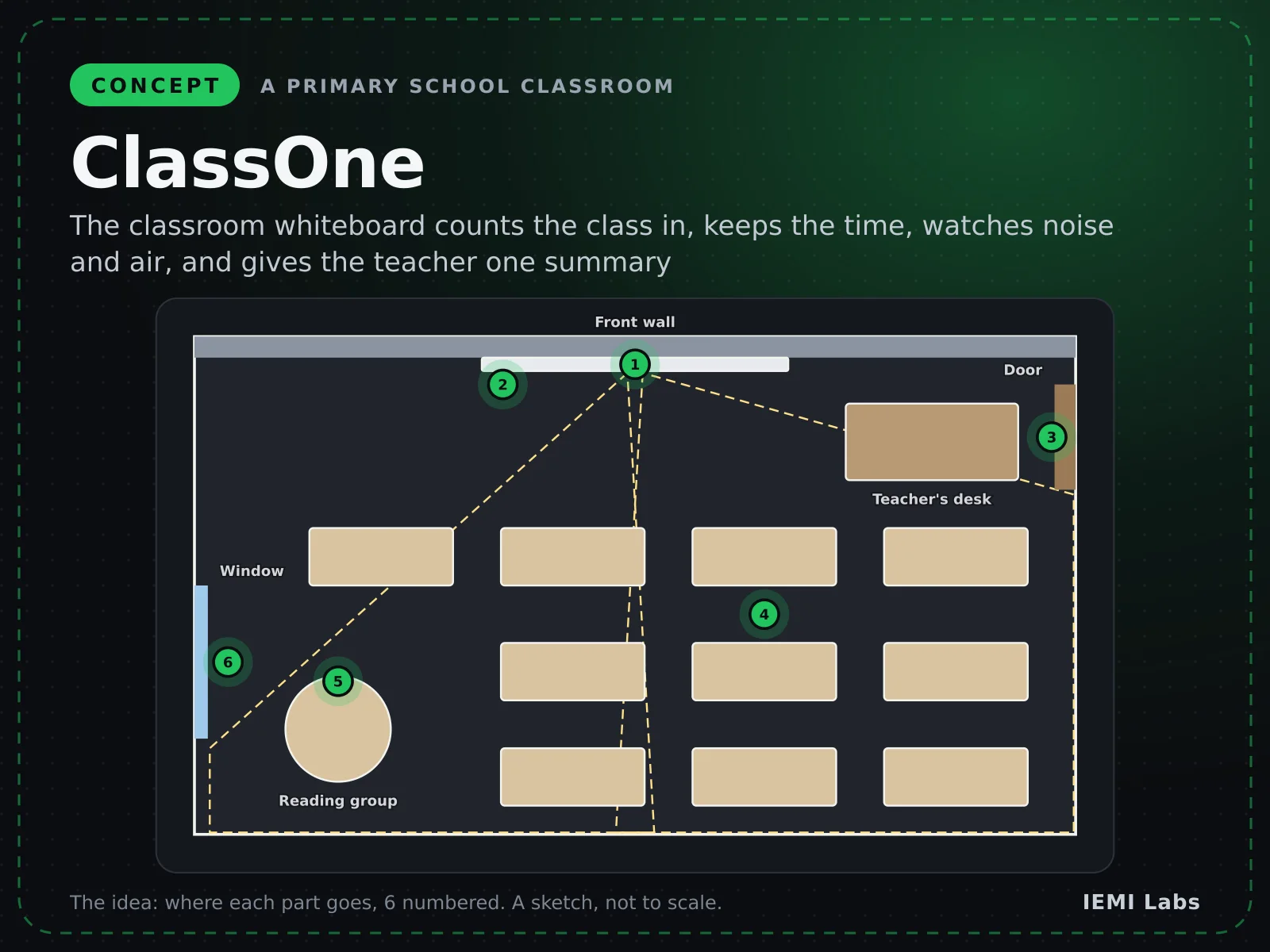
Drag to rotate · right-drag to move · scroll to zoom · click a part for its size and placeSwipe to rotate · pinch to zoom · two fingers to move · tap a part for its size
How it fits together
Scroll or tap a part. Press “See the 3D CAD design” to watch the model, built from our CAD, light each part up and show how it connects.
Real-time 3D render · drag to rotate · final design may varySwipe sideways to rotate
01
The whole ClassOne
The front whiteboard is the classroom's own helper: two head-counting cameras, a CO2 and sound sensor and a tap-in reader inside the header rail and pen tray feed one brain that checks the register, runs the timer and group rotations, calls noise and air, counts the room clear in a drill, shows each call on its time bar with a voice, and sends the teacher one summary.
02Brain
Raspberry Pi 5 (in the header rail)
The brain: it runs the classone-fw program
03
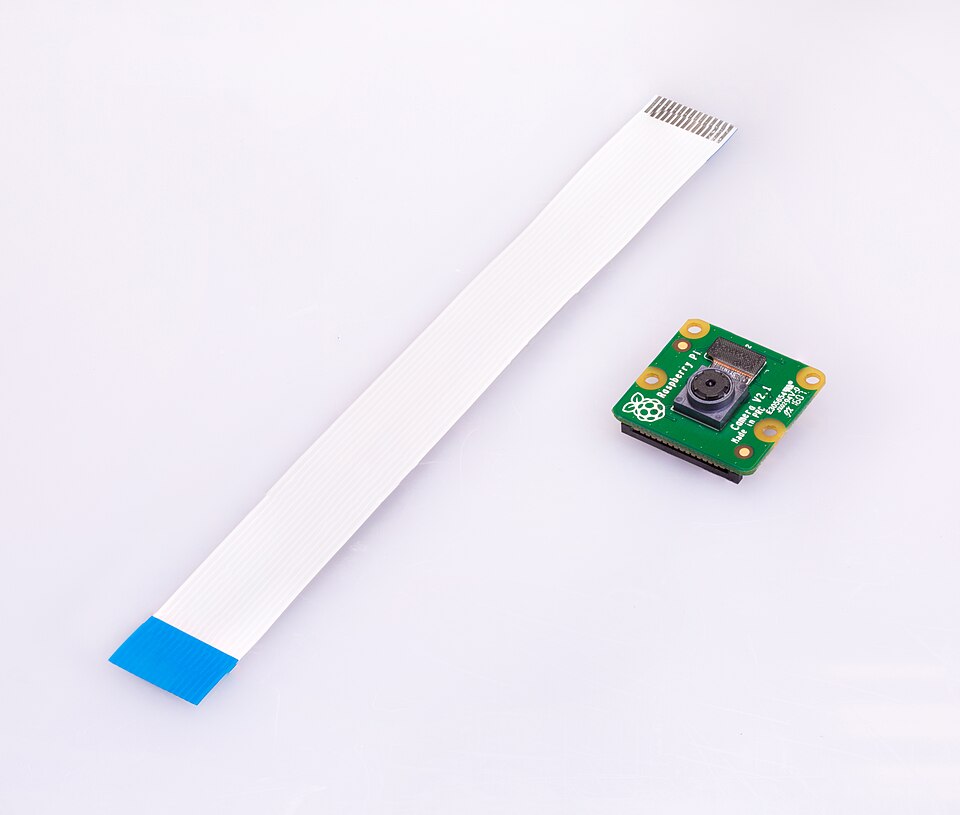
Two room cameras
Count heads at the desks, the door and the group table, and the room clear in a drill; never identify a face
Raspberry Pi 5 (in the header rail) · 2 x CSI-2 ribbon · Frames every 10 s, counted on the board, never stored
04
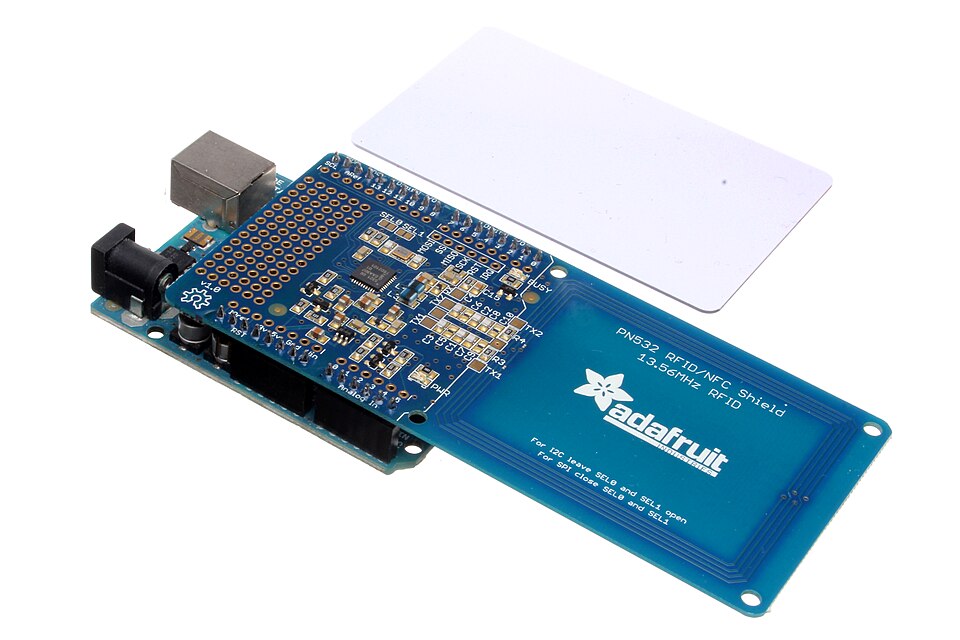
Tap-in reader
Pupils tap their card on the pen tray's left end as they come in: the names for the register
Raspberry Pi 5 (in the header rail) · I²C (cable up the board's side frame) · Card IDs
05
Air sensor
CO2, temperature and humidity for 'open the window' (1,500 ppm BB101, 1,100 ppm California) and too hot or cold
Raspberry Pi 5 (in the header rail) · I²C · CO2 ppm, °C, % RH every 30 s
06
Sound level mic
Measures the room's sound level and hears the fire alarm tone; records nothing
Raspberry Pi 5 (in the header rail) · I²S · Sound level (dB) and alarm tone flag
07
Time bar, call light and voice
The class time bar across the header, each call's colour, and the voice: 'blue group, your turn', 'time to open a window'
Raspberry Pi 5 (in the header rail) · One data wire + I²S · Time left, call colour, voice
08
Secure element and tamper switch
Signs each call and the register; marks the log and turns the cameras off if the header cover is opened
Raspberry Pi 5 (in the header rail) · I²C + GPIO · Signatures, tamper flag
09
All connected
7 key parts, one program, and your phone
Our circuit board · rev A-0
Every chip on one board we design, shaped to fit: the processor, cameras and sensors, Wi-Fi and Bluetooth, lights, sound and power. No plugs, ribbons or adapters. It is checked in our CAD against every part around it, and it arrives from the maker ready to run our software from a microSD card. Turn the model, or pick a part below to see where it sits.
Loading the 3D board…
Drag to turn · scroll to zoom · right-drag to move · click a partDrag to turn · tap a part
Every board-level number ClassOne's jobs depend on, checked against its target: camera pixels and frame rate, power and battery life, heat where it works, shock, radio and software. Every lesson from every one of our boards is a rule here, so this review runs again whenever any board teaches us something. Boards are ordered only when nothing fails and the items to prove are measured.
| Area | Check | Our board | Target | Status |
|---|---|---|---|---|
| Camera | Left room camera: a pupil's head (150 mm) at the back seat at 7.58 m | 42.7 px | ≥ 20 px | passes |
| Camera | Left room camera: frame rate the calls need | 1 fps at 3840 × 2160 | chip: 30 fps at 3840 × 2160 | passes |
| Camera | Left room camera: data rate vs its 4-lane link | 0.08 Gbps (10-bit) | ≤ 80 % of 3.564 Gbps | passes |
| Camera | Right room camera: a pupil's head (150 mm) at the back seat at 7.58 m | 42.7 px | ≥ 20 px | passes |
| Camera | Right room camera: frame rate the calls need | 1 fps at 3840 × 2160 | chip: 30 fps at 3840 × 2160 | passes |
| Camera | Right room camera: data rate vs its 4-lane link | 0.08 Gbps (10-bit) | ≤ 80 % of 3.564 Gbps | passes |
| Camera | Image processor load, all cameras | 17 Mpx/s | ≤ 480 Mpx/s (RK3576J ISP) | passes |
| Camera | AI engine time per frame | 6 TOPS | a head count from both views in under 2 s every 10 s, the group-table check at the same time | to prove on the dev kit |
| Power | Supply | a listed USB-C adapter giving 5 V 3 A (SELV) at the wall socket beside the board, into the inlet tab at the rail's right end | ≤ 70 % of the adapter (15 W) | passes |
| Power | Power cut | no cells: a power cut stops the board; the register log is written to eMMC on every change and signed | no lost register or air log in a power cut | to prove on the dev kit |
| Heat | RK3576J temperature, a sunny classroom in June (30 °C) with the heating or the sun on the wall | 52 °C | ≤ 85 °C (rated) | passes |
| Heat | Camera chips away from the processor | left camera 157 mm, right camera 61 mm from the RK3576J | ≥ 30 mm | passes |
| Shock | Shock and vibration | 50 g (est.) | standard parts | passes |
| Software | Starts our software from the microSD card, no setup | microSD socket with a hinged, latched lid (Amphenol 101-00660 class), fitted on every board: our software starts from the card | card socket fitted on every board, latched | passes |
| Software | Card power switch and protection | 1 power switch and 1 ESD array for 1 card socket | every socket: switched card supply, ESD on all 6 lines | fixed by the review |
| Software | The card wins the start | eMMC shipped empty; our loader reads the card first | the processor starts from the card every time | fixed by the review |
| Software | Card grade | industrial pSLC microSD (Kingston Industrial or Swissbit S-56u), −40 to 85 °C | rated for the heat, cold and writes | to prove on the dev kit |
| Software | Clip buffer for an unsure call | 98.8 s of 8-bit 1 fps video in 40 % of the 2 GB memory | ≥ 3 s | passes |
| Radio | Wi-Fi from inside an aluminium header rail | Wi-Fi 6 module on the light strip, its chip antenna 4 mm behind the opal cover, between the rail's top and bottom lips | certified Wi-Fi module, the school's WPA3-Enterprise Wi-Fi | to prove on the dev kit |
| Moisture | Conformal coating | coated | coated, sensors, sockets and antennas masked | passes |
| Fit | Board inside the product CAD, every part checked in 3D | not yet in the product CAD | nothing touches | to prove on the dev kit |
| Camera | Every head-count, room-clear and group call in a camera view | Left room camera: worst 30.7° / 21.7°; Right room camera: worst 43.6° / 21.7° | inside the 102 × 69.6° view | passes |
| Camera | Camera windows in the header cover | left view reaches 17.5 mm out from its axis, right 41.6 mm (the door, 80° from the cover); margins 6.7 and 1.5 mm | rev T windows 63 × 34, x ±42 to ±105 | fixed by the review |
| Fit | Camera tabs on their brackets | Left room camera: holder 0.3 mm behind the cover, barrel 6 mm, hinge 22.9 mm, lowest corner 2026.5 mm; Right room camera: holder 0.3 mm behind the cover, barrel 6 mm, hinge 22.9 mm, lowest corner 2026.5 mm | holder ≥ 0.3 mm off the cover, hinge within the 25 mm flex, clear of the rail floor and the light strip | to prove on the dev kit |
| Light | Time bar behind the opal cover | 96 RGB LEDs at 6.4 mm pitch across the 614 mm bar, 4 mm behind the cover; 1 A limit | one even bar seen from the back of the room; never glaring | to prove on the dev kit |
| Sensors | CO2 chip where the California rule puts it | Sensirion SCD43 in the left side-frame pocket, 1,388 mm (4.5 ft) up, behind the vent slots | 3 to 6 ft up, 5 ft from doors and windows (PUC 1625); ±75 ppm at 1,000 ppm | to prove on the dev kit |
| Sensors | Tap-in through the tray lid | NXP PN7160 with a 40 × 35 printed coil 3 mm under the 3 mm PETG lid | an NTAG215 card read at 20 mm or more, every tap | to prove on the dev kit |
| Fit | Leads and the bus | L1 about 1.08 m of 18 AWG, 0.1 V drop at 2.1 A; L2 + L3 about 2.46 m of 26 AWG, 0.27 V drop at the tray | L1 ≤ 0.15 V; tray ≥ 3.8 V for its 3.3 V supply; differential I²C ≤ 3 m (est.) | passes |
| Security | Cover and tray-lid tamper sensors | DRV5032 Hall switches 4 mm behind the header cover and under the tray lid, each held by a Ø6 × 3 magnet bonded in the cover or lid | cover or lid opened = logged and signed | to prove on the dev kit |
| Fit | Flex lengths | F1 61 mm up to the light strip; mic tail 163 mm along the rail floor | routed and held in the rev T CAD | to prove on the dev kit |
Before we order the first boards, we prove these on the RV1126B development kit or in the rev A tests:
Demo · 6 real-world moments
Short animated scenes of real moments: what happens today, what ClassOne does about it, and what lands on your phone. The same scenes play in the IEMI app.
8:48 on a Monday. Twenty-nine pupils come in, hang up coats and sit down; one forgets to tap the card.
Use cases
The teacher calls 29 names at the bell, while children are still arriving, and the register eats the first five minutes of the lesson.
Pupils tap their cards on the pen tray as they pass. At the bell the two header cameras count heads, never faces, and compare the count with the taps. A mismatch goes to the teacher as 'check', never as an absence.
The teacher raises a voice over the noise or claps for quiet, and keeps glancing at a separate timer on the desk.
The time bar across the header runs down for the task. The header mic measures the sound level only, records nothing, and compares the last 30 s with the teacher's level for group work. Too loud: the bar's edges turn amber with a soft chime.
The teacher keeps breaking off the reading group to check the clock, hush a table and call the next group across the room.
The board runs the room: the time bar shows each group's minutes, a minute's warning goes up at 10:11, and at 10:12 the bar flashes green while the speaker calls green group to the table. Noise and the rotation are logged for the summary.
Nobody notices the air getting stale until heads drop; a CO2 monitor, if there is one, sits on a shelf where nobody looks.
The SCD30 sensor in the board's left side frame, 4.5 ft up, reads CO2, temperature and humidity every 30 s. At 1,500 ppm, the BB101 call level (1,100 ppm in California schools, PUC 1625), the bar turns blue and the speaker says 'time to open a window'. Any 20 minutes over 2,000 ppm is logged.
The teacher leads the class out and has to trust that nobody stayed behind in the toilets or under a table; the marshal checks rooms one by one.
The header mic hears the alarm tone and the cameras count people out of the door, heads only. When nobody is seen for 10 s the bar turns green 'room clear'; if anyone is still seen, or a view is blocked, it says 'not clear' with the count.
The teacher starts the lesson and only notices an empty chair ten minutes later, if at all.
At the bell the header cameras count the room against the morning register. One short goes to the teacher as 'check', with the time since the bell; when the count matches again the check closes itself.
Demo scenes show how ClassOne and its app are designed to behave. ClassOne is in design; nothing here is recorded from real equipment yet.
What it is
IEMI's one product for a classroom: the front whiteboard, made smart, with one brain and one app.
What it does
Who it's for
Primary and middle schools, trusts and districts.
The idea
The problem today
A primary teacher runs the register, a visual timer, a noise light, a CO2 monitor and group rotations by hand while teaching 30 children. Each gadget is another box on the desk or the wall, none of them talk to each other, and the register still takes minutes every lesson. Camera systems that recognise faces are banned or restricted in many schools.
With ClassOne
The whiteboard is already on the front wall. ClassOne puts two room cameras that count heads (never faces), a CO2 and sound sensor, a time bar, a speaker and a tap-in reader inside its header rail and pen tray, so it takes the register with the teacher, runs the timer and group rotations, calls noise and air on its own lights, and counts the room clear in a fire drill.
How the parts connect
Every part, what links it to the brain, and how the data reaches your phone. A solid line is a cable; a dashed line is a radio link.
The program
while True:
    taps.update(nfc.read())                     # PN532, I2C
    db = mic.level_dba(); alarm = mic.alarm_tone()
    if tick(10): heads = merge(count(camL.frame()), count(camR.frame()))
    if tick(30): air = scd41.read()
    calls = register_rule(taps, heads, bell.now()) + timer_rule(plan)
    calls += noise_rule(db, plan.activity) + air_rule(air) + drill_rule(alarm, heads)
    for c in calls:
        if c.conf < c.line: c.kind = 'check'     # never guess
        atecc.sign(c); bar.show(c); voice.say(c); day.add(c)
    bar.time_left(plan.remaining())
    time.sleep(1)
To your phone
Teacher phones and the school's tablets (Android and iPhone)
One screen for each job ClassOne does.
No teacher at the front modeMs Okafor is at the reading table with blue group. The board runs the room: it shows 6 minutes left on the bar, asks for quiet when maths groups get loud, and calls green group to the table at 10:20.
RegisterThe bell goes at 8:50. 28 children have tapped their cards on the pen tray, but the board counts 29 heads. The bar shows amber 29 / 28 and the teacher's phone shows who has not tapped yet.
Noise and timerDuring group work the room creeps up to 68 dBA for 30 s. The bar's edges turn amber and a soft chime plays; the time bar keeps running down for the task.
AirAfter break, with the windows shut, CO2 reaches 1,520 ppm at 10:40. The bar turns blue and the board says 'time to open a window'. A child opens it; CO2 is 900 ppm by 10:55.
Fire drillThe alarm sounds at 14:05. The board hears the tone, counts the class out of the door and shows 'room clear' 54 s later on the bar and on the teacher's phone at the assembly point.
App screens with sample data. The interface is in development.
| Register | 28 tapped, 29 heads: check 1 | Each bell |
|---|---|---|
| Timer and groups | Blue group at the reading table, 4 min left | Live |
| Noise | Group work: 62 dBA, 2 'too loud' calls | Each lesson |
| Air | CO2 1,620 ppm at 10:40, window opened, 900 by 10:55 | Every 30 s |
| Fire drill | Room clear 54 s after the alarm | Each drill |
| Day summary | 4 registers, 1 check, CO2 average 1,050 ppm, 3 noise calls | End of the day |
The cameras count heads and never identify anyone; no video and no sound recording leaves the board. Only signed counts, card taps and air readings reach the school's own account, under the school's consent and data agreement.
CAD design · Design rev A, 28 Oct 2026: smart whiteboard that runs the room itself (7 calls, 5 alone, 2 assist), time bar and voice, ATECC608 and tamper switch inside; 12 camera views checked in the CAD; not built
| AI processor | Boards of our own inside the whiteboard: Rockchip RK3576J processor with 2 GB memory on the main board in the header rail. The bench whiteboard uses a Raspberry Pi 5 until the boards arrive |
|---|---|
| Sensors | Two Sony IMX415 8 MP camera chips on tabs at the header cover windows, lenses in the cover, turned 30° out and 20° down (heads only, never faces) · NXP PN7160 tap-in chip with a printed coil on the tray board under the pen tray lid · Sensirion SCD43 CO2 chip on the air board in the left side frame, 4.5 ft up (California PUC 1625) · Infineon IM69D130 mic on a tab over the rail's mic port (sound level and the alarm tone only); 96-LED time bar, speaker amp, security chip and Hall tamper switches |
| Connectivity | School Wi-Fi (WPA3-Enterprise), MQTT over TLS · BLE for admin pairing only · NFC for pupil cards |
| Power | Listed 5 V 3 A USB-C adapter at the wall socket, into a USB-C inlet at the header rail's end (only 5 V in the board): about 4.5 W counting and 10.5 W at peak with the time bar and a chime (est.) |
| Enclosure | The board itself: steel board in an aluminium frame, aluminium header rail and pen tray, printed opal header cover and tray lid |
| Dimensions | Board 2,400 x 1,200 mm; header 70 x 80 mm; tray 70 x 45 mm; 70 mm from the wall |
| Weight | About +1.2 kg over a plain board (est.) |
| Ingress rating | Indoor; spray tests in the first build |
| Register | Taps + head count |
|---|---|
| Timer | Time bar and groups |
| Noise | Level per activity |
| Air | CO2, temperature, humidity |
| Drill | Room clear count |
| Protrusion | 70 mm (ADA 307.2 limit 100) |
|---|---|
| Board | Same EN 14434 board and tray |
| Privacy | Heads counted, never faces; FERPA, GDPR |
| Not | The legal register or the fire marshal |
Targets for production units; they may change during development.
Hardware: $1,090 per classroom (smart whiteboard)
Software: $4 per month (teacher app and summaries)
Target pricing (stage 2, 28 Oct 2026). Bought separately, a plain whiteboard (about $400, est.), a Time Timer (about $42), a Yacker Tracker noise light (about $157), an Aranet4 CO2 monitor (about $190 to $250) and a tap-in attendance reader (about $300 + $5/month, est.) add up to about $1,150 + $5/month. Parts cost about $729 per classroom at qty 1 including the board (SCD30 CO2 sensor 29 Oct 2026, est.; other prices checked 28 Oct 2026; board est.).
$1,090 + $4/month
Every classroom job in the board on the front wall.
Indicative launch pricing in USD, excluding taxes and shipping. Final pricing is confirmed before any balance is charged.
Community
ClassOne is in development. Rate the idea, tell us what to change about the features, specs or price, and we'll build it with your feedback.
How much people want it
–
No ratings yet
Follow ClassOne
Get build updates and first access when pre-orders open.
No comments yet. Tell us what you'd want from ClassOne.
Questions
Tell us what this would save you, or ask anything. We reply within two business days.
A member of the IEMI Labs team will reply within two business days.
From the product lab · ideation phase
Smart equipment · legal on the field
It replaces the class's existing front whiteboard, at the same place on the front wall, with every part built in. Everything inside the board: brain, two room cameras, CO2 and sound sensor, time bar, speaker, secure element and tamper switch in the 70 x 80 mm header rail; the tap-in reader in the pen tray's left end. About +1.2 kg over a plain 2,400 x 1,200 board (est.); no timer, noise light, CO2 monitor or attendance reader on the walls or the desk.
| Rule | Limit | ClassOne |
|---|---|---|
| Wall object in a walkway (ADA 2010 Standards 307.2) | objects with a leading edge 685 to 2,030 mm above the floor may protrude no more than 100 mm from the wall | ✓ header rail and pen tray 70 mm deep, board 18 mm (the CAD asserts at most 100 mm) |
| Writing board for schools (EN 14434) | secure wall fixing, pen tray and edges without sharp corners, stable writing surface | ✓ the same board, frame, wall fixings and pen tray as a plain 2,400 x 1,200 board; header and tray are aluminium extrusions with rounded ends; fixing and tray load tests in the first build |
| Electrical safety at a child's reach (IEC 62368-1) | safety extra-low voltage in the classroom | ✓ 5 V only inside the board, from a listed 5 V 5 A USB-C adapter at the wall socket beside it |
| No biometric identification of pupils (GDPR Article 9; New York State Education Department 2023 ban on facial recognition in schools) | no face recognition or other biometric identification of children | ✓ the cameras count heads and people at the door only; names come from the pupils' own tap-in cards and the teacher's register; no face is stored or matched |
| Pupil records (FERPA, 34 CFR Part 99; COPPA with school consent) | education records shared only with the school; the school consents for under-13s; data minimised | ✓ the register and counts go only to the school's own account; no video leaves the board; the school signs the consent and data agreement before pairing |
| Classroom air (BB101, 2018) | average CO2 under 1,500 ppm over the school day, and not over 2,000 ppm for more than 20 minutes in a row | ✓ the SCD30 in the left side frame measures CO2 every 30 s; the board calls 'open the window' at 1,500 ppm and logs any 20 minutes over 2,000 |
| California Public Utilities Code 1625 (AB 841): classroom CO2 monitors in schools in the state's ventilation programme | wall-mounted 3 to 6 ft above the floor and 5 ft from the door and opening windows; shows CO2 to the teacher; a visual alert above 1,100 ppm; keeps past data including the peak; 400 to 2,000 ppm or more; certified within 75 ppm at 1,000 ppm; calibration no more than once every 5 years | ✓ SCD30 in the left side frame at 1,381 mm (4.5 ft), 4.7 m from the door (CAD asserts both); live CO2 on the teacher app; bar turns blue above 1,100 ppm in the California setting; signed log keeps every reading and the day's peak; 400 to 10,000 ppm; +-60 ppm at 1,000 ppm (Sensirion); self-calibration with a 5-year calibration statement to be certified in the first build (est.) |
| Same size and place as the plain board | fits the front wall where the old board hung | ✓ 2,400 x 1,200 board, header to 2,080 mm, tray from 755 mm (the CAD asserts the outline) |
| Radio (FCC Part 15 / RED) | certified modules | ✓ Wi-Fi and BLE on the Raspberry Pi 5's certified radio; 13.56 MHz NFC on the PN532 module |
Indoor school use under the school's own consent and data agreement. Electrical, radio and EN 14434 tests to be done before sale. It is a teaching aid: it never replaces the school's legal register or its fire marshal, and it makes no health claim about the air.
One piece of equipment does
Not done by the equipment, and why
Makes the call itself
With the teacher busy at a reading group or with one child, the board runs the room itself: it shows the time left, calls the next group, shows the noise level and asks for quiet, calls 'open the window' on high CO2, and counts the class back after break. Register mismatches and anything it is unsure of (a head it cannot see, a count that keeps changing) go to the teacher as 'check', never as an absence.
| Call | Who decides | How it sees it | How players see the call · if unsure |
|---|---|---|---|
| Register: present, missing tap or extra head< 10 s after the bell · about 97 % exact counts in a seated class (est.) | Helps the official | PN532 tap-in, both room cameras; person counter (int8) on the two camera views, merged; compared with the taps | Bar shows green when taps and heads match, amber with the number when they do not. Count unsteady or under 85 % confidence: 'check the register' to the teacher, no absence marked |
| Time up for the task or the lessonat the set time · exact | The equipment | clock, the teacher's plan; timer | Time bar runs down green to amber to red, then a chime. None needed |
| Reading group rotation: next groupat the set time · exact time; table occupancy about 95 % (est.) | The equipment | clock, room cameras (group table occupied); rotation plan + occupancy at the group table | Bar flashes the group colour and the speaker says 'blue group, your turn'. Table still busy: one minute's warning, then the call |
| Too loud for the activity30 s · about +-3 dB (est., calibrated in the first build) | The equipment | SPH0645 mic (sound level only, no recording); A-weighted level over 30 s against the teacher's level for that activity | Bar edges turn amber, then red with a soft chime. A single loud bang or the alarm tone: ignored for noise |
| Open the window: CO2 high30 s readings · +-(30 ppm + 3 %) from 400 to 10,000 ppm, so +-60 ppm at 1,000 ppm (Sensirion SCD30) | The equipment | SCD30 CO2, temperature and humidity (left side frame, 4.5 ft up); BB101 rule: 1,500 ppm call, 2,000 ppm for 20 min logged; California setting (PUC 1625): 1,100 ppm call, peak kept, more than once a week flagged to facilities | Bar turns blue and the speaker says 'time to open a window'. Sensor self-test fails: 'air unknown' to the teacher |
| Too hot or too cold for lessons5 min · +-(0.4 C + 0.023 x (T - 25 C)) (Sensirion SCD30 datasheet) | The equipment | SCD30 temperature and humidity; temperature against the school's limits | Shown to the teacher and in the summary. None needed (logged only) |
| Fire drill: room clear< 10 s after the last person leaves · about 97 % (est.) | Helps the official | mic (alarm tone), both room cameras; alarm tone detector + person counter | Bar turns green 'room clear' or red with the count; the teacher's phone shows the same. Anyone still seen, or a view blocked: 'not clear' to the teacher's phone; the fire marshal's check stands |
Nothing added to the field
The only things in play are the items the laws already put there:
Desks, chairs, the teacher's desk, the door and the windows stay as they are; no timer, noise light, CO2 monitor, card reader or camera on the walls
Built to take the hits
Secure by design
You can, for about $400 plus the board: an Aranet4, a Yacker Tracker and a Time Timer are three more boxes with three batteries or plugs, and none of them takes the register or knows the room is clear in a drill. ClassOne does all of those jobs from the board you already teach at, on one time bar, with one summary.
It is designed to. California's rule for schools in its ventilation programme (Public Utilities Code 1625) asks for a wall monitor 3 to 6 feet up and 5 feet from the door and opening windows, an alert above 1,100 ppm, a record of the peak, and accuracy within 75 ppm at 1,000 ppm. ClassOne's Sensirion SCD30 sits in the board's side frame 4.5 feet up, reads within about 60 ppm at 1,000 ppm, turns the time bar blue above 1,100 ppm in its California setting and keeps every reading and the day's peak. Our own accuracy and 5-year calibration statement come with the first build's tests.
No. The two cameras count heads only. Names come from the cards pupils tap and from the teacher. No video or sound recording leaves the board, and it runs with the cameras off if the school prefers.
$1,090 per classroom plus $4 a month for the teacher app and summaries (target). The board, timer, noise light, CO2 monitor and tap-in reader it replaces cost about $1,150 plus $5 a month bought separately (est.).
A plain whiteboard, a visual timer, a noise light, a CO2 monitor and a tap-in attendance reader. It does not fold any IEMI product: IEMI Gecko stays a robot kit for AI lessons, and StudyOne covers homework at home.
It checks it. At the bell it compares card taps with the head count and shows green or the number to check. The teacher confirms; the legal register stays the teacher's.
It says check and never marks a child absent on a guess.
Yes. With the cameras off it still runs taps, the timer, groups, noise and air.
It is the same board, frame and tray as a plain board, 70 mm from the wall (under the ADA 100 mm limit), with only 5 V inside from a listed supply. Lab tests come before sale.
No. ClassOne is the classroom whiteboard, bought by a school or trust, and runs the room: register, timers, group rotations, noise, CO2, heat and fire-drill room clear. StudyOne is a desk lamp a parent buys for one child doing homework at home. They share parts and one app, not a job.
A palm-sized edge box that plugs into your existing parking cameras.
From $499 per edge box
Details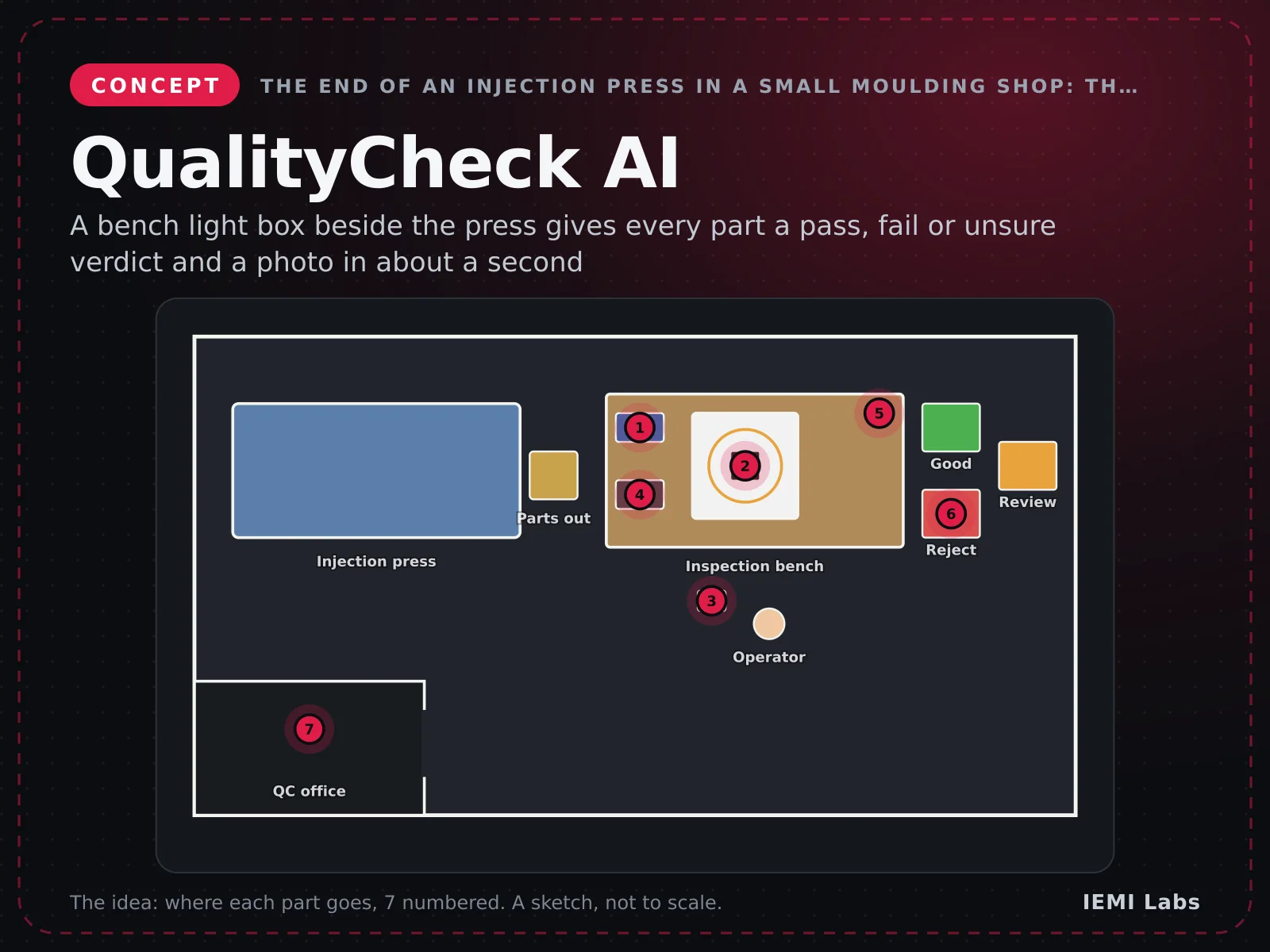
A compact camera with its own light that mounts above a production line.
From $2,499 per station
Details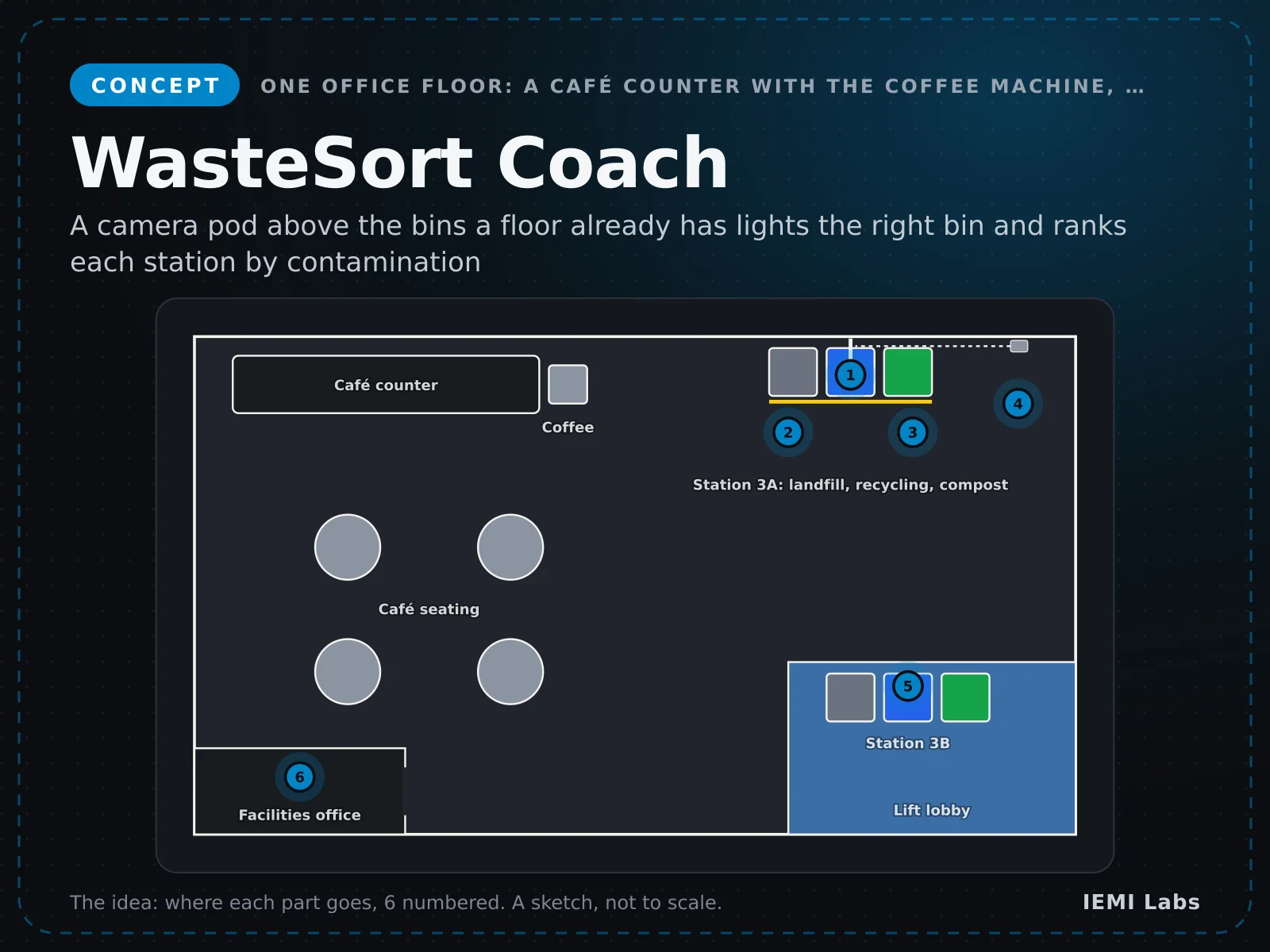
A clip-on camera coach for the recycling bins you already have.
From $299 per 3-bin station
DetailsClassOne
Concept · target $1,090