
VisionConcept
ParkSense AI
A palm-sized edge box that plugs into your existing parking cameras.
- Counts free bays in real time
- Flags overstays and wrong parking
- Guides drivers to open spaces
From $499 per edge box
DetailsOne ceiling camera per aisle: shelf gaps, spills, the wet-floor sign, floor walks and footfall
Software: $129 per store per month (extra heads $15/month)
Concept, not for sale yet. Tell us if you want it; that decides what we build.
Rate this idea and tell us what to change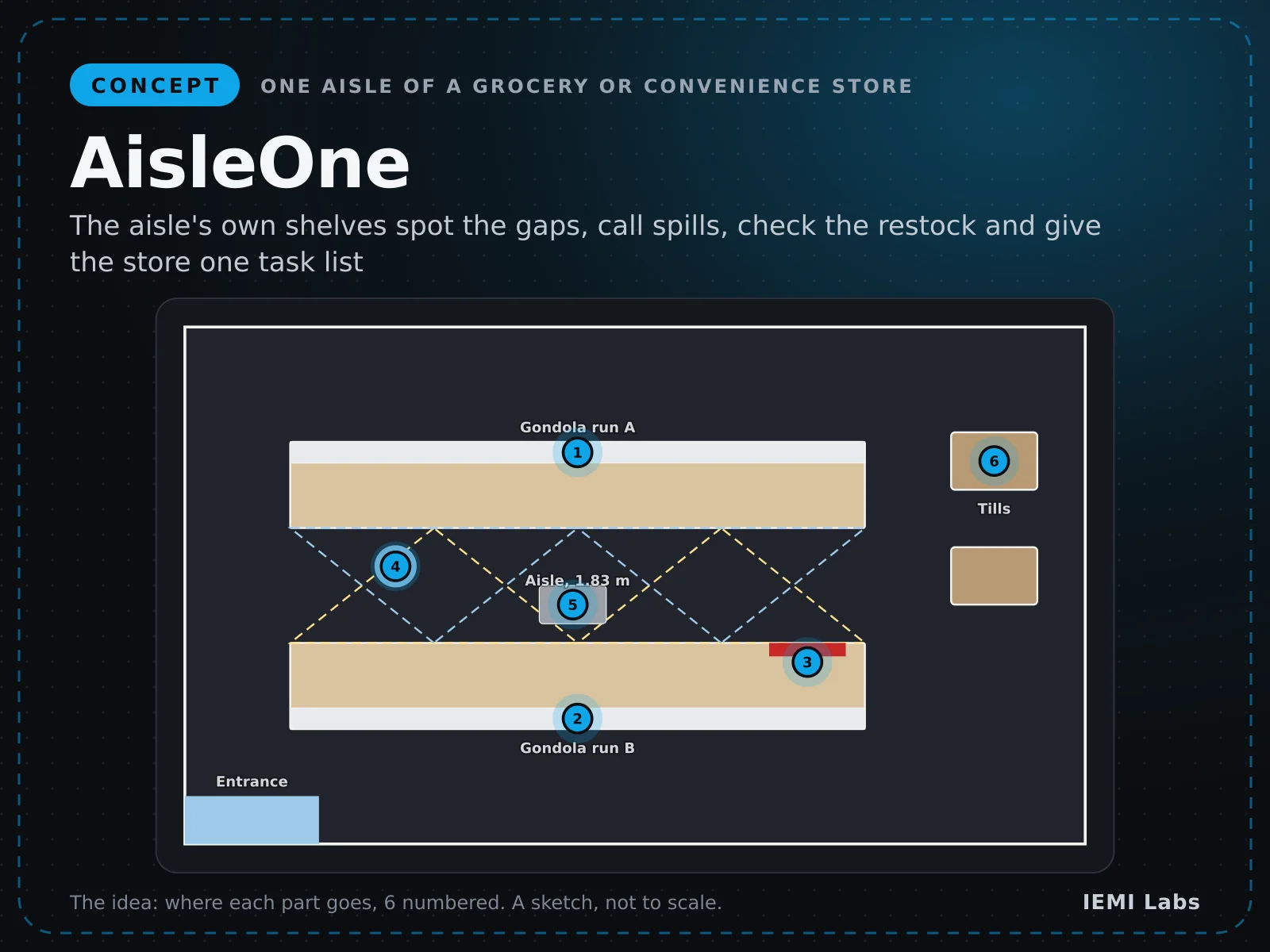
Drag to rotate · right-drag to move · scroll to zoom · click a part for its size and placeSwipe to rotate · pinch to zoom · two fingers to move · tap a part for its size
How it fits together
Scroll or tap a part. Press “See the 3D CAD design” to watch the model, built from our CAD, light each part up and show how it connects.
Real-time 3D render · drag to rotate · final design may varySwipe sideways to rotate
01
The whole StoreEye
One ceiling camera per aisle counts shoppers as dots, takes a shelf photo only when nobody is in view, and watches the floor for spills and the wet-floor sign. Staff tap a plaque on each floor walk. Everything lands in one app.
02Brain
Raspberry Pi Zero 2 W (in the ceiling head)
The brain: it runs the storeeye-head program
03
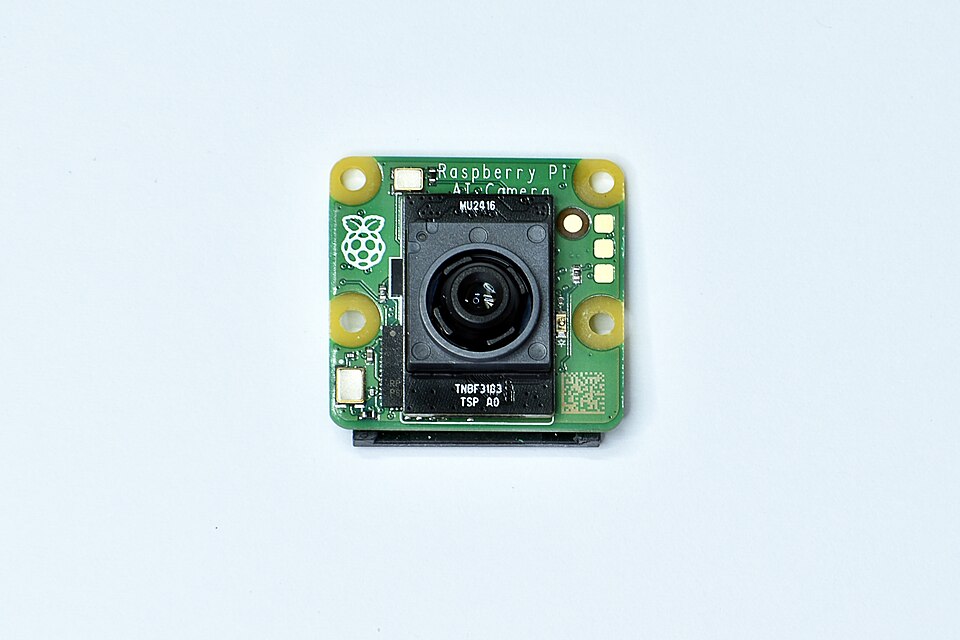
AI Camera (Sony IMX500)
Finds people on the chip for counts; takes shelf stills and floor frames
Raspberry Pi Zero 2 W (in the ceiling head) · CSI-2 ribbon cable · People boxes, 12 MP stills, small grey frames
04
Lens window
Gives the camera a clean view down the aisle; wipes clean
Raspberry Pi Zero 2 W (in the ceiling head) · Optical path · Light onto the sensor
05
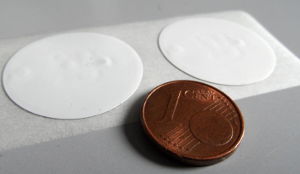
Walk checkpoint
Proves a staff phone stood at this aisle end on a floor walk
IEMI cloud · NFC tap to a staff phone, then HTTPS · Signed tap counter
06
USB Ethernet adapter
Sends results over the wired cable, not the shop Wi-Fi
Raspberry Pi Zero 2 W (in the ceiling head) · USB OTG (micro-USB) · Counts every 5 s, tasks and alerts
07
PoE splitter
Powers the head from the one ceiling cable
Raspberry Pi Zero 2 W (in the ceiling head) · 5 V micro-USB lead · 5 V power
08
Status light
Green means counting; amber means no uplink
Raspberry Pi Zero 2 W (in the ceiling head) · GPIO 17 pin · LED on and off
09
All connected
7 key parts, one program, and your phone
What it is
One small ceiling camera per shop aisle that does four store jobs.
What it does
Who it's for
Independent grocers, convenience stores and small chains.
How the parts connect
Every part, what links it to the brain, and how the data reaches your phone. A solid line is a cable; a dashed line is a radio link.
The program
while True:
    req = picam2.capture_request()              # IMX500 boxes + 320x240 grey frame
    people = [b for b in imx500.get_outputs(req.get_metadata()) if b.score >= 0.45]
    tracks = tracker.update(people)             # IDs in memory only, reset every 10 min
    for line in lines: counts[line.id].add(line.crossings(tracks))
    zones.update(tracks)                        # aisle dwell, till queue length
    if now() >= next_floor:
        floor.update(req.make_array('lores'), mask=people)   # wet patch? yellow sign?
        next_floor = now() + 1
    req.release()
    if now() >= next_shelf and not people:      # shelf still only when nobody is in view
        shelf.score(picam2.switch_mode_and_capture_array(still_cfg))
        next_shelf = now() + 900
    if now() - last_pub >= 5:
        mqtt.publish(f'{base}/state', json.dumps(snapshot(counts, zones, floor, shelf)))
        last_pub = now()
To your phone
Staff and owner phones, manager browser and email
One screen for each job StoreEye does.
Empty shelfShelf 3 in aisle 4 has emptied since the last check. With nobody in view, the camera takes a photo and sends a restock task.
Possible spillA jar breaks in aisle 6. The camera sees a new patch on the floor and sends staff a floor photo, with any person blanked out.
Floor walksOn each round staff tap their phone on the aisle-end plaque. Every tap is timed, so there is a record the floor was walked.
Queues and footfallOn a busy Saturday the till queue grows. The owner sees the wait and footfall live, and the Monday email adds conversion.
App screens with sample data. The interface is in development.
| Empty-shelf task | Aisle 4 left, shelf 3, about 40% empty | When a row empties |
|---|---|---|
| Possible spill | Aisle 6 floor, 3 min, no sign yet | When a floor patch changes |
| Wet-floor sign | Aisle 6 sign out 14:02 | On each change |
| Walk tap | Aisle 6 end, verified | Each tap |
| Till queue and wait | 5 in line, about 4 min | Every 5 s |
| Footfall and conversion | 412 in, 38% bought | Hourly; Monday email |
People are counted as dots on the camera chip and never stored. Shelf photos are taken only when nobody is in view. A possible-spill photo is a small floor crop with any person blanked out.
CAD design · Design rev A, 27 Oct 2026: CAD, fit checks and assembled 3D model done; not built
| AI processor | Raspberry Pi Zero 2 W in each ceiling head, the one brain |
|---|---|
| Sensors | Raspberry Pi AI Camera (Sony IMX500, 12 MP) with on-chip person detection · NXP NTAG 424 DNA walk tags in printed plaques |
| Connectivity | 802.3af PoE Ethernet, MQTT over TLS · Staff phone NFC taps over HTTPS · Square, Shopify POS and Clover sales link |
| Power | 802.3af PoE, about 3.3 W per head (est.); no batteries |
| Enclosure | White PETG ceiling head 140 × 120 × 44 mm on a no-drill T-bar clip, with a 30° wedge for aisle-end heads |
| Dimensions | Head 140 × 120 × 44 mm; with the aisle wedge about 100 mm deep |
| Weight | ~250 g per head (est.) |
| Ingress rating | Indoor only |
| Shelf gaps | Rows in view scored every 15 min; task with photo; restock timed |
|---|---|
| Floor | Possible spill and wet-floor sign in the aisle; signed walk taps |
| Counts | Door in and out, parties, aisle dwell, till queue and wait |
| Sales | Conversion with Square, Shopify POS or Clover; Monday email |
| Ceiling | 15/16 in T-bar clip or two screws; 2.6–4 m high |
|---|---|
| View | Floor to about 4.4 m, top shelf to about 2 m (est.); long aisles get a head at each end |
| Power | One PoE cable per head; injector if no PoE switch |
| Time | About 15 minutes per head |
Targets for production units; they may change during development.
Hardware: $2,490 store pack: 8 heads (6 aisles, door, till) + 12 walk plaques; extra heads $299
Software: $129 per store per month (extra heads $15/month)
Target pricing. For a 6-aisle store, our four products bought separately (ShelfScan 6 cameras $1,794 + $174/month, SpillGuard edge box and 2 domes $597 + $199/month, StoreSense $287 + $15/month, FlowCount 2 sensors $1,798 + $78/month) add up to about $4,476 + $466/month (est.). Parts cost about $132 per head at qty 1 (est.).
$2,490 + $129/mo
Every job for a 6-aisle store.
$299 + $15/mo
Longer aisles, a back room or a second till.
Custom
Small chains of up to 10 stores.
Indicative launch pricing in USD, excluding taxes and shipping. Final pricing is confirmed before any balance is charged.
Community
StoreEye is in development. Rate the idea, tell us what to change about the features, specs or price, and we'll build it with your feedback.
How much people want it
–
No ratings yet
Follow StoreEye
Get build updates and first access when pre-orders open.
No comments yet. Tell us what you'd want from StoreEye.
Questions
Tell us what this would save you, or ask anything. We reply within two business days.
A member of the IEMI Labs team will reply within two business days.
From the product lab · ideation phase
It does the job of ShelfScan (empty-shelf tasks), SpillGuard (possible spills, the wet-floor sign log and floor-walk taps), StoreSense (footfall, conversion and the Monday email) and FlowCount (queue length and wait) with one ceiling camera per aisle and one app. For a 6-aisle store our four products cost about $4,476 + $466 a month separately; StoreEye is $2,490 + $129 a month (target).
No. It flags a possible spill so someone can go and look, and keeps a record of walks, spills and the sign. It does not prevent falls and is not a safety system. Ask your lawyer before you rely on the timeline, because a missed walk is a record too.
No. People are found as dots on the camera chip and never stored. Shelf photos are taken only when nobody is in view, and a possible-spill photo is a small crop of the floor with any person blanked out. Shops still need camera signs.
Not for every row. From the ceiling it sees the lower shelves to about 4.4 m and the top shelf to about 2 m, so long aisles need a head at each end. ShelfScan's shelf-edge cameras stay the better choice for a few money bays.
No. Each head works out its own results and sends them over its one network cable, which also powers it.
No. It is a concept in design. The CAD and fit checks are done, but it has not been built or tested. We are not taking orders, reservations or deposits.
A palm-sized edge box that plugs into your existing parking cameras.
From $499 per edge box
Details
A compact camera with its own light that mounts above a production line.
From $2,499 per station
Details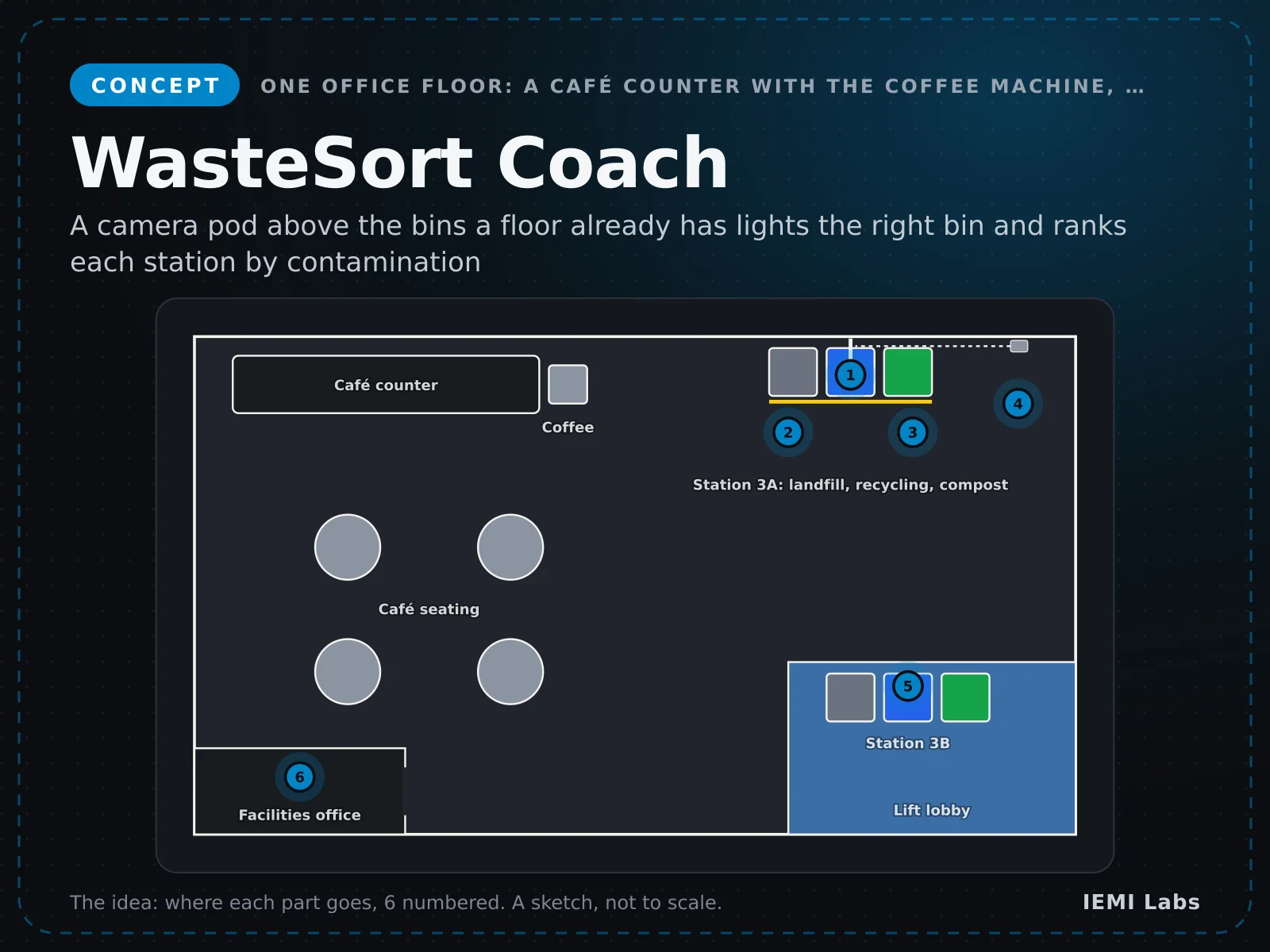
A clip-on camera coach for the recycling bins you already have.
From $299 per 3-bin station
DetailsStoreEye
Concept · target $2,490