Drag to rotate · right-drag to move · scroll to zoom · click a part for its size and placeSwipe to rotate · pinch to zoom · two fingers to move · tap a part for its size
How it fits together
SplitBlock, part by part
Scroll or tap a part. Press “See the 3D CAD design” to watch the model, built from our CAD, light each part up and show how it connects.
Real-time 3D render · drag to rotate · final design may varySwipe sideways to rotate
01
The whole SplitBlock
A block-mounted pod counts laps and splits using a camera that outputs only head boxes, and shows them at the wall and on a phone.
02Brain
Raspberry Pi Zero 2 W (LanePod)
The brain: it runs the splitblock pod service program
03
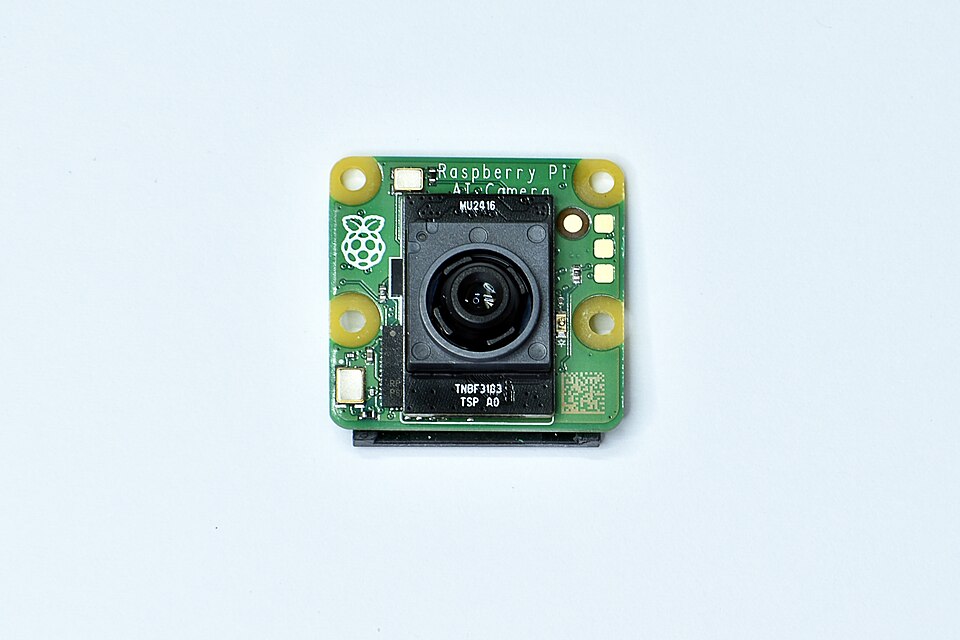
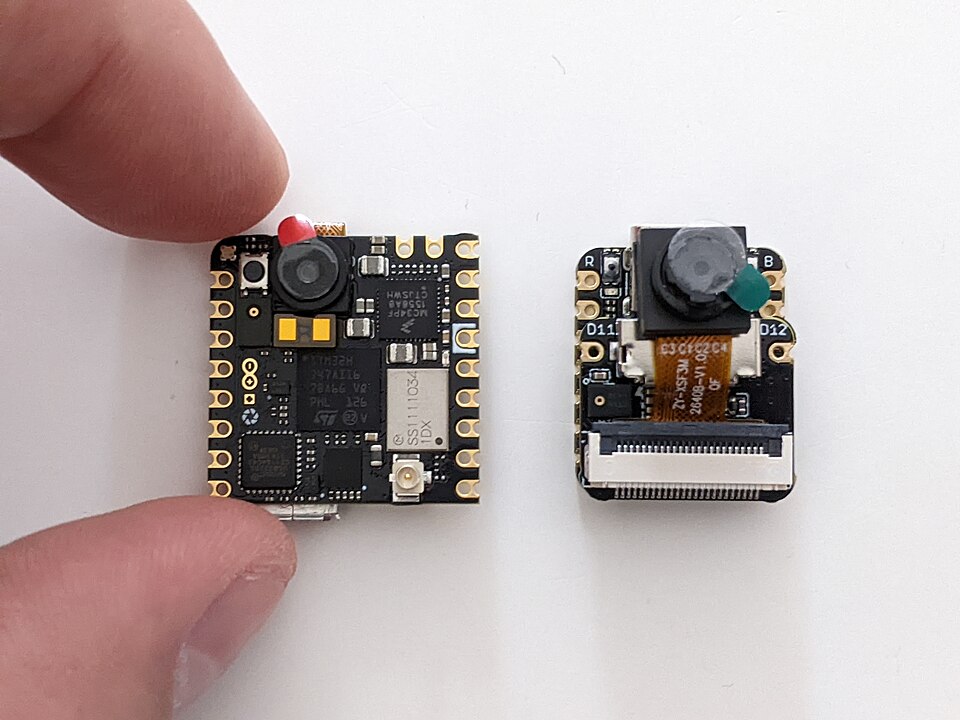
AI camera (IMX500)
Finds swimmers' heads on the sensor; no images leave it
Raspberry Pi Zero 2 W (LanePod) · CSI-2 ribbon cable · Head boxes at 30 fps
04
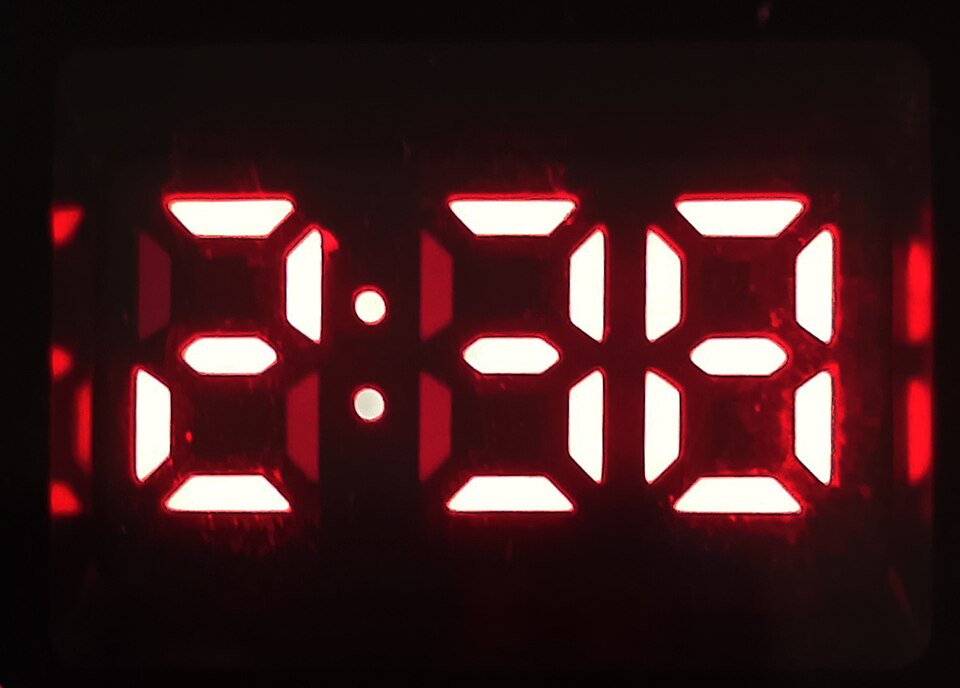
4-digit display
Shows the lap count or split at the wall
Raspberry Pi Zero 2 W (LanePod) · I²C (4 wires) · Lap and split digits
05
PowerBoost 1000C
Charges the cell and lifts it to 5 V
Raspberry Pi Zero 2 W (LanePod) · 5 V power lead · 5 V power
06
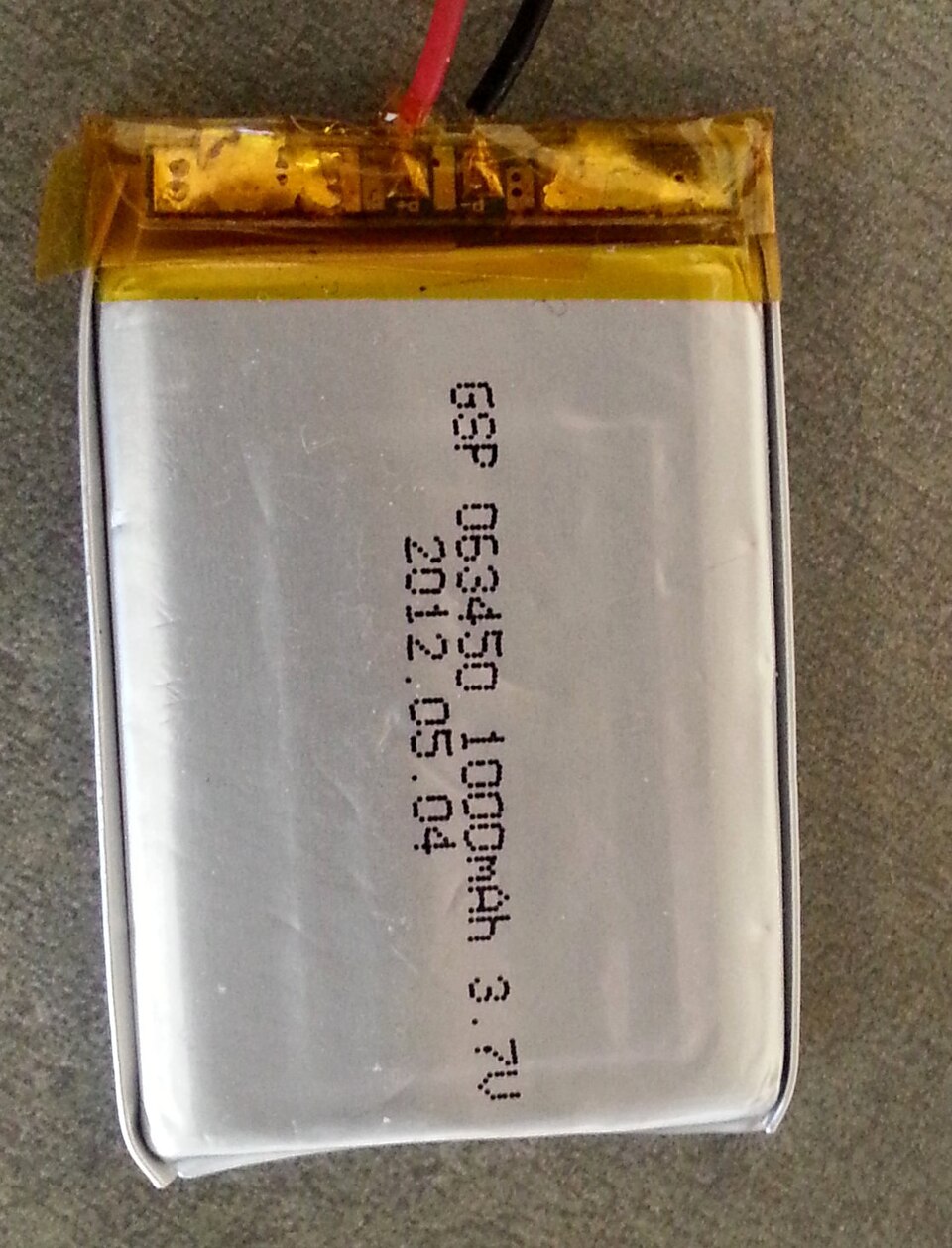
10,050 mAh Li-ion pack
Runs the pod for about 12 hours
Raspberry Pi Zero 2 W (LanePod) · Lead to PowerBoost · 3.7 V battery power
07
StartBox horn listener
Hears the start horn and sends one start message
XIAO ESP32-S3 · ESP-NOW radio · One start message
08
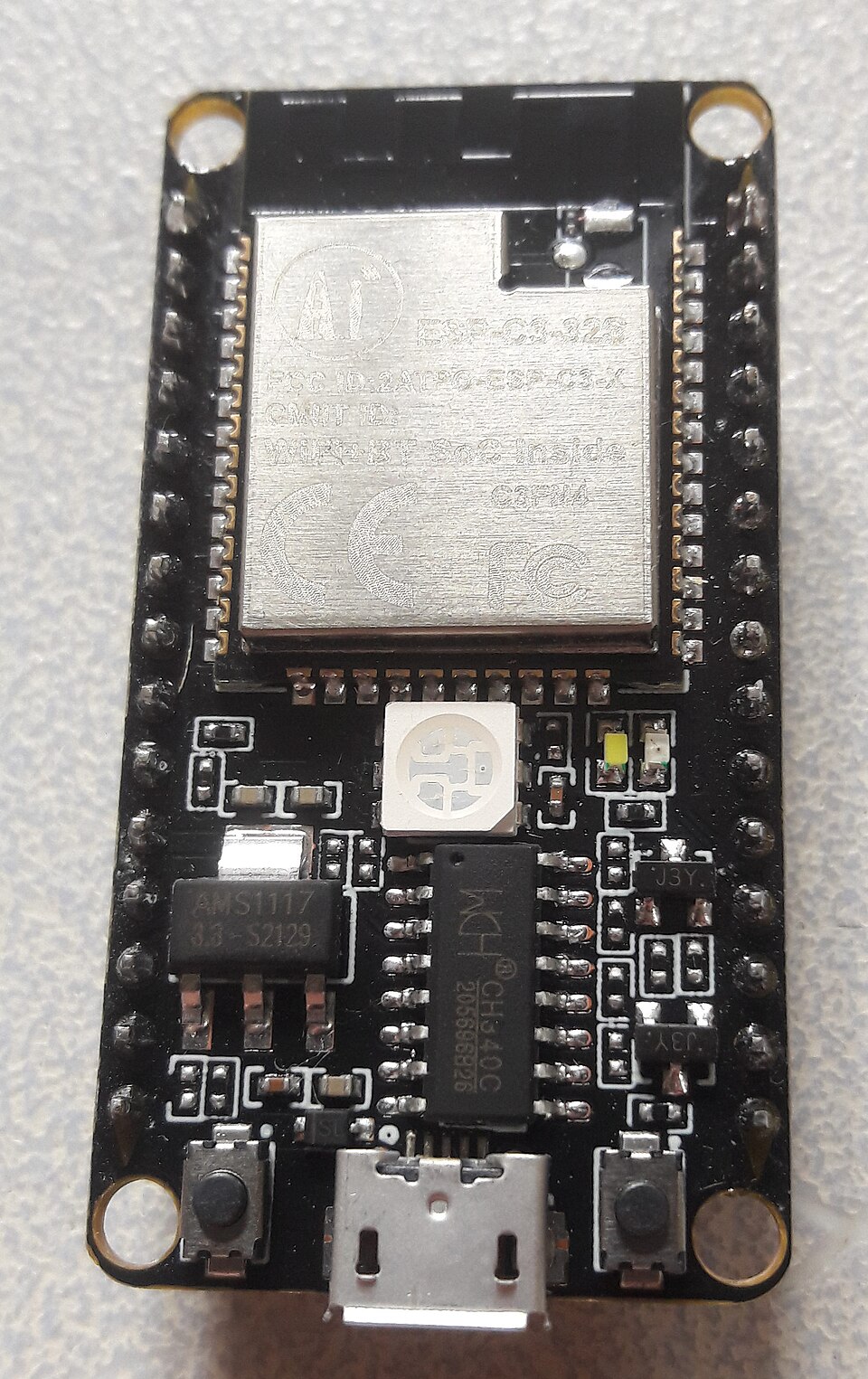
TapGrip timer handle
Times start to stop on the timekeeper's button press
XIAO ESP32-C3 · ESP-NOW radio · Lane time and stop press
09
All connected
7 key parts, one program, and your phone
What it is
A small camera and display that clamps on a pool's starting block, one per lane.
What it does
Counts every swimmer's laps
Takes 50 splits without wearables
Times club galas from the starter's horn
Fills a lane grid for the coach
Who it's for
Age-group and masters swim clubs, and high-school and college teams.
How the parts connect
SplitBlock, wired up
Every part, what links it to the brain, and how the data reaches your phone. A solid line is a cable; a dashed line is a radio link.
Drawn from the SplitBlock parts list. The 3D view above is built separately, from the CAD.
The program
What controls SplitBlock
Runs on
Raspberry Pi Zero 2 W
Written in
Python 3 with Picamera2
System
Raspberry Pi OS Lite
AI model
Head detector on the IMX500 chip itself
1Read head boxes from the camera chip, never images
2Keep one track per head in the 0.6 to 6 m zone
3Time each crossing of the 1.5 m line
4Match it to the swimmer expected next at the wall
5Show the lap and split; send it to the coach
splitblock pod service.pymain loop
cam = Picamera2()
cam.start()                                  # IMX500 outputs tensors only
tracker = HeadTracker(zone_m=(0.6, 6.0), line_m=1.5)

while True:
    meta = cam.capture_metadata()
    boxes = imx500.get_outputs(meta)            # head boxes + confidence
    for wall in tracker.update(boxes, t=meta['SensorTimestamp']):
        sw = assign(wall, order, last_split)    # next swimmer expected
        split = wall.in_t - last_in[sw]
        last_in[sw] = wall.in_t
        display.show(lap_count(sw), split)      # I2C 7-segment
        ws.send(json.dumps({'t': 'wall', 'lane': LANE, 'sw': sw, 'split50': split}))
To your phone
How the data reaches SplitBlock coach page
Coach phone or tablet browser
Lane pod
Wi-Fi · WebSocket
Lane-1 pod
Own Wi-Fi access point
Coach phone
What you see in the app
One screen for each job SplitBlock does.
07:40
SplitBlock coach pageLaps and splits
Lane 3 · Swimmer B07:40
Last 50 in 36.41 s. Rep 6 of 10, on track for 1:13.
Rep
6 of 10
Last 50
36.4 s
Pod battery
71%
Swimmer B, second 50 each rep (s)
Laps and splitsFour swimmers share lane 3 on a 10 × 100 set. The pod on the block shows each one's lap and split at the wall, with nothing to wear.
07:42
SplitBlock coach pagePass check
Possible pass · Lane 307:42
C and D within 1.5 s on the same side. Tap to confirm.
Flagged passes
2
Swimmers
4
07:38Rep 5: all on send-off
07:42Possible pass: C and D
07:42Coach confirmed D ahead
07:43Order swapped for rep 7
Confirm pass
Pass checkSwimmer D catches C mid-set and overtakes. The pod could mix them up, so it asks the coach to confirm instead of guessing.
10:13
SplitBlock coach pageGala timing
Heat 4 · Times in10:13
Horn heard at 10:12. 5 of 6 lanes timed; lane 5 needs a backup time.
Lanes timed
5 of 6
Fastest
31.84 s
Heat 4 lanes
Lane 1
Lane 2
Lane 3
Lane 4
Lane 5
Lane 6
Gala timingAt a club gala the StartBox hears the starter's horn and starts every timekeeper's handle at once. Each timekeeper just presses stop at the touch.
App screens with sample data. The interface is in development.
What the app gets
Data SplitBlock sends to the app
Wall split
36.41 s per 50
Each wall
Lap count
Lap 6
Each wall
Pass flag
Possible pass, lane 3
On close crossings
Set plan
10 × 100 on 1:40
Each set
Pod battery
71%
Every minute
No images are read out in normal use. Swimmers show as initials; data stays on the pods.
CAD design · Rev A3 TakeOff design complete, all hardware fit-checked in CAD, gala, relay and start logic checked in software, not built
Designed in code, checked in 3D
11 printed parts, each a single closed solid
Every bought part fitted inside and checked for collisions
Assembled exactly as shown in the 3D CAD view (the button on the picture at the top)
Raspberry Pi Zero 2 W (tracking, display, Wi-Fi); detector runs on the IMX500 sensor
Camera
Raspberry Pi AI Camera (Sony IMX500), 67 × 53° view, 30 fps
Sensors
Adafruit 1.2 inch 4-digit 7-segment lane display · 12 mm IP67 push button (wake / lane reset) · GalaTime TapGrip: 19 mm IP67 stop button, 0.91" OLED, haptic · GalaTime StartBox: MAX9814 mic at the horn, 3.5 mm wired start-line input · TakeOff: Velostat pressure strip on the block edge, XIAO ESP32-S3 Sense camera looking down at the wall
Connectivity
Wi-Fi to the lane-1 pod, which runs the access point and coach web page · WebSocket JSON messages (no images) · GalaTime: one ESP-NOW start message to every TapGrip; results page and CSV export from the StartBox
Power
Adafruit 10,050 mAh Li-ion pack with PowerBoost 1000C, about 11.8 h per charge (est.); IP67 USB-C socket, charged off the wet deck
Enclosure
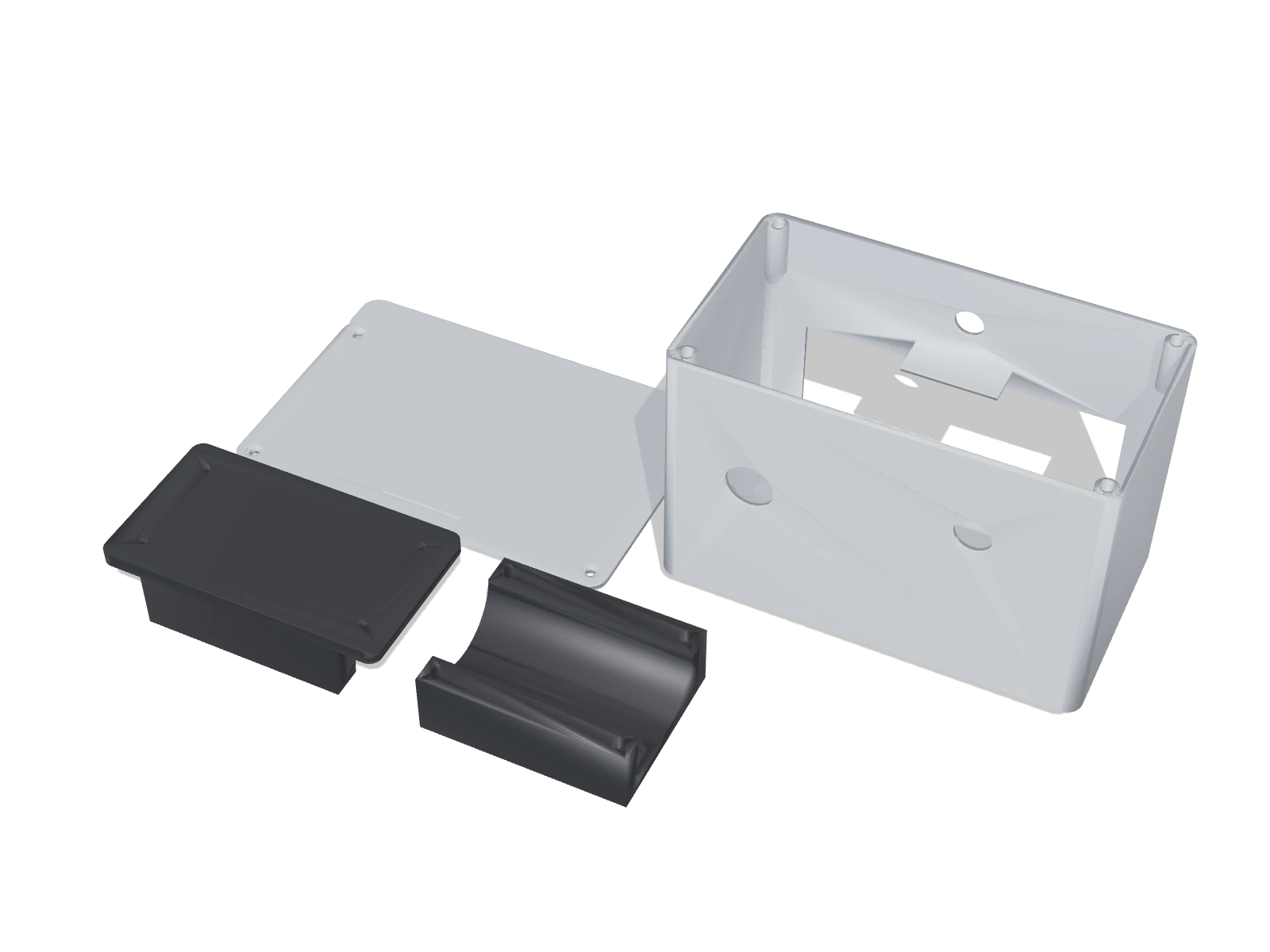
White ASA case with acrylic display and camera windows, gasketed lid with drip visor; black ASA split clamp for the block tube; designed to be splash-proof, no IP claim
Dimensions
Case about 140 × 80 × 90 mm
All target specifications
Counting and timing (target, computed)
Counting and timing (target, computed) target specifications
Split line
1.5 m from the wall (1.0 m for open turns)
Split timing
About 8–17 ms (est.)
Lap count
Every wall at the block end
Lane traffic
Several swimmers sent 3–5 s apart
Camera and privacy
Camera and privacy target specifications
Camera
Sony IMX500 with on-sensor detector
Frame rate
30 fps
Images
None stored or sent in normal mode
Working zone
About 0.6–6 m from the wall
Power and fit
Power and fit target specifications
Runtime
About 11.8 h per charge (est.)
Recharge
About 10 h at 1 A, overnight
Mount
Split clamp on a horizontal block tube; no drilling
Targets for production units; they may change during development.
Pricing
Hardware: $279–$1,499per LanePod or 6-lane kit
Software: Basic alerts included · optional plans up to $10 per club per month (optional season history)
Target prices: $279 per LanePod, $1,499 for a 6-lane kit, $599 for a GalaTime kit (8 TapGrips + StartBox), $49 per extra TapGrip. Parts cost at quantity 1 is about $197 per pod, about $27 per TapGrip and $36 per StartBox (est.).
LanePod
$279 (target)
One pod for one lane.
Lap counts and 50 splits
Lane display at the wall
Coach web page
No per-athlete fees
6-lane kit
$1,499 (target)
Six pods for a club training pool.
6 LanePods
Lane-1 pod runs the coach page
Clamps sized per block model
Safeguarding notice template
Season history
$10/month (est.)
Optional history for head coaches.
Test-set trends per swimmer
Season export
Off by default
Indicative launch pricing in USD, excluding taxes and shipping. Final pricing is confirmed before any balance is charged.
Community
What do you think of SplitBlock?
SplitBlock is in development. Rate the idea, tell us what to change about the features, specs or price, and we'll build it with your feedback.
A school times its swimming gala and its athletics sports day with parents holding stopwatches, each started late by reaction, and never has enough of them: swimming rules want 1 to 3 timekeepers per lane and athletics hand timing wants 3 or more per race (World Aquatics, UKA and Welsh Athletics guidance); NSW and Sheffield school galas ask schools and parents to supply the timekeepers. Our own two products for these jobs cost $1,098 with two start units and two results pages.
Combined into SchoolMeet (https://iemilabs.com/products/schoolmeet/); SplitBlock itself is unchanged
At club galas without touchpads, relay changeovers and starts are judged by eye. World Aquatics rule SW 10.11 disqualifies a relay if the next swimmer's feet leave the block before the team-mate touches, USA Swimming asks for two officials to agree on an early take-off, and the referee must confirm every false start the starter calls. Automatic relay platforms cost $400 a lane refurbished (Colorado Time) and only work with a touchpad system.
New CAD part takeoff-strip: a pressure pad bar with a lip over the front edge of the block, held with tape (4 of 4 bought parts fit)
New CAD parts touchcam-case and touchcam-lid: a pod with a camera looking down at the wall and a SAFE / CLOSE / EARLY? light for the judge (14 of 14 bought parts fit)
New relay and start logic: changeover margin for the judges and coach, and a flag for the referee if a swimmer moved before the horn; never a disqualification
Product page updated with TakeOff, three new examples and three new FAQs
Parts list: about $54 per lane, $326 for 6 lanes (est.), target price $699 for 6 lanes
Club swim galas are timed by volunteers on hand watches: World Aquatics wording asks for at least 1 timekeeper per lane plus a spare and advises 3, USA Swimming wants 3 per lane (1 with touchpads), and club leagues write 3 adult timers per lane into their handbooks. Every hand watch starts late by the timekeeper's reaction, and a synced wireless system (Colorado Time Dolphin) costs $3,277 to $7,243 (World Aquatics and USA Swimming rules, Aquatics GB timekeeper guide, Poolweb prices).
New CAD parts: TapGrip body and cap, a timekeeper's handle with a waterproof stop button, a small screen and a buzzer; 11 of 11 fit checks pass
New CAD parts: StartBox case and lid, strapped to the starter's horn, with a microphone and a plug for a wired start line; 14 of 14 fit checks pass
New gala logic: one start message from the horn starts every grip; official time from the rulebook (two agree, middle, average); camera disagreements over 0.3 s flagged to the referee; 10 of 10 replayed checks pass
BOM: about $27 per TapGrip and $36 per StartBox, $251 for an 8-grip kit (est.); product page updated with gala timing, new FAQs on legality and timekeeper numbers
Swim watches miss or add laps (forum reports of 10 missed in 70, or 3–10 extra per mile) → counting is done from the wall, not the wrist, and is the same for every stroke and turn style
New design: 4 printed parts in code CAD, bought parts fit-checked
Market research, hardware list and use case written up
No. SplitBlock is a concept in the in-house design and testing stage. It is designed and fit-checked in CAD, but nothing has been built, the detector is not yet trained, and all accuracy numbers are computed estimates.
Can TakeOff disqualify a relay team?
No. TakeOff is an aid, not certified automatic officiating equipment. It shows the relay take-off judge a measured margin for each changeover, and anything within 0.05 s is shown as CLOSE and left to the judges. The judges still need double confirmation and mark their own slips, and only the referee can disqualify. The meet referee or league must agree to its use.
How accurate is the changeover check?
The strip times the feet leaving to about 1 ms. The touch comes from a camera at about 50 frames a second, so it is within about 0.02 s (est.). That is why the CLOSE band is 0.05 s each way. These are computed figures; nothing has been measured in a pool yet.
Does the start check call false starts?
No. It flags a swimmer whose feet left before the horn, or whose weight moved forward just before it, so the referee can compare it with the starter's view. Leg twitches are ignored, as the rules say, and the referee makes every decision.
Is GalaTime legal at a swim meet?
GalaTime is a semi-automatic timing aid: the start is electronic (the horn) and the stop is the timekeeper's press. Swimming rules recognise that kind of timing, and the official time still comes from the timekeepers' presses using the rulebook method (two agree, the middle time, or the average). The meet referee decides, a league or meet must agree to use it, and it is not automatic touchpad timing, so it is not for records. The camera time is only a check and is never the official time.
How many timekeepers does it need?
One per lane, plus spares, which is the minimum many rulebooks allow. Two or three grips per lane give a more reliable official time. If a grip misses the start it shows NO START and the timekeeper uses a backup watch.
Is a camera on the pool deck safe for children?
The pod faces away from the blocks, runs the detector on the sensor and reads out only head boxes, so no image is stored or sent in normal use. That is a design choice, not a compliance claim: a club welfare officer must sign off before use, and some pools may refuse any camera on deck.
What happens when swimmers pass each other?
Swimmers are matched by send-off order and lane side. When two heads arrive close together, the pod flags a possible pass instead of guessing, and the coach confirms it with a tap.
Will it fit our starting blocks?
It needs a horizontal tube on the block, outboard of where backstrokers hold. Some blocks have none, and the clamp is sized per block model, so we plan to measure common blocks first.
IEMI's one football product: a pair of legal full-size goals with cameras, computers, batteries and radios inside the posts and crossbar, and a referee wrist unit.
Sees the ball cross the line and buzzes the referee
Logs shots, saves and headers at goal
Counts the keeper’s 8 seconds and keeps the match clock and sin bins
From$4,690per pair of smart goals with sockets and the referee wrist unit