Smart umpire's counter: pitch counts, rest days that travel with the pitcher, a pitch clock, tournament time limits, bat checks and cricket over limits
Drag to rotate · right-drag to move · scroll to zoom · click a part for its size and placeSwipe to rotate · pinch to zoom · two fingers to move · tap a part for its size
How it fits together
PitchTally, part by part
Scroll or tap a part. Press “See the 3D CAD design” to watch the model, built from our CAD, light each part up and show how it connects.
Real-time 3D render · drag to rotate · final design may varySwipe sideways to rotate
01
The whole PitchTally
A radar behind the backstop times every pitch; the umpire's hand-held Tally adds balls and strikes, and phones read the count over local Wi-Fi.
02Brain
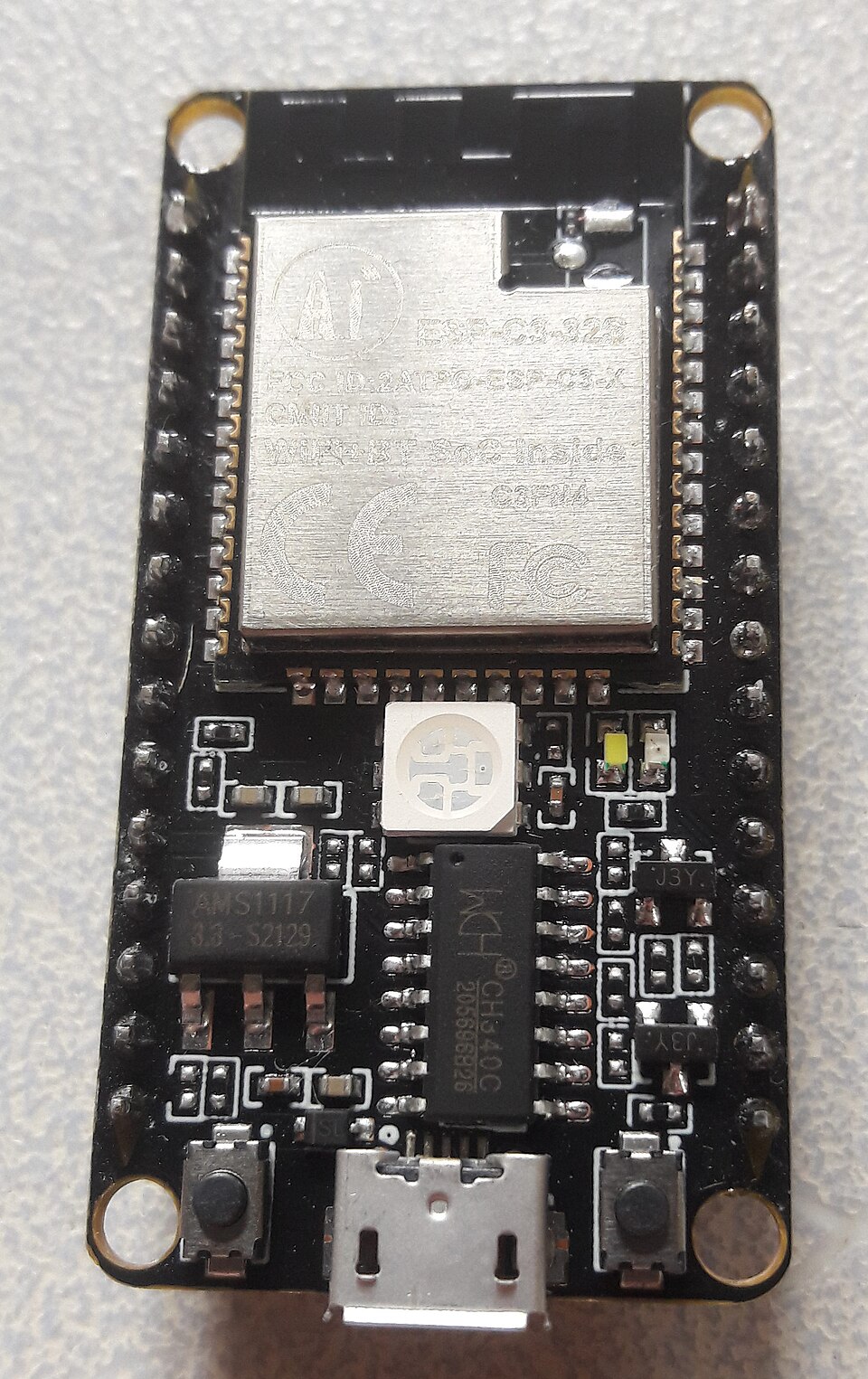
XIAO ESP32-S3 (BackstopPod)
The brain: it runs the backstoppod-fw program
03
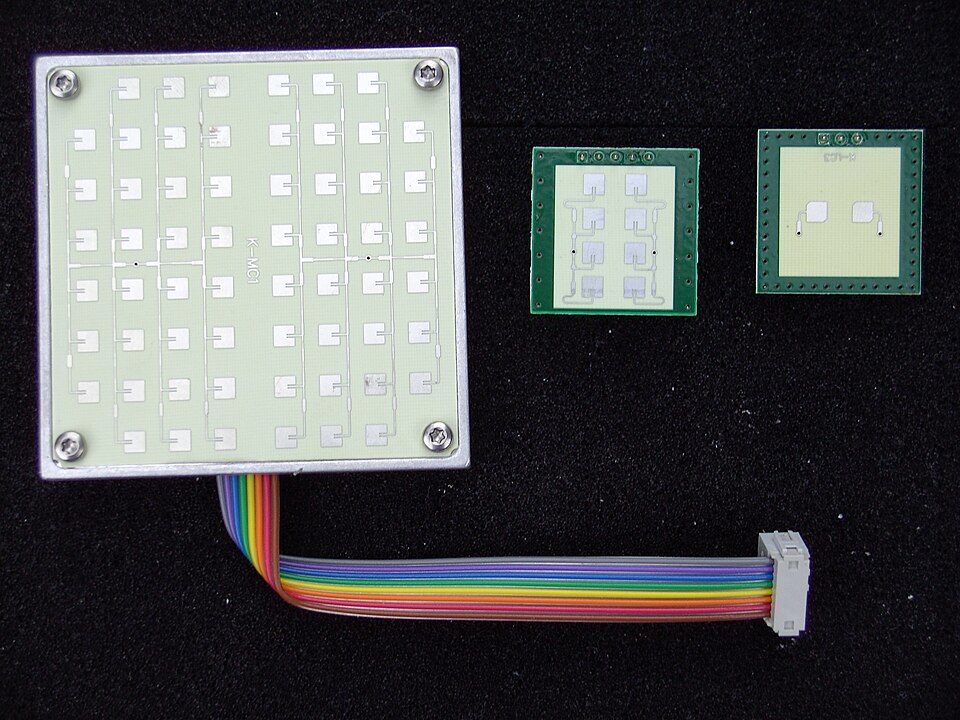
OPS243-A Doppler radar
Measures speed and direction of each pitch in a 20° beam
XIAO ESP32-S3 (BackstopPod) · UART · Speed and direction reports
XIAO ESP32-S3 (BackstopPod) · 5 V power lead · Power
06
Tally umpire indicator
Takes ball, strike, out keys; shows the count and buzzes at limits
XIAO ESP32-C3 · BLE radio · Key presses and count
07
PaceFace clock
Shows the 20-second pitch clock on large digits
XIAO ESP32-C3 · ESP-NOW radio · Clock and count
08
All connected
6 key parts, one program, and your phone
What it is
A smart ball/strike clicker for the umpire and a radar box that counts pitches from the backstop.
What it does
Keeps the umpire's count
Counts every baseball pitch by radar
Checks tournament bats against the rules
Times pitches, innings limits, spells and overs
Who it's for
Youth baseball leagues, junior cricket clubs and umpires.
How the parts connect
PitchTally, wired up
Every part, what links it to the brain, and how the data reaches your phone. A solid line is a cable; a dashed line is a radio link.
Drawn from the PitchTally parts list. The 3D view above is built separately, from the CAD.
The program
What controls PitchTally
Runs on
XIAO ESP32-S3
Written in
C++ (ESP-IDF or Arduino) with NimBLE
System
ESP32-S3 firmware
AI model
No AI model; rule-based pitch detection
1Read speed reports from the radar over UART
2Call it a pitch: inbound, 30 to 80 mph, 3 reports
3Ignore an outbound burst within 0.6 s
4Match the pitch to the umpire's key from the Tally
5Push count and pitch log to the Tally, display and phones
backstoppod-fw.cppmain loop
for (;;) {
    r = ops243.read();                       // UART: speed, direction
    if (r.inbound && r.mph >= 30 && r.mph <= 80)
        track.add(r);
    else if (track.len >= 3) {
        pitch = track.close();               // peak mph, time
        pitcher.count++;
        ble.notify(tally, pitcher.count);    // NimBLE
        display.show(pitcher.count);         // I2C 7-segment
        ws.send_json("pitch", pitcher.count, pitch.mph);
        track.clear();
    }
    if (ble.key()) apply_key(ble.key());     // BALL, STRIKE, OUT, UNDO
}
To your phone
How the data reaches PitchTally recorder and dugout pages
Any phone browser
Tally
BLE
BackstopPod
Wi-Fi access point · WebSocket
Phones
What you see in the app
One screen for each job PitchTally does.
11:02
PitchTally recorder and dugout pagesPitch count
Pitch 38 · Home #1211:02
52 mph. Count 1-2, 1 out.
Home #12
38 pitches
Count
1-2, 1 out
Home #12 pitch speeds (mph)
Pitch countIn a youth game the radar behind the backstop counts every pitch, so the umpire, recorder and both dugouts see the same number.
11:42
PitchTally recorder and dugout pagesPitch limit
Pitch 80 · limit near11:42
Home #12 at 80 of 85. At 85 he finishes this batter.
Pitches
80 / 85
Left
5
80pitches
Home #12 pitch count
Pitch limitThe home pitcher nears the 85-pitch limit. The umpire's Tally buzzes so he can finish the batter and come out.
18:27
PitchTally recorder and dugout pagesPitch clock
Clock ran out18:27
20 s passed before the pitch. Umpire to rule.
Clock
0 s
Over today
2
18:27Clock out · pitch 64
18:26Clock started, 20 s
18:14Clock out · pitch 51
Pitch clockAt a high-school game the big clock facing the pitcher counts down the 20 seconds between pitches.
11:31
PitchTally recorder and dugout pagesFlagged pitch
Unmatched pitch 6111:31
Radar pitch at 48 mph, no umpire key. Confirm it.
Unmatched
1
Confirmed
60
11:31Pitch 61 · radar only
11:30Pitch 60 · strike
11:30Pitch 59 · ball
Count it
Flagged pitchThe radar saw a pitch but the umpire did not press a key. The recorder confirms it, so nobody argues about the count later.
App screens with sample data. The interface is in development.
What the app gets
Data PitchTally sends to the app
Pitch count
38 pitches, #H12
Each pitch
Pitch speed
52 mph
Each pitch
Ball and strike count
1-2, 1 out
Each key press
Limit alert
85, finish batter
At the limit
Flagged pitch
Radar pitch, no key
When unmatched
No camera and no images. Pitchers are jersey numbers unless the league enters names. No internet needed at the field.
CAD design · Rev A7 design complete (baseball rev A, tournament TimeLimit lamp, BatCheck, RestPass rest record, cricket SpellCount and OverRate, high-school PaceClock), all hardware fit-checked in CAD, not built
Designed in code, checked in 3D
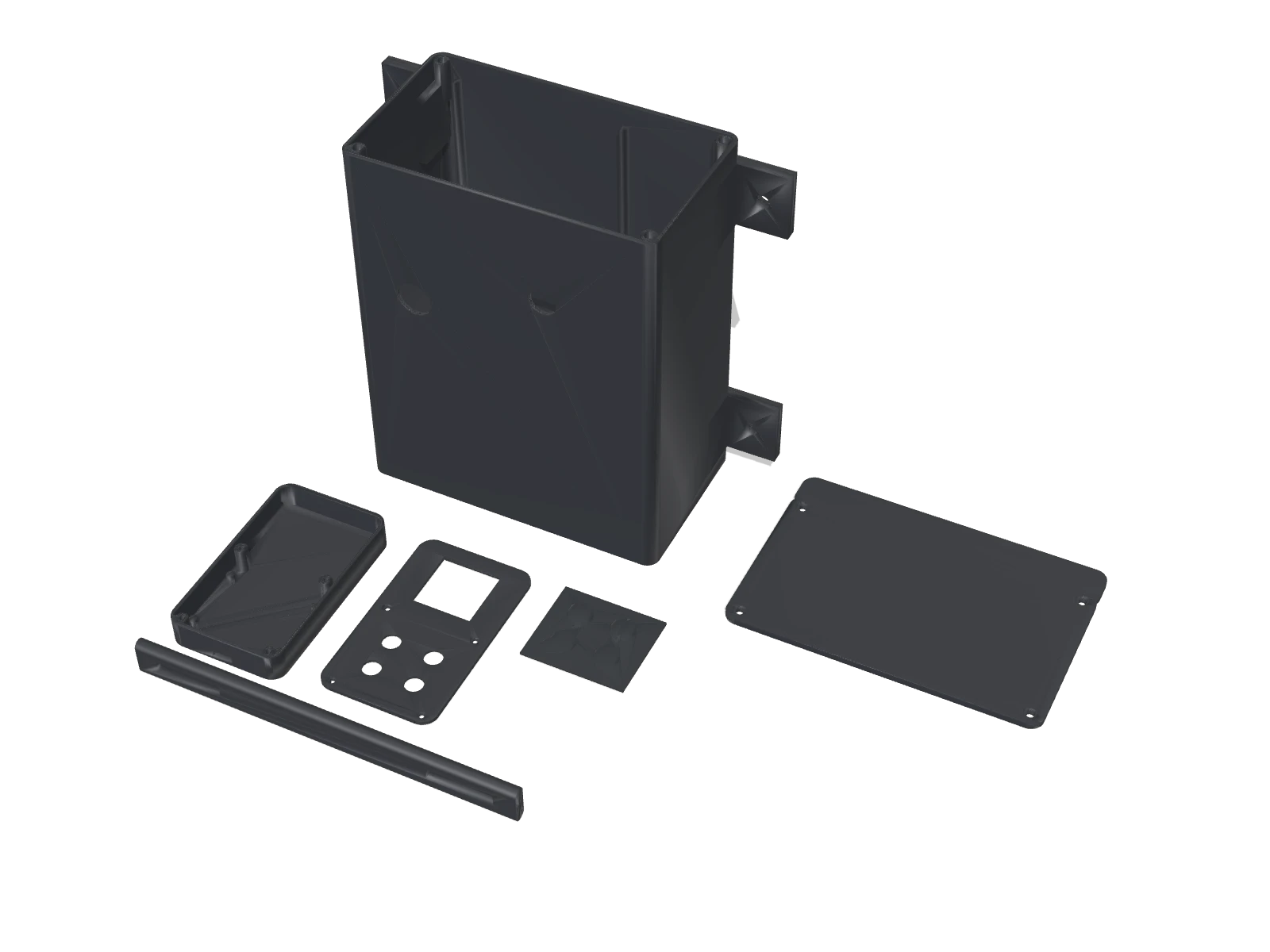
20 printed parts, each a single closed solid
Every bought part fitted inside and checked for collisions
Assembled exactly as shown in the 3D CAD view (the button on the picture at the top)
OmniPreSense OPS243-A 24 GHz Doppler radar (20° beam, inbound/outbound direction) · 4 tact switches under a TPU key mat (BALL, STRIKE, OUT, UNDO) · Coin vibration motor in the Tally · Cricket key mat: BALL, EXTRA, BOWLER, UNDO (SpellCount) · PaceClock key mat: BALL, STRIKE, OUT, TIME (long-press TIME = UNDO) · BatCheck: OV3660 camera on a XIAO ESP32-S3 Sense behind a 2 5/8 in and 2 3/4 in printed ring gauge; NTAG215 NFC HOLD tags
Connectivity
BLE between Tally and pod · Local Wi-Fi access point for phones (no internet needed) · CSV export · ESP-NOW between the two umpires' Tallies (cricket) · ESP-NOW from the pod or Tally to the PaceFace clock
Power
Pod: 10,050 mAh Li-ion pack, about 13.1 h (est.); Tally: 500 mAh LiPo, about 224 h (est.); PaceFace: 12 V 3000 mAh pack, about 17 h (est.)
Enclosure
Black ASA pod with the radar behind a 2 mm ASA radome wall, rain visor and fence bars; black ASA Tally with TPU key mat and lanyard loop; cricket SpellCount kit adds a TPU key mat and a black ASA waistband holster; PaceFace: black ASA case with two 6.5-inch LED digits behind acrylic, bolted through the chain-link with two field-side bars
Dimensions
Tally 54 × 97.5 × 13 mm; pod 140 × 80 × 175 mm (188 mm wide over the fence tabs); PaceFace 245 × 60 × 184 mm (236 mm tall over the fence tabs)
All target specifications
Radar counting
Radar counting target specifications
Mount height
2.5–3.0 m up the backstop
Flight seen
8.35–9.7 m, about 290–480 ms
Count accuracy
Within ±1 of a video count (to be tested)
Speed
Cosine error under 1.1%; off by default for 12 and under
Tally
Tally target specifications
Display
1.54 inch e-paper
Keys
BALL, STRIKE (tall), OUT, UNDO (low)
Haptics
Full count and pitch limit
Battery
About 224 h, roughly 111 games (est.)
BackstopPod
BackstopPod target specifications
Display
1.2 inch 4-digit 7-segment
Battery
About 13.1 h, a tournament day (est.)
Mounting
Bolted through chain-link with fence bars; no drilling
Cricket SpellCount
Cricket SpellCount target specifications
Limits
Overs per spell and per day by age group, from the league table (ECB default: U13 5/10, U14–15 6/12, U16–19 7/18)
Rest
Overs from the same end equal to the spell; 40-minute break starts a new spell
Cues
One buzz on the last over of a spell, three when a resting bowler is named
Battery
About 190 h with two Tallies linked (est.)
PaceClock
PaceClock target specifications
Rules
NFHS: 20 s from the catch, runners or not; 60 s between innings, then batter 10 s and pitcher 20 s. NCAA setting: bases empty only
Start and reset
Starts on the catcher's return throw (radar) or the umpire's TIME key; TIME resets for a step-off, feint or play
Display
Two 153 mm red LED digits facing the mound; can run dark (umpire-only buzz) where a league has not adopted a visible clock
Battery
About 17 h per charge (est.)
BatCheck
BatCheck target specifications
Rings
2 5/8 in (Little League, BBCOR, USABat) and 2 3/4 in (USSSA youth); a screen, sticking bats go to the steel ring
Divisions
Little League Majors, Intermediate/Junior and Senior, NFHS high school, USSSA youth
Checks per bat
Mark for the division, barrel ring, decertified list, umpire damage flag
Battery
500 mAh LiPo, a tournament day of checks (est.)
Targets for production units; they may change during development.
Pricing
Hardware: $29–$699per RestPass pack, Tally or Field Kit
Software: No subscription required
Target prices: $29 RestPass Team Pack (12 glove tags), $59 Tally, $79 BatCheck Kit, $99 SpellCount Pair for cricket, $299 PaceClock Kit (PaceFace clock and a Tally with the TIME key mat), $449 Field Kit (1 BackstopPod and 2 Tallies), $699 PaceClock Field Kit (pod, PaceFace and 2 Tallies). Parts cost at quantity 1 is about $10 per RestPass pack, $35 per Tally, $32 per BatCheck Kit, $175 per PaceFace, $334 per pod and $580 per PaceClock Field Kit (est.).
RestPass Team Pack
$29 (target)
12 orange glove tags that carry each pitcher's outings between teams.
Tap to add an outing
Tap to see who may pitch or catch today
Little League or Pitch Smart rules
No account, no subscription
Tally
$59 (target)
A smart umpire indicator that works alone.
E-paper ball, strike and out count
Haptic full-count cue
One-press UNDO
Pairs with a BackstopPod
BatCheck Kit
$79 (target)
A tournament bat and catcher-gear check for the umpire.
2 5/8 in and 2 3/4 in ring gauge
Camera reads the mark and model
Decertified list and HOLD tags
Plate-meeting card the coach affirms
SpellCount Pair
$99 (target)
Two cricket Tallies, one per umpire, for junior matches.
Spells, rests and day overs per bowler
League limit tables by age group
Buzz on the last over of a spell
End-of-match record
PaceClock Kit
$299 (target)
A pitcher-facing 20-second clock and a Tally for high-school baseball.
6.5-inch digits facing the mound
NFHS 20 s and between-innings timing
TIME key resets for step-offs and feints
TimeLimit lamp add-on ($49): tournament time limits and drop-dead
Field Kit
$449 (target)
One BackstopPod and two Tallies for one field.
Radar pitch count
Recorder and dugout pages
Pitch-limit and rest-day rules
CSV export
Tournament
Custom
Pods for every field at a travel-ball event.
One pod per field
End-of-day eligibility export
Volume pricing
Indicative launch pricing in USD, excluding taxes and shipping. Final pricing is confirmed before any balance is charged.
Community
What do you think of PitchTally?
PitchTally is in development. Rate the idea, tell us what to change about the features, specs or price, and we'll build it with your feedback.
A club with a league side and junior nets wants run-out and front-foot evidence for a lone umpire, an over-rate clock, junior spell limits and a smarter bowling machine. Today that is five separate kits, or a nets system from about GBP 2,200 (PitchVision) and sponsor-funded LED wickets (Wisden on Zing).
Combined into Cricket MatchKit (https://iemilabs.com/products/matchkit/); PitchTally itself is unchanged
Youth baseball tournaments end games on time, and each event writes its own rule: USSSA Tennessee starts no new inning after 1 hour 30 for 9U–12U, USSSA Nebraska after 1 hour 40, and a Syracuse, Utah league stops at 90 minutes and puts the score back an inning if the visitors lead. Referee.com says the base umpire keeps the time on a watch, so coaches and parents cannot see it and teams stall or rush near the limit.
New CAD parts limitlamp-base and limitlamp-lens: a lamp bar that sits on top of the PaceFace clock, hooks over its back cover and holds an Adafruit NeoPixel Stick 8 under a frosted lens (all bought parts fit, each part one solid)
The PaceFace case gains a 6 mm cable hole in its top for the lamp
TimeLimit software: the umpire starts the clock on the Tally, the third out decides whether a new inning may start, and drop-dead puts a visitor lead back an inning where the rule says so; 10 of 10 replayed checks pass
3D view updated: the lamp on top of the backstop clock
Product page updated: summary, a highlight, two tournament examples, three new questions and a $49 TimeLimit lamp add-on; parts about $10 a lamp (est.); real parts list now includes the NeoPixel Stick
Youth baseball sets rest days by pitches thrown and stops a player who caught 4 innings from pitching that day, but no rule follows a child between teams: Little League says nothing stops 50 pitches for a travel team on Sunday and 50 more for the league team on Monday, and leaves it to parents. In 2019 tournaments, 43% of pitchers broke Pitch Smart rest advice (Greiner et al. 2021).
New CAD part glove-tag: an orange TPU tag that laces onto the pitcher's glove, with a sealed NFC sticker pocket (both bought parts fit, one solid)
New RestPass rules in the app: Little League rest days, daily limits and catcher rules, or Pitch Smart advice; 12 of 12 checks pass, including Little League's own examples
3D view updated: the tag laced on a youth glove beside the field kit
Product page updated: summary, highlight, two tournament examples, a RestPass Team Pack option and three new questions
Parts list: about $10 for a 12-tag team pack (est.), target price $29
Before every tournament game, youth baseball umpires must check each team's bats for the right certification mark for the division, damage and the latest decertified list, and hand illegal bats to the tournament director (Little League tournament guidance, Rule 1.10); in high school the head coach must confirm every player is legally equipped, including the catcher's NOCSAE helmet and chest protector (NFHS rules 1-3-2, 1-5-3, 4-1-3b).
New CAD part batring: a ring gauge with 2 5/8 in and 2 3/4 in bores and a camera pod for a XIAO ESP32-S3 Sense, battery and SNAP key (8/8 fit checks, one solid)
New CAD part batring-lid: camera window with a clear disc and a glove-friendly flexure key (5/5 fit checks, one solid)
New CAD part hold-tag: an orange TPU clip with an NFC sticker for a bat taken out of play (2/2 fit checks, one solid)
New BatCheck software: division table (Little League, NFHS, USSSA), mark, ring, decertified list and damage checks, catcher gear list and a plate-meeting card the coach affirms (12/12 checks)
BOM: BatCheck Kit about $32 in parts (est.), target $79
Product page, design page and DESIGN.md updated with two tournament use cases, three FAQs, a spec group, a price tier, sources and a rules note
Club T20 cricket leagues play to a hard innings time with in-match penalties: the North West Cricket League gives each innings 75 minutes, takes 10 runs for every full over not bowled and gives a new batter 90 seconds; GMACL plays 4 minutes an over, then brings an extra fielder into the circle and awards 5 runs per over. Only the two umpires keep the clock, on a wristwatch. Sources: NWCL and GMACL T20 rules, ICC stop clock, MCC Law 40.
New CAD part over-keys: a cricket key mat for the umpire's Tally with BALL, WICKET, STOP (pause for an allowance) and UNDO (4/4 fit checks)
New CAD part rateface-clamp (print 2): hangs the big clock on a standard 48.3 mm scaffold tube by the pavilion or scorebox, bolted to the clock's own inserts, with a thumb screw (7/7 fit checks)
New software overrate-kit.mjs: the innings clock, overs due against bowled, the new batter's countdown and the league rule tables (NWCL, GMACL, ICC-style, Laws only); 14/14 checks
BOM: OverRate Kit about $221 at qty 1 (est.), target $279
Product page, design page and DESIGN.md updated with sources and a rules note
High-school baseball already has a 20-second rule: under NFHS rule 6-2-2c a pitcher who does not pitch within 20 seconds of getting the ball gives the batter a ball, and NFHS pace-of-play guidance allows 60 seconds between innings. Umpires on Umpire-Empire say it is almost never enforced because nobody has a visible clock and holding a stopwatch looks bad, and Oregon's OSAA tells umpires to keep the minute in their heads.
New CAD part: PaceFace clock case with two 6.5-inch (153 mm) LED digits facing the mound, a 12 V battery bay and fence tabs; 18 of 18 fit checks pass
New CAD parts: PaceFace back cover and two field-side fence bars; 10 of 10 fit checks pass, each printed part is one solid
New CAD part: Tally key mat with a TIME key (step-off, feint or time out); long press is UNDO
New timer software: 20 seconds from the catch, 60 seconds between innings, then batter 10 and pitcher 20, with an NCAA bases-empty setting; 12 of 12 replayed situations pass
Product page updated: tagline, summary, two high-school use cases, a PaceClock spec group, a $299 PaceClock Kit tier and 3 FAQs
BOM: PaceFace about $175, PaceClock Kit about $211 (target $299), PaceClock Field Kit about $580 (target $699), all est.
Junior cricket caps how much a young fast bowler may bowl: the ECB Fast Bowling Match Directives set overs per spell and per day by age (under-13s 5 and 10, up to 7 and 18 at 16–19), and a bowler must rest for as many overs as their spell from the same end. Captains, team managers and umpires are asked to keep this, and Cricket Ireland expects umpires to keep the record and tell the captain.
New CAD part: cricket key mat (BALL, EXTRA, BOWLER, UNDO) that swaps into the stock Tally lid; all 4 switch fits checked
New CAD part: waistband holster with a belt tongue and a USB-C slot; 8 of 8 fit checks pass and each printed part is one solid
New spell rules software: spells, rest overs from the same end, changes of ends, 40-minute breaks and the day total per bowler, from the league's table; 14 of 14 replayed checks pass
Product page updated: new tagline, summary, cricket use cases, a SpellCount spec group, a $99 SpellCount Pair tier and 3 cricket FAQs
Parts list +$1.50 per Tally; SpellCount Pair about $74 in parts (est.), target $99
No. PitchTally is a concept in the in-house design and testing stage. It is designed and fit-checked in CAD, but nothing has been built or tested on a live game, and all figures are targets or estimates.
Is the radar count the official count?
No. League rules name a human official pitch count recorder, and the manager stays responsible. PitchTally is an aid that gives everyone the same number and a pitch-by-pitch log; the recorder confirms changes and every correction is logged.
Does BatCheck decide whether a bat is legal?
No. The umpire decides. BatCheck shows the mark the rules require for the division, whether the barrel went through the ring, and whether the model is on the decertified list it last synced, and it keeps a record. It never tests a bat's performance or certifies it.
How accurate is a printed bat ring?
About ±0.2 mm (est.), so it is a quick screen. A bat that sticks or is borderline is checked with the league's steel ring, and the umpire's call stands.
Can it check a catcher's helmet?
Only that the NOCSAE wording is there in a photo. It cannot tell whether gear is damaged or out of date, and the cup is confirmed by the coach. Under NFHS rules the head coach still verifies that all players are legally equipped.
Does it work for softball?
Not yet. Underhand pitches from a shorter distance follow a lower path, and we need to rerun the sight-line check for softball fields before we claim it works there.
Can umpires use an electronic indicator?
We have not yet confirmed this with Little League or umpire associations. Checking the rules is one of the first steps before any field use.
Does it film players?
No. There is no camera and no images. Pitchers are jersey numbers unless the league enters names, and pitch speed is off by default for ages 12 and under.
Does it work for junior cricket?
That is the SpellCount kit: the same Tally with a cricket key mat (BALL, EXTRA, BOWLER, UNDO) and a waistband holster. It keeps each young fast bowler's overs per spell and per day, the rest overs from the same end and 40-minute breaks, using the league's own table (the ECB Fast Bowling Match Directives by default). It is designed and checked in software, not yet built.
Does SpellCount decide who may bowl?
No. No Law of Cricket sets these limits; they are league playing conditions that captains, team managers and umpires are asked to keep. The Tally warns and keeps a record; the umpires decide, tell the player and the captain, and can override with a logged reason. It cannot tell pace: the coaches mark who is a fast bowler at the toss.
Which overs limits does it use?
Whatever the league adopts. The default is the ECB table (U13 5 a spell and 10 a day, U14–15 6 and 12, U16–19 7 and 18); county versions such as Cornwall's 2025 limits are another table. We are still checking for a newer ECB revision.
Does PaceClock call the delay penalty?
No. NFHS rule 6-2-2c gives the pitcher 20 seconds and the umpire decides who caused a delay and whether to award a ball or a strike. At 0 the clock shows 0 and buzzes the umpire's Tally; the count only changes when the umpire presses a key.
Is a visible pitch clock allowed in high-school baseball?
The NFHS rule does not require or forbid one; your state association or conference decides. Where it has not adopted a visible clock, run the PaceFace dark and the umpire still gets a silent buzz at 5 seconds and at 0.
How does the clock know the pitcher has the ball?
With a BackstopPod, the radar sees the catcher's throw back to the pitcher and starts the 20 seconds; it sees the next pitch and stops. The radar cannot see a step-off or a feint, so the umpire presses TIME. Without a pod, the umpire starts it with TIME.
Does the OverRate clock give penalty runs automatically?
No. It times and shows. At the league's deadline it tells the umpires how many full overs are outstanding and what the league's playing condition says; the umpires decide and tell the scorers. Allowances for injuries, lost balls or weather are paused only when an umpire presses STOP, and every pause is logged.
Is the OverRate clock allowed in league matches?
Innings times and over-rate penalties are each league's own playing conditions, not Laws of Cricket. A league needs to adopt the clock before it is shown on the ground; until then it runs dark, as a silent aid on the umpire's Tally only.
Can players in the middle read the clock?
Not reliably. The 6.5-inch digits read to about 30 metres (est.), so the face goes by the pavilion gate or scorebox for the incoming batter, scorers and captains at drinks; the umpires use the Tally and tell the captains.
How does RestPass know about games with other teams?
The record lives on the tag laced to the player's glove, not in any league's database. Whoever keeps the count after a game (recorder, coach or parent) taps the tag with the free PitchTally app to add the outing. If a game is not tapped it is missing, so the app shows the date of the last tap on every check.
Which rest rules does RestPass use?
Little League regular-season rules (rest days by pitches, the daily limit by age and the catcher rules) or MLB/USA Baseball Pitch Smart, which adds advice against pitching on consecutive days. A tournament director picks the rule set. The league or tournament decides eligibility; the app reads the record and quotes the rule.
Does RestPass protect a pitcher's arm?
It makes no health claim. It keeps the counts and rest rules that leagues already set, across every team the player plays for. Pain, tiredness and medical advice stay with parents, coaches and doctors.
Does the TimeLimit lamp end the game?
No. The umpire keeps the official time and decides. The lamp shows the same clock to both dugouts and the stands, and the recorder's page quotes the tournament's rule. If the umpire's watch and the lamp disagree, the umpire's time stands.
Which time-limit rules does it know?
Each tournament writes its own. The director enters the no-new-inning time, any drop-dead time, whether a visitor lead goes back to the last full inning, and the start point (first pitch or end of the plate meeting). We tested it in-house against USSSA Tennessee and Nebraska state rules and two park-league rule books.
When does a new inning count as started?
At the third out of the previous inning, which is how most tournament rules and umpire guides read it. If the third out comes before the mark, the next inning is played. The umpire presses OUT, so the time of every third out is logged.
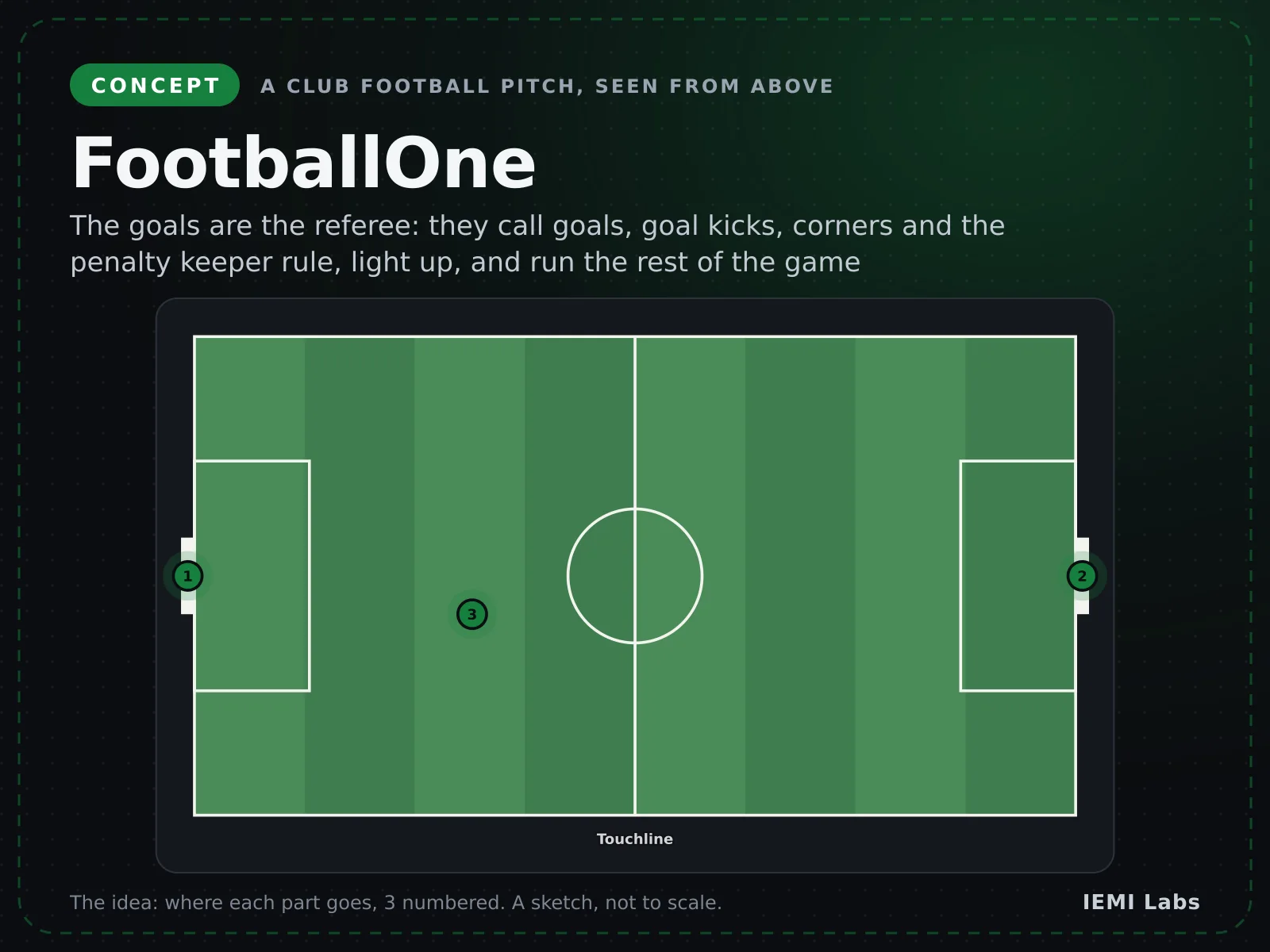
IEMI's one football product: a pair of legal full-size goals with cameras, computers, batteries and radios inside the posts and crossbar, and a referee wrist unit.
Sees the ball cross the line and buzzes the referee
Logs shots, saves and headers at goal
Counts the keeper’s 8 seconds and keeps the match clock and sin bins
From$4,690per pair of smart goals with sockets and the referee wrist unit
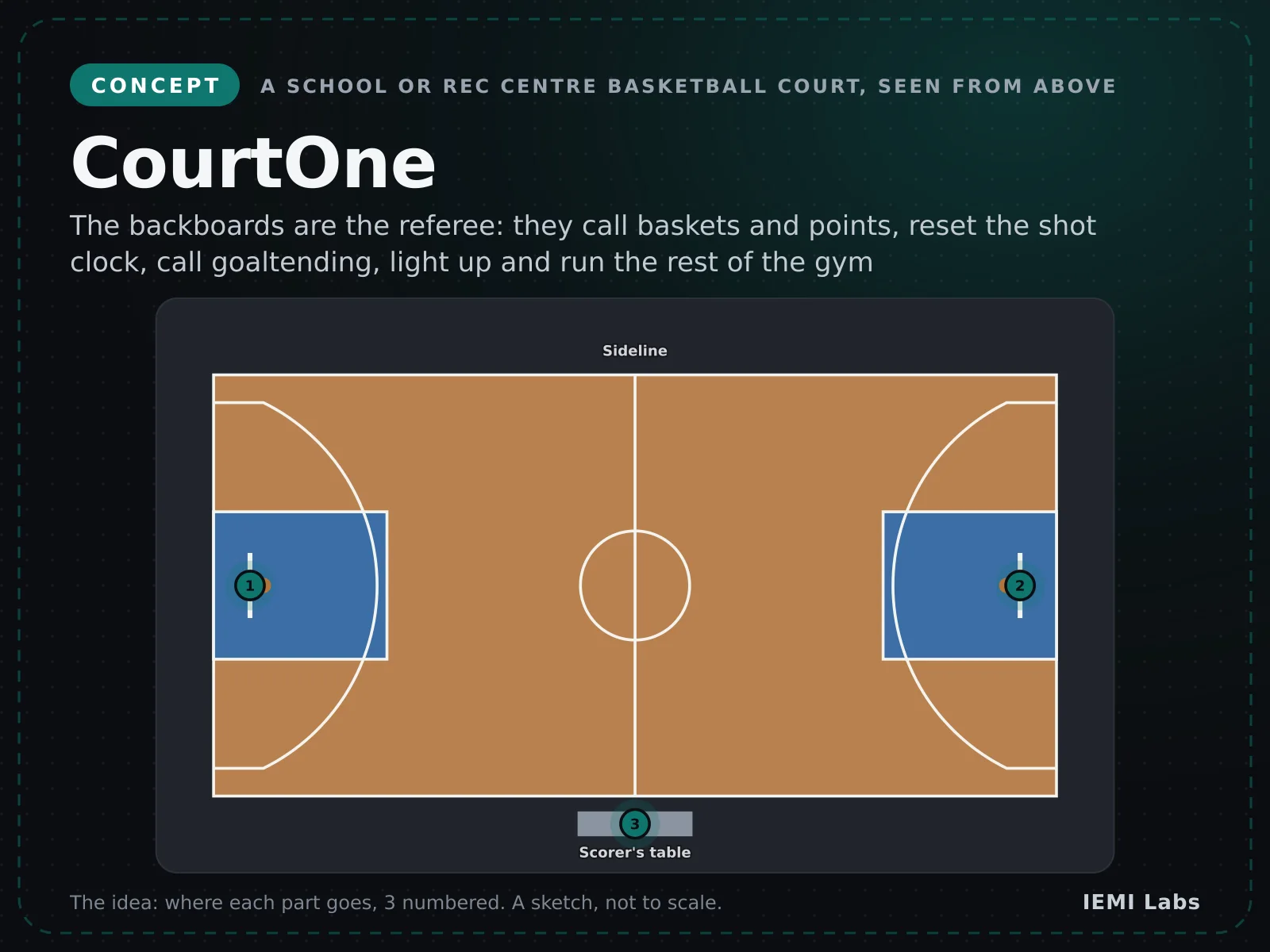
IEMI's one basketball product: the backboard, ring, padding and shot clock at both ends of a court, with a camera, a computer, a rim sensor and edge lights built in, and one app.
Counts makes, maps shot spots and feels rim hits
Runs a double-sided 24/14 or 35-second shot clock from the scorer's tablet
Lights the board edges red at the end of a period and yellow at the shot clock signal
From$4,990per court: two smart backboards with rings, padding and shot clocks