Drag to rotate · right-drag to move · scroll to zoom · click a part for its size and placeSwipe to rotate · pinch to zoom · two fingers to move · tap a part for its size
How it fits together
LiftStation AI, part by part
Scroll or tap a part. Press “See the 3D CAD design” to watch the model, built from our CAD, light each part up and show how it connects.
Real-time 3D render · drag to rotate · final design may varySwipe sideways to rotate
01
The whole LiftStation AI
A box in the pump panel watches float contacts and pump current, then calls the owner when the level is high or a pump fails.
02Brain
nRF9151 (LTE-M)
The brain: it runs the liftstation firmware program
03
Float and panel inputs
Reads dry contacts: high-level float, contactors, generator, door
nRF9151 (LTE-M) · Optocouplers to GPIO · 8 on/off signals
04
Pump current clamps
Measure each pump motor's current, giving run time and health
nRF9151 (LTE-M) · ADC over SPI · Current samples
05
Strobe relay
Switches a local strobe or horn on a high-level alarm
nRF9151 (LTE-M) · GPIO via MOSFET · Strobe on/off
06
Buzzer
Sounds locally until someone silences the alarm
nRF9151 (LTE-M) · GPIO (PWM) · 2.7 kHz tone
07
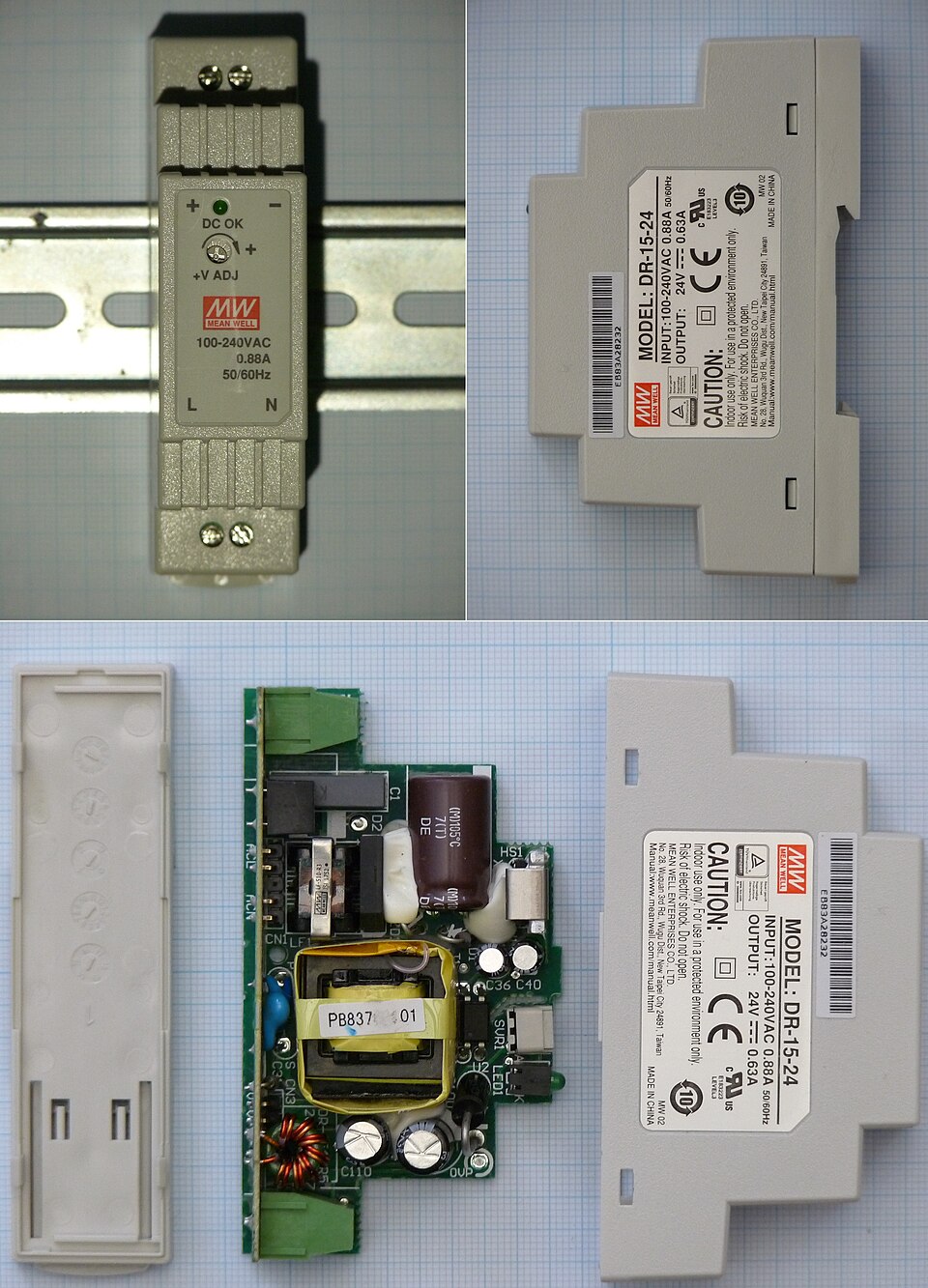
DIN-rail 24 V supply
Powers the board from the panel's mains
nRF9151 (LTE-M) · 24 V power lead · 24 V power
08
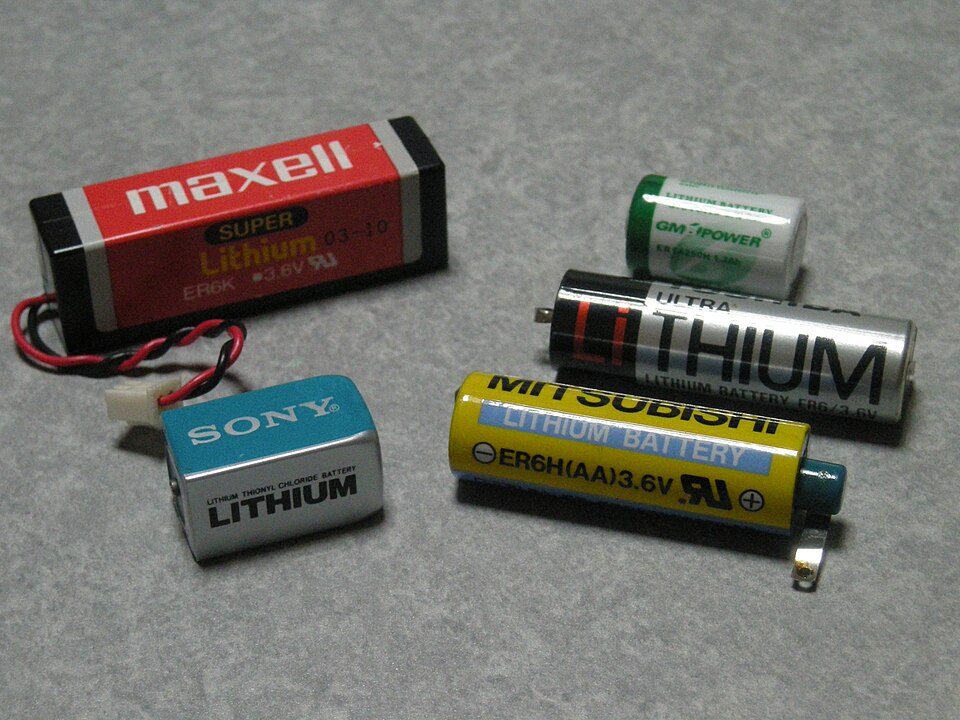
Backup cell
Keeps the alarm call alive when power fails
nRF9151 (LTE-M) · Ideal-diode power OR · 3.6 V backup power
09
All connected
7 key parts, one program, and your phone
What it is
A wall-mounted monitor with a radar level puck and pump sensors for sewage lift stations.
What it does
Tracks wet-well level by radar
Scores pump health from current and vibration
Predicts overflow risk
Reports power failures and alarms
Who it's for
Water and wastewater utilities, cities, towns and their SCADA integrators.
How the parts connect
LiftStation AI, wired up
Every part, what links it to the brain, and how the data reaches your phone. A solid line is a cable; a dashed line is a radio link.
Drawn from the LiftStation AI parts list. The 3D view above is built separately, from the CAD.
The program
What controls LiftStation AI
Runs on
nRF9151 (Cortex-M33)
Written in
C (nRF Connect SDK)
System
Zephyr RTOS
AI model
No AI; rule-based pump health
1Scan the 8 inputs at 1 kHz with 50 ms debounce
2Compute pump current RMS per cycle, averaged to 1 s
3Log each pump run as a cycle record
4Send alarms at once over LTE-M, cycles every 15 min
5Switch to the backup cell on power loss and send power_fail
liftstation firmware.cppmain loop
while (1) {
    k_sleep(K_MSEC(1));
    inputs = scan_inputs();                   // opto outputs, 50 ms debounce
    if (drdy()) ct_rms = ads131m04_read();    // SPI, per-cycle RMS
    for (each changed input) {
        if (is_alarm(input))
            mqtt_publish("iemi/lift/<site>/<dev>/alarm", alarm_json(input), QOS1);
        update_cycle(&pump, input, ct_rms);
    }
    if (vin_volts() < 18.0) send_power_fail();   // runs on the backup cell
    if (every_15_min()) mqtt_publish("iemi/lift/<site>/<dev>/cycles", cycles_json(), QOS1);
}
To your phone
How the data reaches LiftStation
Phone call, SMS, and a web app
Station box
LTE-M · MQTT over TLS
Cloud
Voice call, SMS and web app
Owner's phone
What you see in the app
One screen for each job LiftStation AI does.
02:04
LiftStationHigh level
Lift station 1 · High level02:04
High-level float on at 02:04. Strobe on. Press 1 to accept.
Accepted
Dave, 02:07
Pumps
Both running
02:04High-level float on
02:05Call 1: Ana, no answer
02:07Call 2: Dave pressed 1
02:31Level normal, float off
Accept
High levelAt 2 am the high-level float trips at lift station 1. The on-call list is phoned in turn until someone presses 1 to accept.
07:00
LiftStationPump health
Pump 2 capacity down 30%07:00
Current up 12% to 14.8 A, pump-down 30% slower: likely debris.
Capacity
70% of normal
Current
14.8 A
Pump 2 capacity, last 3 weeks (%)
Pump healthEvery pump run is logged. Over three weeks pump 2 takes longer to pump down while its current rises, which usually means debris.
16:22
LiftStationPower loss
Lift station 3 · Power lost16:22
Mains off at 16:22. Running on the backup cell. Level normal.
Mains
Off
Level
Normal
Signal
−104 dBm
92%
Backup cell
Power lossA storm cuts mains power to the panel. The backup cell keeps the radio on, so the crew knows before the wet well starts to fill.
App screens with sample data. The interface is in development.
What the app gets
Data LiftStation AI sends to the app
High-level alarm
Station 4 high level
At once
Pump current
14.8 A
Each cycle
Pump capacity
86% of normal
Each cycle
Power state
Mains on, 24.1 V
Hourly
Signal strength
−104 dBm
Hourly
Callout contacts stay in the cloud, never on the device. Each device has its own certificate; no inbound ports.
CAD design · Design complete (stages 1–6, rev A), not built, not validated
Designed in code, checked in 3D
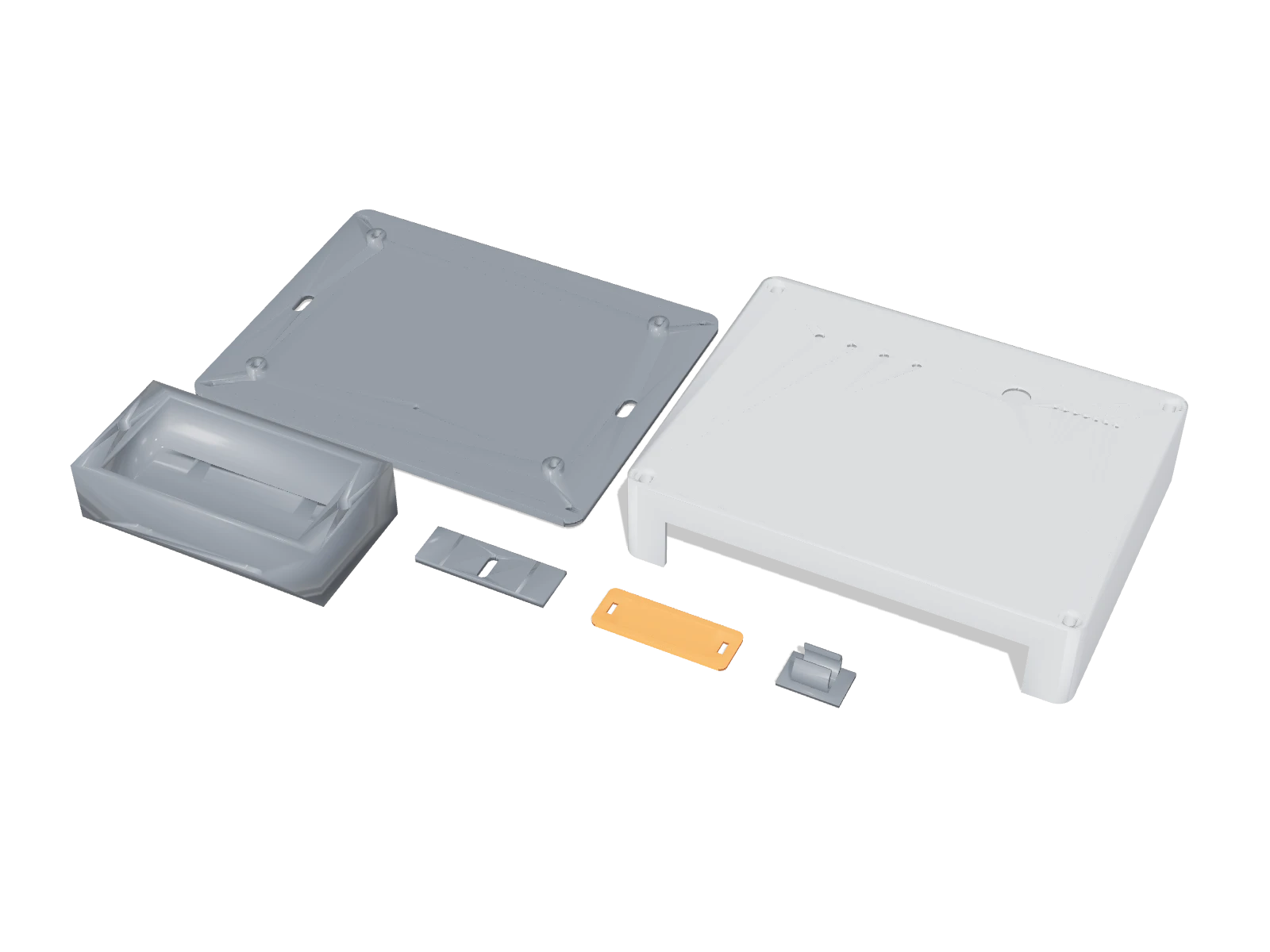
6 printed parts, each a single closed solid
Every bought part fitted inside and checked for collisions
Assembled exactly as shown in the 3D CAD view (the button on the picture at the top)
60 GHz radar level sensor (radar puck on 5 m cable) · Clamp-on pump current sensors · Magnetic vibration pods for pump motors · Float backup and generator-run inputs
12/24 V DC or 120/230 V AC, with 24-hour battery backup for power-fail reporting (target)
Enclosure
Light-grey wall box with hinged clear lid, teal stripe, small e-ink status window and stub antenna; white radar puck under the wet-well hatch; magnetic vibration pods on the pump motors
Dimensions
Wall box 25 × 20 × 12 cm; radar puck Ø10 × 6 cm on 5 m cable; vibration pods 4 × 4 × 3 cm
Ingress rating
NEMA 4X (target)
All target specifications
Sensing
Sensing target specifications
Level
60 GHz non-contact radar
Pump current
2–4 clamp-on current sensors
Vibration
Magnetic pods, one per pump
Inputs
Float backup, generator run
Alarms and integration
Alarms and integration target specifications
Alarms
High level, overflow risk, pump fault, power fail
Cellular
LTE-M / NB-IoT
SCADA
Modbus RTU / TCP and DNP3 outstation
On-site display
E-ink status window
Power and physical
Power and physical target specifications
Supply
12/24 V DC or 120/230 V AC
Backup
24-hour battery for power-fail reporting
Wall box
25 × 20 × 12 cm, NEMA 4X (target)
Radar puck
Ø10 × 6 cm, 5 m cable
Targets for production units; they may change during development.
Pricing
Hardware: $1,390per station (controller + radar; pump-sensor kits per pump)
Software: $39 per month per station
Target pricing. Pump-sensor kits (current sensors + vibration pod) about $300 per pump (est.). Installation by your integrator or electrician is quoted per site.
Monitor
$1,390 + $39/mo per station
Radar level, alarms and power-fail reporting.
Radar wet-well level
High-level and power-fail alarms
Modbus / DNP3 to SCADA
Dashboard and call-outs
Pump Health
$1,390 + ~$300 per pump + $39/mo
Adds pump current and vibration sensing with AI pump-health scores.
Current sensors and vibration pod per pump
Pump-health scores
Overflow-risk forecasts
Weekly maintenance reports
Utility
Custom
For utilities and integrators rolling out many stations.
Volume pricing
SCADA integration support
Integrator programme
SLA
Indicative launch pricing in USD, excluding taxes and shipping. Final pricing is confirmed before any balance is charged.
Community
What do you think of LiftStation AI?
LiftStation AI is in development. Rate the idea, tell us what to change about the features, specs or price, and we'll build it with your feedback.
LatestA town or water district needs one thing at each lift station that calls high water, a failed pump, a power cut and entry to the person on call, as the Ten States Standards (section 46) ask, and that reads the gauges and watches the panel between rounds. Today they pay for a cellular alarm dialer (Mission M110 $1,195 plus service, about $55 per station per month in a Florida utility filing), drive the round to read gauges and pay for a yearly heat survey.
Now part of PumpOne: https://iemilabs.com/products/pumpone/
Small towns, water districts and private owners (HOAs, RV parks, mobile-home parks) have three jobs at every pump station: answer the alarm, know each pump is still pumping, and catch a hot connection in the panel. Daily lift-station checklists list alarms, levels and pump readings (MaintainX), pressure is read with pumps off and running (Indiana DNR), a site visit costs $500–2,000 or more (Vista Projects), and a cellular dialer alone is $1,200–1,600 (Mission, Sensaphone). Our own three products for it cost $2,827 and $87 a month per station.
Combined into PumpStation (https://iemilabs.com/products/pumpstation/); LiftStation AI itself is unchanged
Only station data: level, pump current, vibration features, alarms and power status. There is no camera and no personal data. Data goes to your dashboard and to your SCADA, and you control who can see it.
Is LiftStation certified for wet wells?
No. Wet wells are often classified as hazardous locations. LiftStation holds no intrinsic-safety or hazardous-location certification, so the radar head must be installed outside the classified space unless and until a certified version exists. Your engineer or AHJ confirms the area classification for each site. NEMA 4X is a design target, and FCC/CE and carrier certification testing is planned.
Is it a safety-rated or compliance system?
No. LiftStation is a monitoring and early-warning aid. It does not replace your pump controls, float switches or permit duties, and it does not make you compliant. It helps you evidence station performance.
How is it installed?
The wall box mounts in the control kiosk, the radar puck sits on a bracket under the wet-well hatch on its 5 m cable, current sensors clip around the pump supply leads and the vibration pods stick magnetically to the pump motors. Installation by your electrician or integrator is expected to take a few hours per station (est.).
What connectivity does it need?
LTE-M / NB-IoT with a SIM for alarms and the dashboard, plus Modbus RTU / TCP and DNP3 to existing SCADA. Alarms are still raised locally if the cellular network is down.
Is LiftStation AI available now?
No. It is in development and the specifications are targets. It is a concept: we are not taking orders, reservations or deposits, and it has no ship date yet.
What warranty will it come with?
We are planning a 2-year limited hardware warranty covering manufacturing defects. Final terms will be published before shipping begins.