Drag to rotate · right-drag to move · scroll to zoom · click a part for its size and placeSwipe to rotate · pinch to zoom · two fingers to move · tap a part for its size
How it fits together
SplitPole, part by part
Scroll or tap a part. Press “See the 3D CAD design” to watch the model, built from our CAD, light each part up and show how it connects.
Real-time 3D render · drag to rotate · final design may varySwipe sideways to rotate
01
The whole SplitPole
Poles time a runner's torso crossing a laser beam. They sync by radio and the lead pole serves splits to the coach's phone.
02Brain
XIAO ESP32-C3 in each pole
The brain: it runs the splitpole firmware program
03
TFmini Plus hip beam
Measures range 1000 times a second to time the crossing
XIAO ESP32-C3 in each pole · UART (5-core cable) · 1000 Hz range readings
04
TF-Luna chest beam
Confirms the crossing was a torso, not an arm
XIAO ESP32-C3 in each pole · UART (5-core cable) · 250 Hz range readings
05
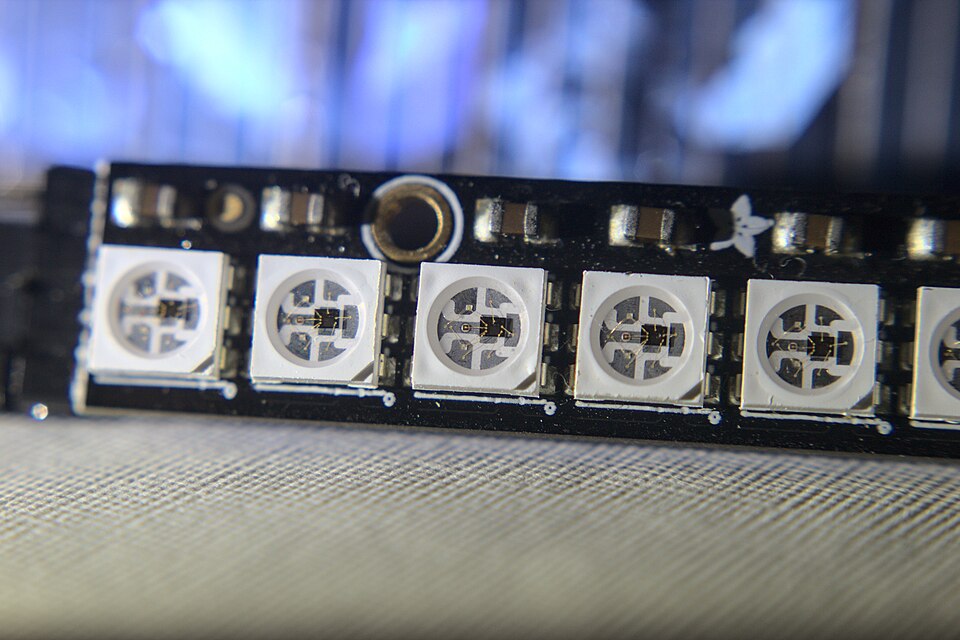
NeoPixel start lights
Show ready and go along the lane, both ways
XIAO ESP32-C3 in each pole · GPIO pin (one data line) · Colour data
06
Start buzzer
Beeps for ready and go
XIAO ESP32-C3 in each pole · GPIO pin (FET gate) · On or off tone
07
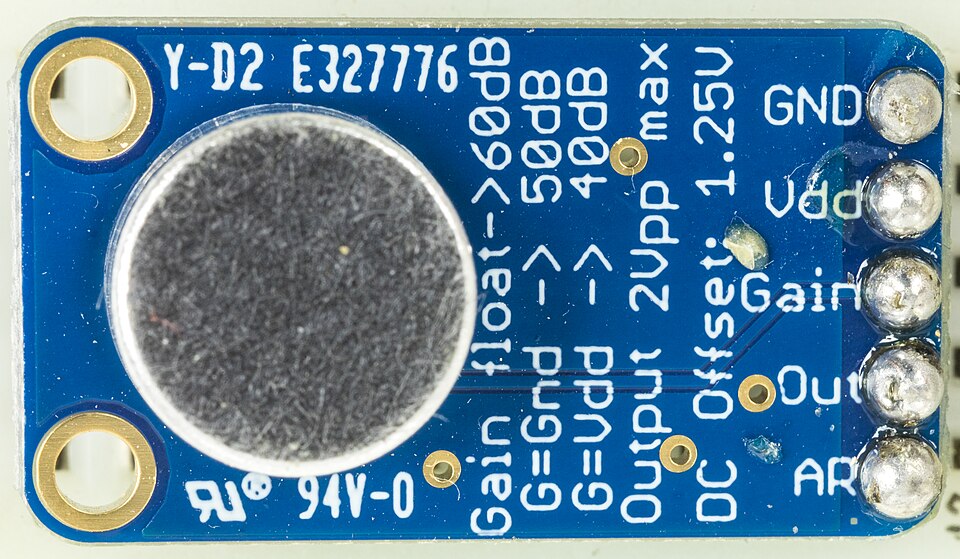
GunEar start pod
Hears the gun or sees its flash, then sends one start
XIAO ESP32-C3 · ESP-NOW radio · Start time
08
18650 + PowerBoost
Gives 5 V to both beams for about 6 hours
XIAO ESP32-C3 in each pole · 5 V power lead · 5 V power
09
All connected
7 key parts, one program, and your phone
What it is
Two clip-on sensor heads that turn a spiked agility pole into a sprint timing gate.
What it does
Times sprints and races to the millisecond
Starts races on the gun or clapper
Reads each runner's lane at the finish
Shows times on the coach's phone
Who it's for
High school and club coaches, school sports days and athletics club meets.
How the parts connect
SplitPole, wired up
Every part, what links it to the brain, and how the data reaches your phone. A solid line is a cable; a dashed line is a radio link.
Drawn from the SplitPole parts list. The 3D view above is built separately, from the CAD.
The program
What controls SplitPole
Runs on
XIAO ESP32-C3
Written in
C++ (Arduino-ESP32)
System
Arduino-ESP32 (FreeRTOS)
AI model
None: range segments and timing rules
1Wait armed with both beams at full rate
2Split the hip trace into stable range segments
3Take the midpoint of a 15 to 40 ms torso segment
4Check the chest beam saw a target within 60 ms
5Send the crossing time to the lead pole by ESP-NOW
splitpole firmware.cppmain loop
void loop() {
  Frame f;
  if (hip.read(&f)) segmenter.push(f.range_cm, micros());   // TFmini Plus, UART1
  if (chest.read(&f)) chestSeen.push(micros());               // TF-Luna, UART0

  Segment s;
  if (segmenter.torso(&s, 15000, 40000)) {                    // 15-40 ms, stable +/- 8 cm
    uint32_t mid = (s.t0 + s.t1) / 2;
    bool chestOk = chestSeen.within(mid, 60000);              // else amber: hip only
    Crossing x = { POLE_ID, mid, s.range_cm, chestOk };
    esp_now_send(LEAD_MAC, (uint8_t*)&x, sizeof x);
  }
  syncReplyIfPinged();                                         // answer lead's 1 s ping
}
To your phone
How the data reaches SplitPole page
Coach phone browser (no internet)
Poles 1 to 3
ESP-NOW radio
Lead pole
Own Wi-Fi access point
Coach phone
What you see in the app
One screen for each job SplitPole does.
16:14
SplitPole pageSpeed test
#14 run 2 · 4.17 s16:14
30 m: 0–10 m 1.84 s, 10–20 m 1.21 s, 20–30 m 1.12 s.
30 m
4.17 s
Best of 2
4.17 s
Beams
Hip + chest
Poles on this run
0 m
10 m
20 m
30 m
Speed testFour poles at 0, 10, 20 and 30 m time a squad's sprints. Each run shows its splits, with the chest beam confirming the torso.
16:12
SplitPole pageFlagged runs
Hip only · #9 run 116:12
Chest beam saw no target at pole 2. Rerun suggested.
Flagged
2 runs
Pole battery
74%
16:08Two athletes at pole 3, not timed
16:12#9 run 1: hip only at pole 2
16:15#9 rerun: 4.38 s, confirmed
Queue rerun
Flagged runsA player's arm cuts the hip beam but the chest beam sees nothing. The run is flagged amber so the coach can ask for a rerun.
10:14
SplitPole pageSports day race
Race 6 · 60 m done10:14
Lane 4 first in 9.42 s. Lane 5 hidden, use the backup watch.
Lanes timed
5 of 6
Winner
9.42 s
Race 6 lanes
Lane 1
Lane 2
Lane 3
Lane 4 · 1st
Lane 5 · hidden
Lane 6
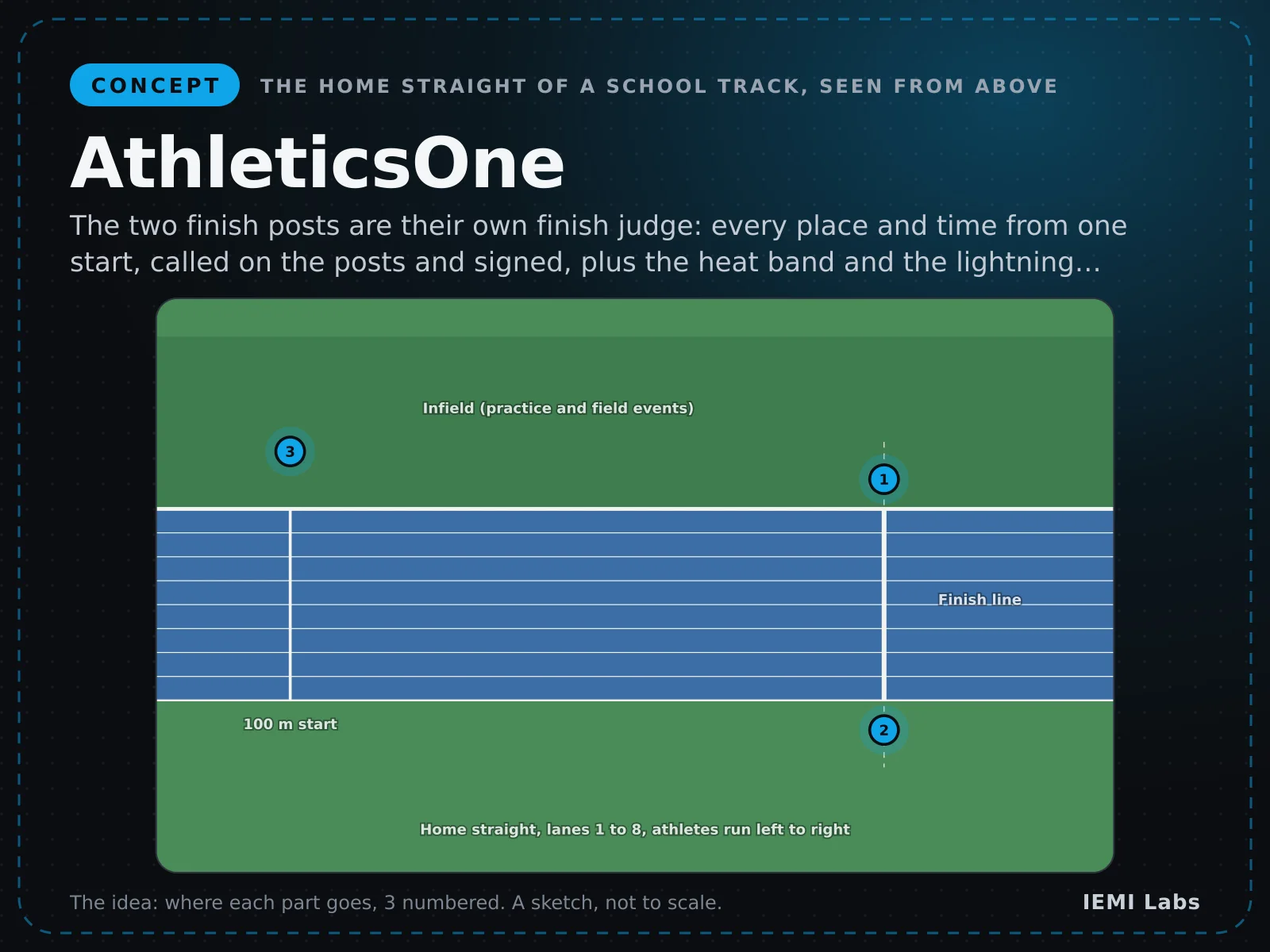
Sports day raceAt a school sports day the gun starts the race and two finish poles read each child's lane. One helper taps the finish order on the phone.
App screens with sample data. The interface is in development.
What the app gets
Data SplitPole sends to the app
Split
0-10 m: 1.82 s
Each run
Run flag
Amber: hip only
Each flagged run
Best of runs
30 m: 4.31 s
Each athlete
Lane
Lane 4 (range 4.9 m)
Race finish
Pole battery
74%
Every minute
No internet and no account. Names stay on the phone; poles store only bib numbers.
CAD design · Rev A2 MeetTime design complete, all hardware fit-checked in CAD, not built
Designed in code, checked in 3D
6 printed parts, each a single closed solid
Every bought part fitted inside and checked for collisions
Assembled exactly as shown in the 3D CAD view (the button on the picture at the top)
Benewake TFmini Plus IP65 LiDAR at hip height (1000 Hz, 3.6° FOV) · Benewake TF-Luna LiDAR at chest height (250 Hz, 2° FOV) · 2× Adafruit NeoPixel Stick 8 start lights · 12 mm buzzer · GunEar start pod: MAX9814 mic and BPW34 flash photodiode
Connectivity
ESP-NOW between poles (encrypted per kit) · Wi-Fi access point on the lead pole for the coach's phone
Power
18650 3,000 mAh cell with Adafruit PowerBoost 1000C, about 6.3 h armed or 26 h idle (est.); USB-C charging
Enclosure
Black ASA HipHead and ChestPod with rain visors and pole collars that lock with an M5 thumb screw
Dimensions
Fits 25.4 mm (1 inch) agility poles; TPU shims for 22–25 mm poles
All target specifications
Timing
Timing target specifications
Timing beam
1000 Hz, about ±0.5 ms per gate
Torso choice
About ±5 ms (est., to be tested)
Pole sync
About ±0.3 ms (est.)
Accuracy target
Within 0.02 s of a dual-beam reference on 10 m
Setup
Setup target specifications
Lane offset
1.0–1.5 m, same at every pole
Alignment
None; both beams are reflectorless
Dark clothing
Seen to about 2.5 m (est., to be tested in sun)
Arm time
Under 1 s from idle
Power (target, est.)
Power (target, est.) target specifications
Armed
About 6.3 h
Idle
About 26 h
2-hour practice
About a third of a charge
Targets for production units; they may change during development.
Pricing
Hardware: $199–$649per pole, Pair or Squad Kit
Software: No subscription required
Target prices: $199 per pole, $349 Pair, $649 Squad Kit of 4 poles, $499 MeetTime Kit (2 poles + GunEar). Parts cost is about $158 per pole and $48 per GunEar at quantity 1 (est.).
Single pole
$199 (target)
Add a gate to an existing set.
HipHead and ChestPod
Dual-beam confirm
Start lights and buzzer
Pair
$349 (target)
Two poles for one timed split.
2 dual-beam gates
Phone page with roster queue
CSV export
No alignment
Squad Kit
$649 (target)
Four poles for three splits, such as 0–10–20–30 m.
4 dual-beam gates
3 splits per run
Best-of-N results
Team testing in one session
MeetTime Kit
$499 (target)
Two finish poles and a GunEar start pod for sports days and club meets.
Starts on the gun or clapper
Lane from LiDAR range, 6 lanes
Place judge on the phone
Hand-time equivalents
Indicative launch pricing in USD, excluding taxes and shipping. Final pricing is confirmed before any balance is charged.
Community
What do you think of SplitPole?
SplitPole is in development. Rate the idea, tell us what to change about the features, specs or price, and we'll build it with your feedback.
A school times its swimming gala and its athletics sports day with parents holding stopwatches, each started late by reaction, and never has enough of them: swimming rules want 1 to 3 timekeepers per lane and athletics hand timing wants 3 or more per race (World Aquatics, UKA and Welsh Athletics guidance); NSW and Sheffield school galas ask schools and parents to supply the timekeepers. Our own two products for these jobs cost $1,098 with two start units and two results pages.
Combined into SchoolMeet (https://iemilabs.com/products/schoolmeet/); SplitPole itself is unchanged
A high-school practice field shared by football, soccer and track needs a WBGT heat reading and log (UIL rule from 1 Aug 2026, GHSA on-site rule), a 30-minute lightning clock (NFHS guidelines), heat-acclimatization check-in and weekly sprint testing, and hosts league matches where referees use electronic flags. Today that is a Kestrel ($554-786) or a Perry Weather subscription, stopwatches or $940-1,100 gate pairs, and $900 ErvoCom flags.
Combined into FieldSide (https://iemilabs.com/products/fieldside/); SplitPole itself is unchanged
Athletics clubs and schools cannot find enough timekeepers. Hand timing by the rules needs three timekeepers for each finishing place, each timing a place, not a lane (UK Athletics, quoting World Athletics rule TR 19(8)), and clubs and county associations report a national shortage of timekeepers and starters. An entry photo-finish camera is under $5,000. Sources: Welsh Athletics and England Athletics officials cards, Trackside, Hampshire Athletics, FinishLynx.
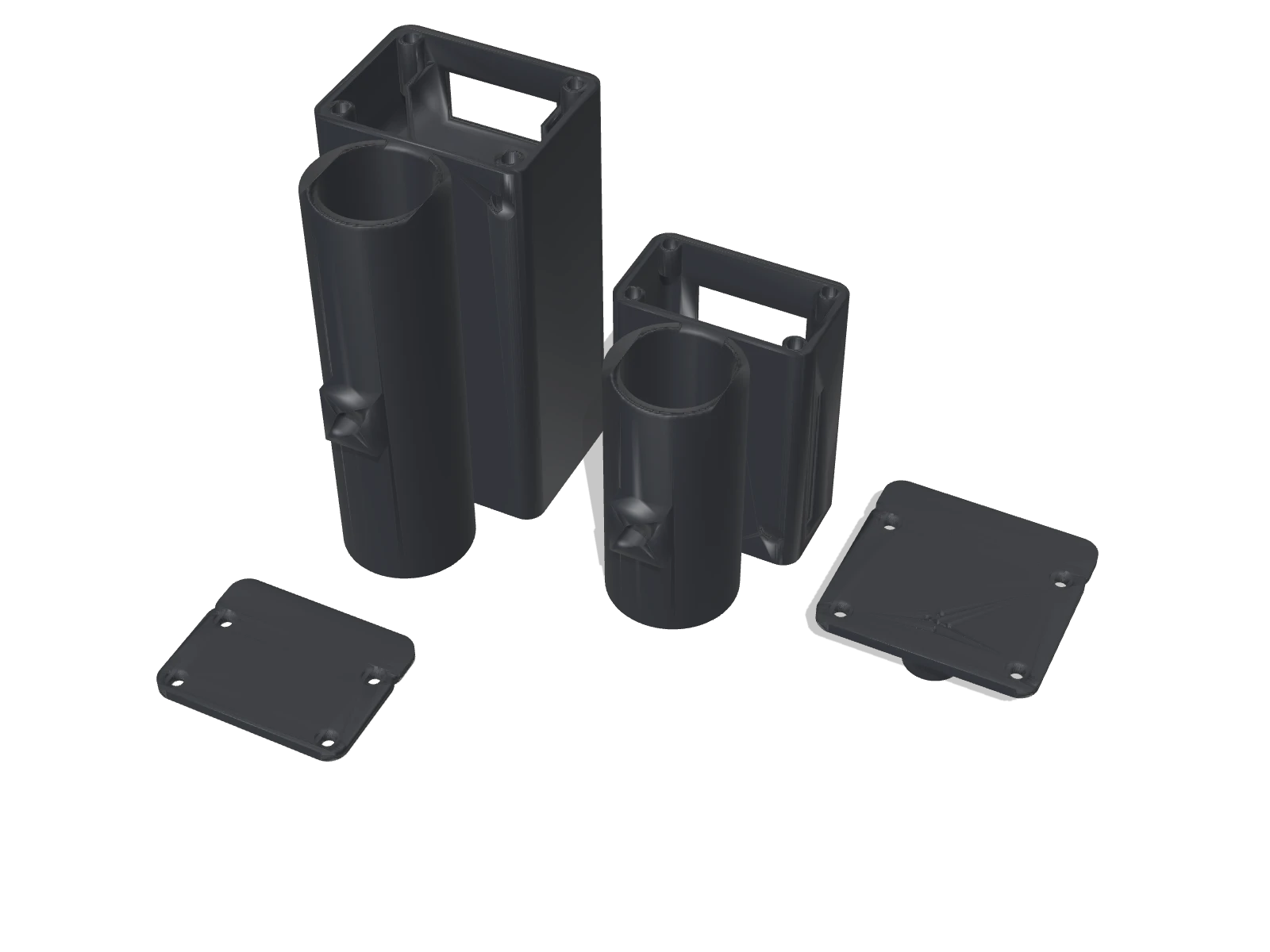
New CAD parts gunear-case and gunear-lid: a start pod on a spare agility pole with a microphone for the gun or clapper and a light sensor for the flash (16/16 fit checks, one solid each)
New race software: start from the flash or the bang (sound lag removed), lane from range at the finish, the helper's finish order joined to the times, hidden runners flagged; 12/12 race checks pass
BOM: GunEar about $48; MeetTime Kit of 2 poles + GunEar about $364 in parts, target $499 (est.)
Product page, design page and DESIGN.md updated with sports-day and club-meet use cases, FAQs, sources and a rules note (not fully automatic timing, not for records)
No. SplitPole is a concept in the in-house design and testing stage. It is designed and fit-checked in CAD but not built, and accuracy, range and battery figures are estimates until tested.
Can I use SplitPole for official meet results?
No. Times are training data. Official meet timing needs fully automatic timing systems, which SplitPole is not.
Does it work in full sun with dark shirts?
We do not know yet. Range on dark clothing comes from datasheets and estimates, so the setup card keeps poles 1.0–1.5 m from the lane, and a midday summer test comes before any claim.
Can it time several athletes at once?
In MeetTime, yes: two finish poles read each runner's lane from range for up to 6 lanes, and a helper taps the finish order. A runner hidden behind another at the line keeps the place and is flagged for a backup watch. In training mode it times one athlete per lane.
Are the lasers safe?
Both LiDARs are 850 nm sensors that the vendor lists as Class 1 laser products. We will confirm the label on each part revision before making that claim for the finished product.
Can MeetTime replace our timekeepers at a licensed meeting?
No. MeetTime is not fully automatic timing and is not for records. Licensed meetings keep their timekeepers, and MeetTime can run as a backup. It is for sports days, open and development meetings and training races where the organiser chooses the timing.
Does MeetTime decide places?
No. A person taps the finish order, and that order always stands. If a time disagrees with the order, the page flags it and the place judge decides.
IEMI's one football product: a pair of legal full-size goals with cameras, computers, batteries and radios inside the posts and crossbar, and a referee wrist unit.
Sees the ball cross the line and buzzes the referee
Logs shots, saves and headers at goal
Counts the keeper’s 8 seconds and keeps the match clock and sin bins
From$4,690per pair of smart goals with sockets and the referee wrist unit