VisionConcept
FlowCount AI
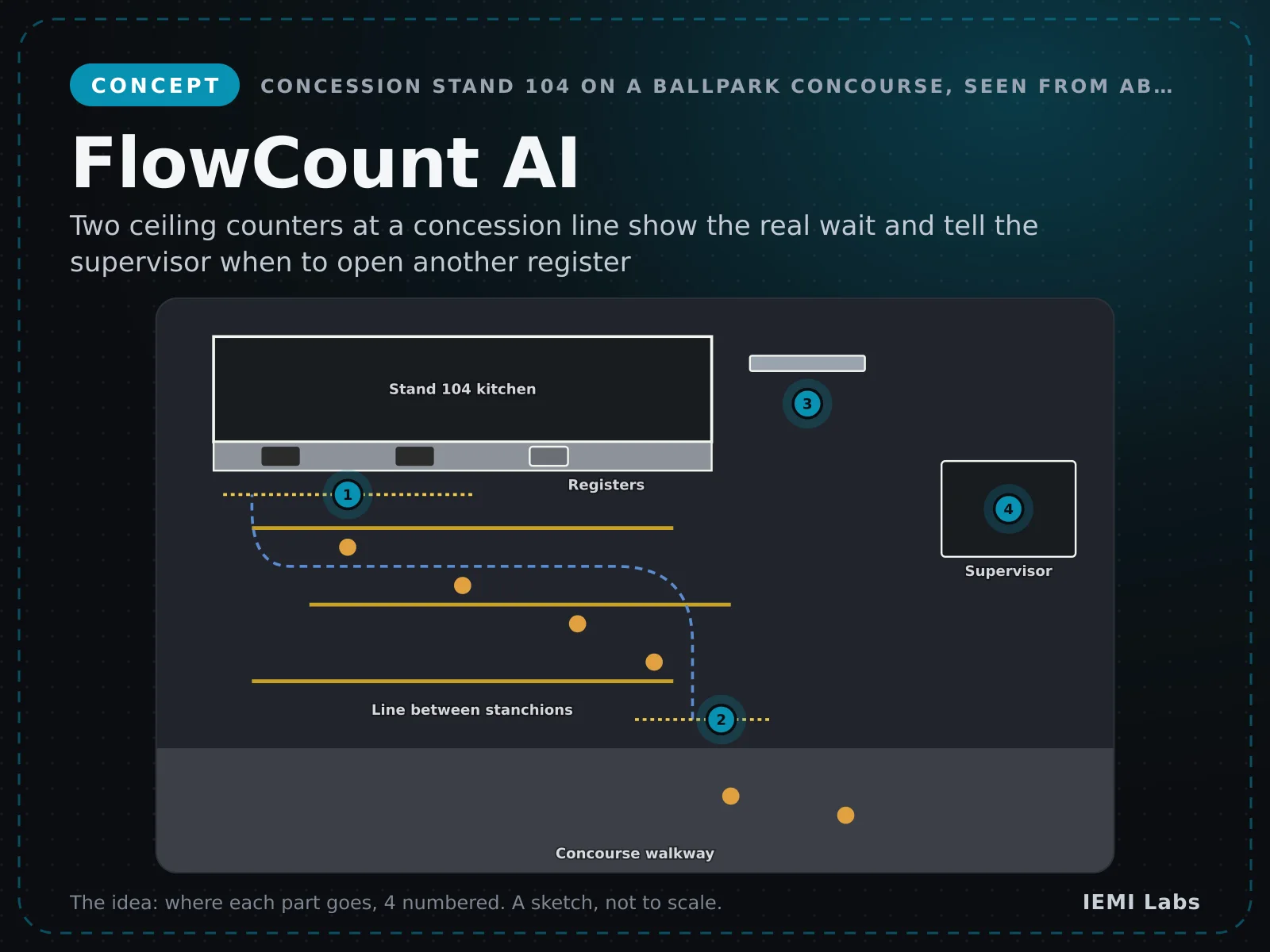
A small white ceiling sensor with two lenses that counts people without sending images.
- Measures queue length in real time
- Predicts wait times per lane
- Counts entries, exits and occupancy
From $899 per sensor
DetailsTraffic and active-travel counts as a subscription, per sensor
Software: $95–$149 per month per sensor
Concept, not for sale yet. Tell us if you want it; that decides what we build.
Rate this idea and tell us what to change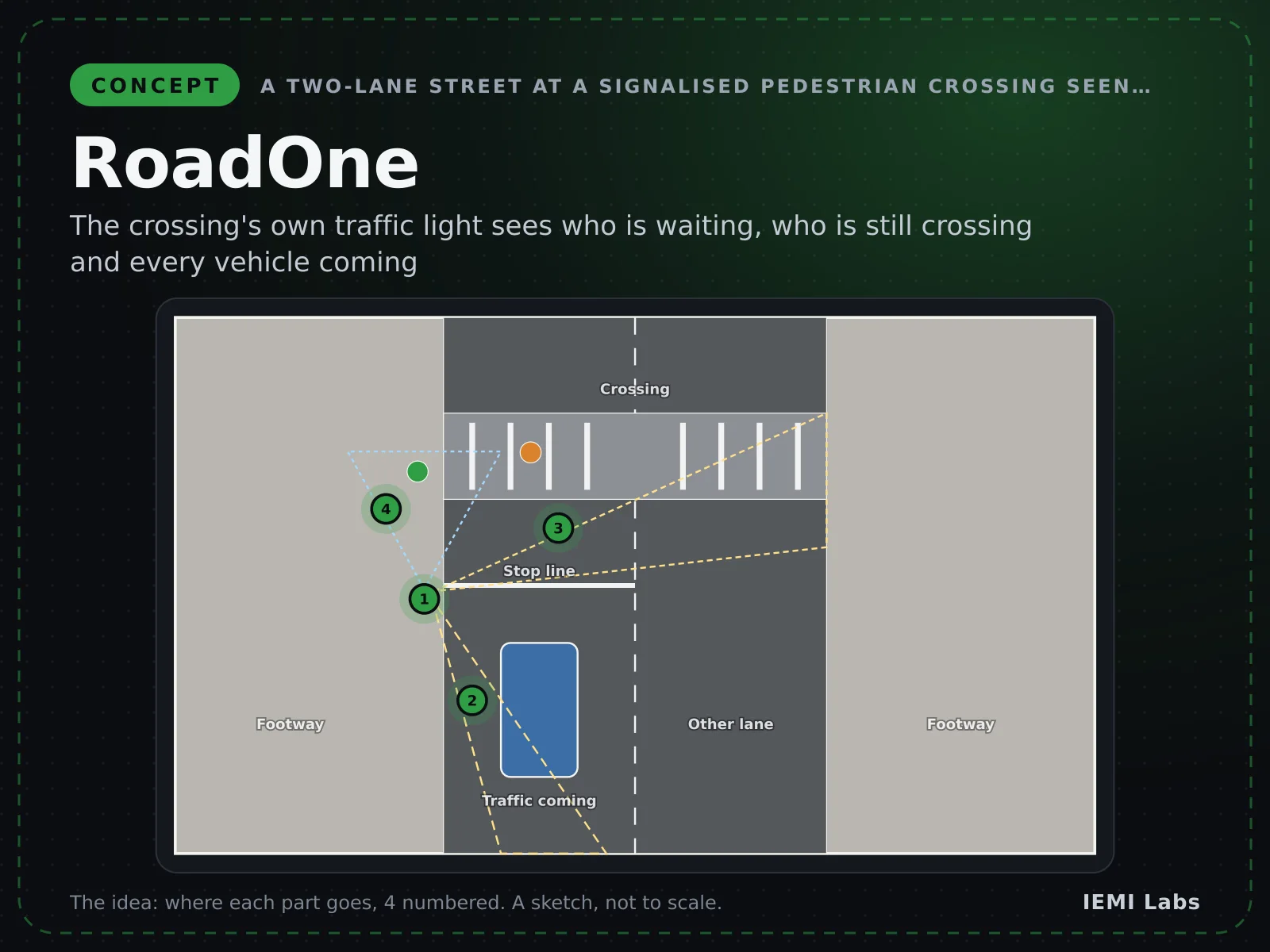
Drag to rotate · right-drag to move · scroll to zoom · click a part for its size and placeSwipe to rotate · pinch to zoom · two fingers to move · tap a part for its size
How it fits together
Scroll or tap a part. Press “See the 3D CAD design” to watch the model, built from our CAD, light each part up and show how it connects.
Real-time 3D render · drag to rotate · final design may varySwipe sideways to rotate
01
The whole RoadSense AI
A pole camera records an encrypted traffic study on a memory card; the office hub counts vehicles by turn and class from the video.
02Brain
Raspberry Pi Zero 2 W
The brain: it runs the rs-rec program
03
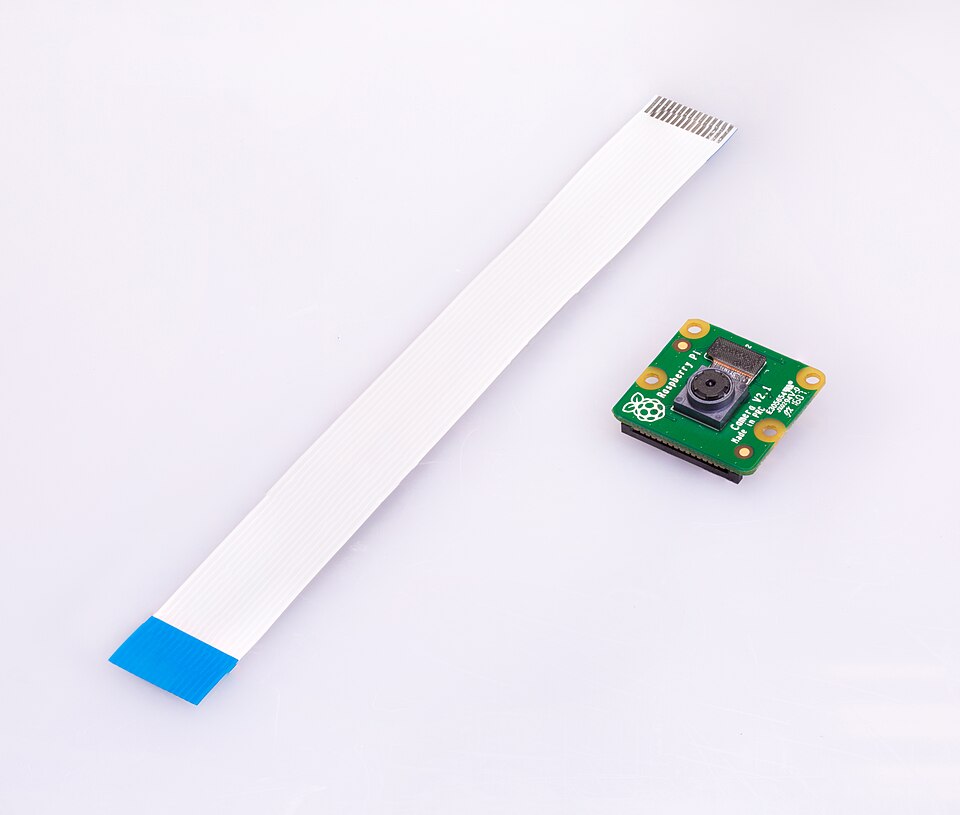
Camera Module 3 Wide
Films the intersection at 720p, 15 frames a second
Raspberry Pi Zero 2 W · CSI ribbon cable · Video frames
04
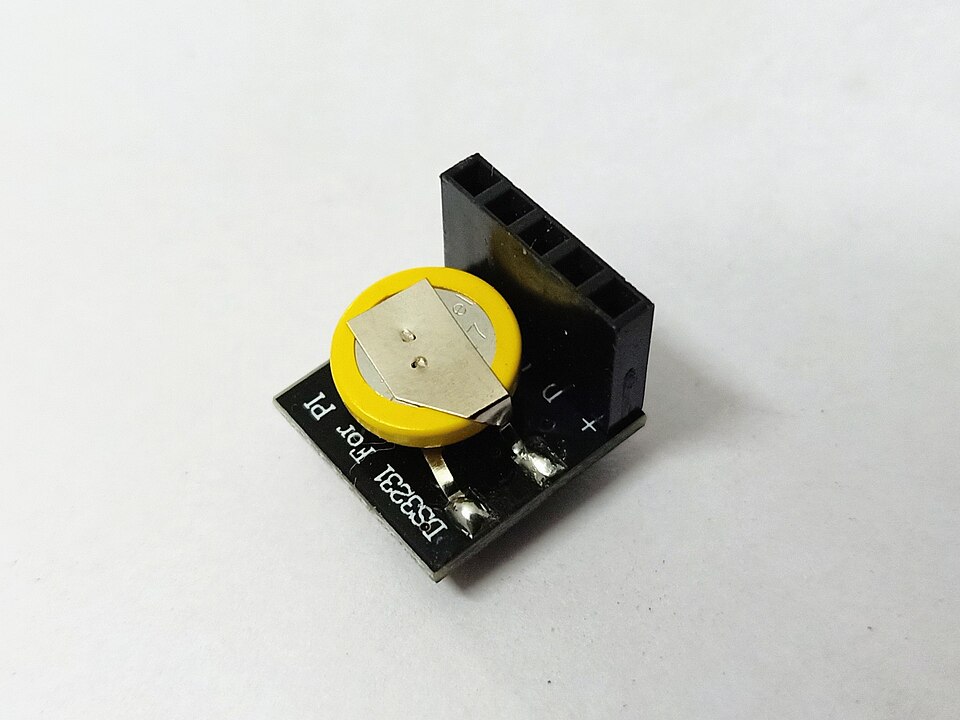
DS3231 clock
Keeps true time so every count lines up with the clock
Raspberry Pi Zero 2 W · I²C plus 1 Hz GPIO · Time and tick
05
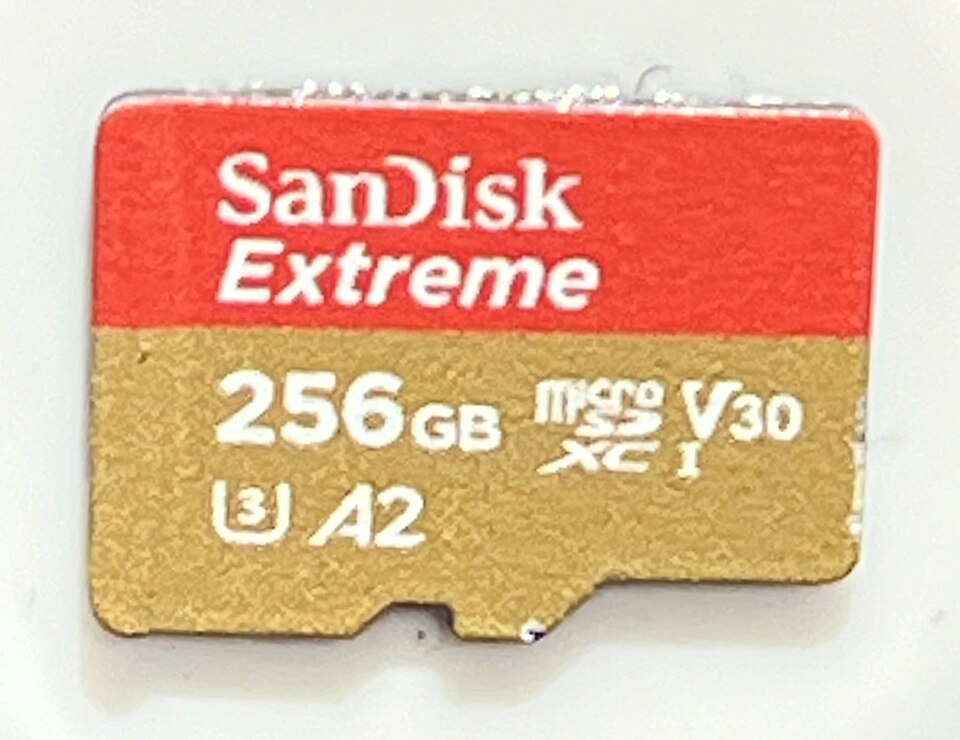
256 GB microSD
Stores the encrypted 5-minute video segments
Raspberry Pi Zero 2 W · microSD slot · Encrypted video
06
5 V step-down
Turns 12.8 V from the battery into 5 V
Raspberry Pi Zero 2 W · 5 V power pins · Power
07
LiFePO4 battery case
Powers the camera for a multi-day study from the post foot
Raspberry Pi Zero 2 W · 2-core cable, IP68 plug · 12.8 V power
08
Cat-M status modem
Optional: sends battery and view status every 15 minutes
Raspberry Pi Zero 2 W · UART (3 wires) · Status messages
09
All connected
7 key parts, one program, and your phone
What it is
A weatherproof camera sensor on a lamp column that counts road users and sends only numbers.
What it does
Who it's for
Councils, transport authorities, DOTs and consultancies monitoring streets.
How the parts connect
Every part, what links it to the brain, and how the data reaches your phone. A solid line is a cable; a dashed line is a radio link.
The program
while (state === 'RECORDING') {
  const seg = await rpicamVid({ width: 1280, height: 720, fps: 15,
                                bitrate: '2M', seconds: 300 });
  await age.encrypt(seg.file, FIRM_PUBLIC_KEY);   // X25519
  fs.rm(seg.file);                                // only the .age file stays
  sidecar.append({ start: seg.start, frames: seg.frames, lux: seg.lux });
  const view = viewMatch(referenceFrame, seg.lastFrame);
  if (view < 0.5) mqtt.event('view_moved', view);
  if (battery.volts() < 12.0) { state = 'LOWBATT'; manifest.end('END_LOWBATT'); }
  if (rtc.now() >= schedule.stop) state = 'SLEEP';
}
To your phone
Phone for setup; browser on the office hub
One screen for each job RoadSense AI does.
Pole setupA technician straps the recorder to a sign post at a junction. The phone shows the camera view so the whole junction is in frame.
Study runningWhile the study runs, the pole sends a short status every 15 minutes: battery, card space and whether the view has moved.
Counts readyBack at the office the hub turns the video into classified counts overnight. The firm gets turning counts by class with a quality report.
App screens with sample data. The interface is in development.
| Vehicle count | 18,422 entering | Each job |
|---|---|---|
| Count by class | Light 17,011; heavy 1,032 | Each job |
| Pedestrian count | 412 | Each job |
| Completeness | 97.3% | Each 15 min bin |
| Pole battery | 13.12 V | Every 15 min (modem) |
Video is encrypted on the pole; the key stays on the hub. No plate or face reading; counts only.
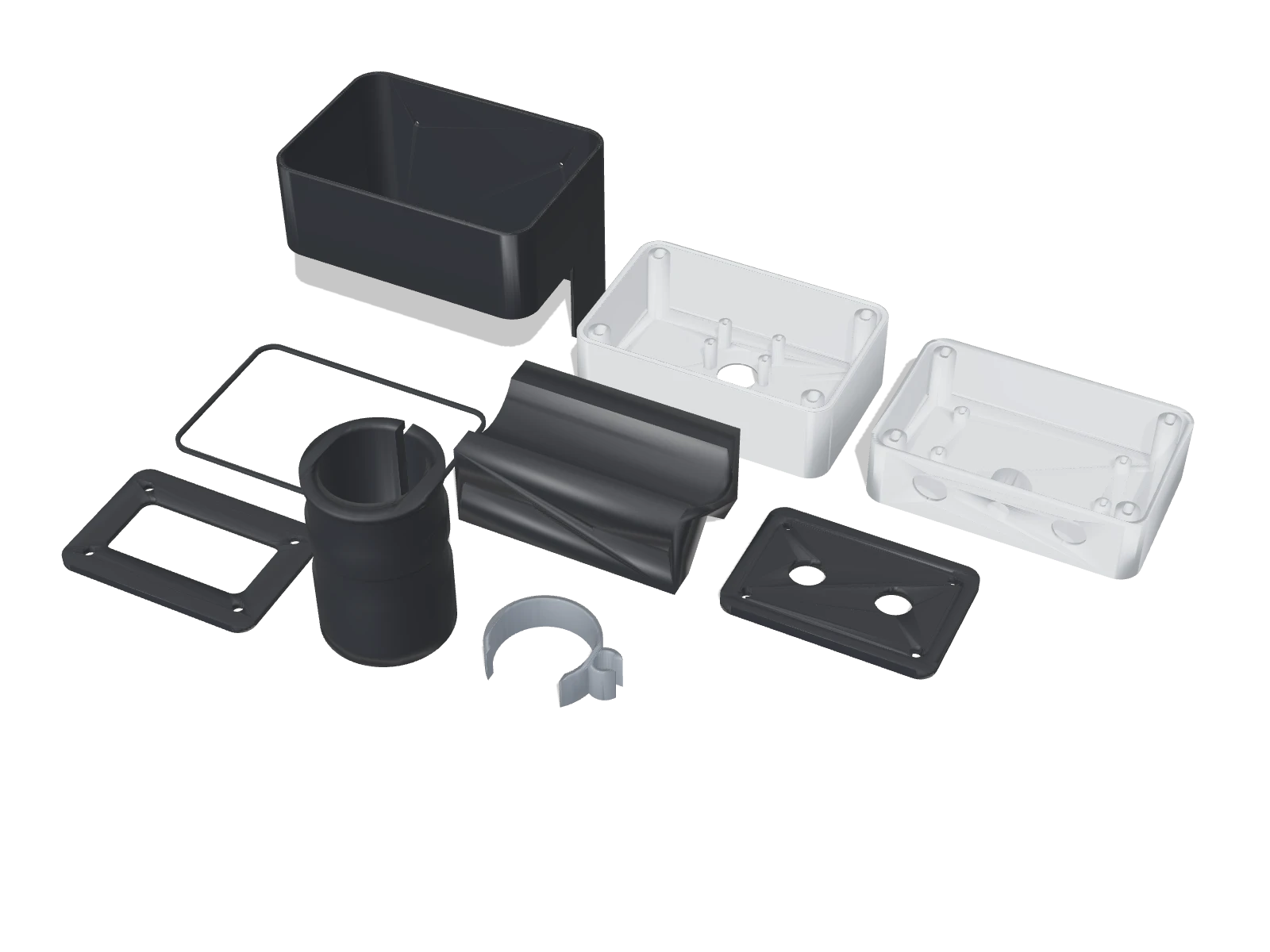
CAD design · Design complete (stages 1-6), not built
| AI processor | Hailo-8L (13 TOPS) + ARM host |
|---|---|
| Camera | Global-shutter colour camera (Sony IMX296 class), wide-angle lens with IR-corrected optics |
| Sensors | Ambient light sensor · Tilt / tamper accelerometer · Internal temperature sensor |
| Connectivity | 4G LTE (Cat 4) with LTE-M fallback · Optional Ethernet · REST API, CSV and open-data feeds |
| Power | Lamp-column or mains supply (100–240 V AC or 12–24 V DC), ~8 W (target) |
| Enclosure | Grey weatherproof housing with sunshield and stainless pole / lamp-column bracket |
| Dimensions | 22 × 14 × 10 cm |
| Weight | ~1.4 kg with bracket |
| Ingress rating | IP66 |
| Classes | 8+ road-user classes |
|---|---|
| Count accuracy | ≥95% for vehicles, ≥90% for cyclists (target) |
| Range | Up to 4 lanes + footways |
| Night | Street-lit scenes; IR option planned |
| Processor | Hailo-8L (13 TOPS) |
|---|---|
| Outputs | Counts, turning movements, speeds |
| Interval | Aggregated every 5 min |
| Video | Not stored or transmitted |
| Power | Mains / lamp column, ~8 W |
|---|---|
| Size | 22 × 14 × 10 cm |
| Rating | IP66 |
| Operating temp. | −25 °C to 55 °C |
Targets for production units; they may change during development.
Hardware: $1,490 per sensor (waived on a 36-month subscription)
Software: $95–$149 per month per sensor
Target pricing. Subscription includes LTE data, dashboard, maintenance and replacement. Installation by a local contractor or our partner network is quoted per site.
$95/mo per sensor
Classified counts for corridors and active-travel schemes.
$149/mo per sensor
Adds turning movements and speeds.
Custom
For authority-wide deployments and consultancies.
Indicative launch pricing in USD, excluding taxes and shipping. Final pricing is confirmed before any balance is charged.
Community
RoadSense AI is in development. Rate the idea, tell us what to change about the features, specs or price, and we'll build it with your feedback.
How much people want it
–
No ratings yet
Follow RoadSense AI
Get build updates and first access when pre-orders open.
No comments yet. Tell us what you'd want from RoadSense AI.
Questions
Tell us what this would save you, or ask anything. We reply within two business days.
A member of the IEMI Labs team will reply within two business days.
From the product lab · ideation phase
No. Video is processed on the sensor and discarded. Only counts, classes, turning movements and speeds leave the device. Number-plate reading is not included. A single setup snapshot is used during configuration and can be deleted afterwards.
The sensor is banded to a lamp column or pole at 4–8 m and powered from the column feed or a nearby supply. Installation is usually done by the authority's street-lighting contractor or our partner network and takes under an hour per site.
RoadSense has built-in 4G LTE with LTE-M fallback, and the data plan is included in the subscription. If coverage drops, counts are buffered on the sensor and uploaded later.
Not yet. We plan to apply to relevant frameworks such as the UK Crown Commercial Service transport-technology and G-Cloud agreements. Until then, pilots can be bought directly under local purchasing thresholds.
No. RoadSense AI is a new concept in development. Specifications are target specifications. It is a concept: we are not taking orders, reservations or deposits, and it has no ship date yet.
Hardware is covered for the full term of your subscription, including replacement. For customers who buy the hardware outright, we plan a 2-year limited warranty. Final terms will be published before shipping begins.
A small white ceiling sensor with two lenses that counts people without sending images.
From $899 per sensor
Details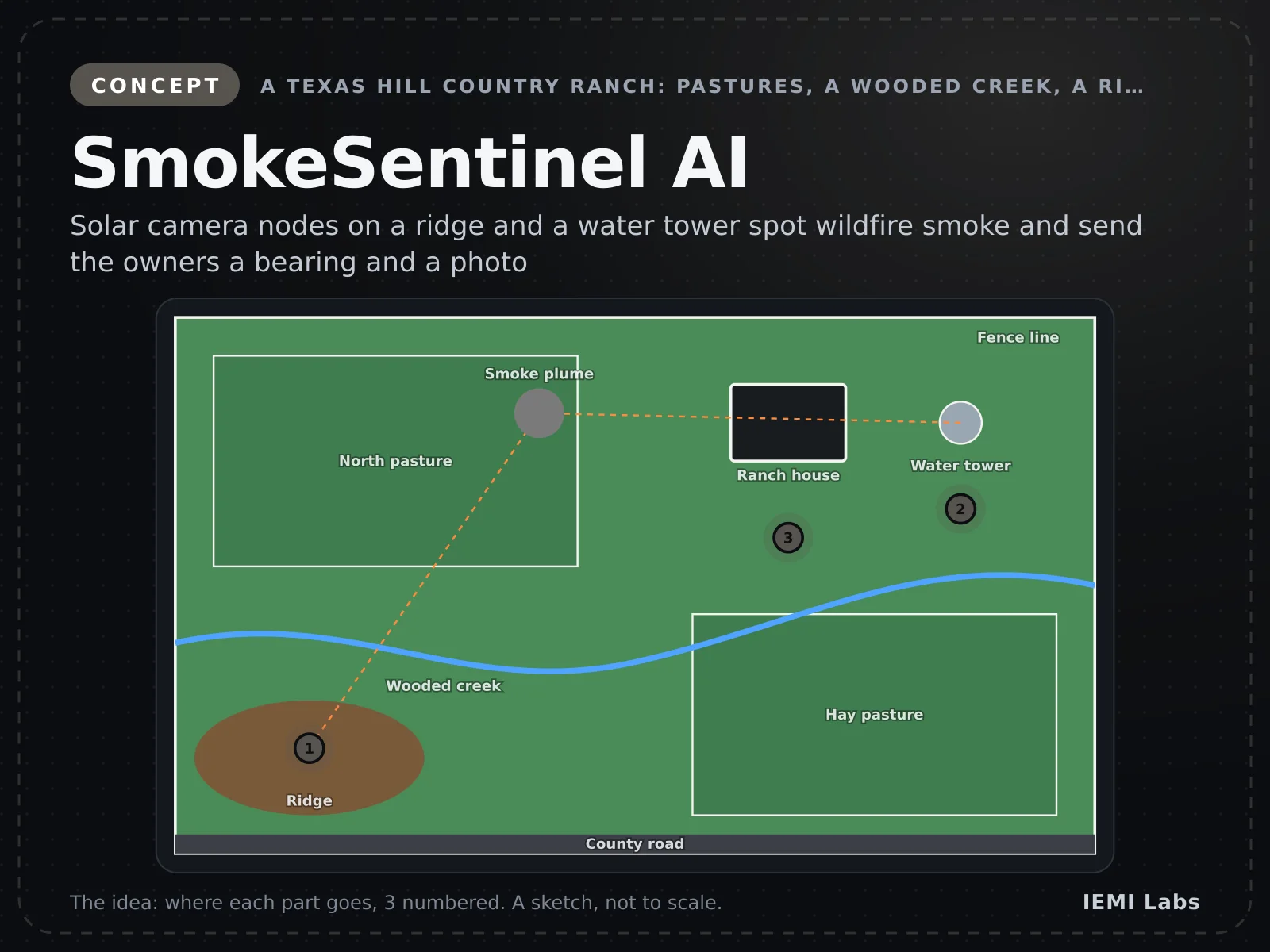
A solar-powered four-camera head on a mast that watches the horizon for wildfire smoke.
From $4,900 per node incl. solar kit
Details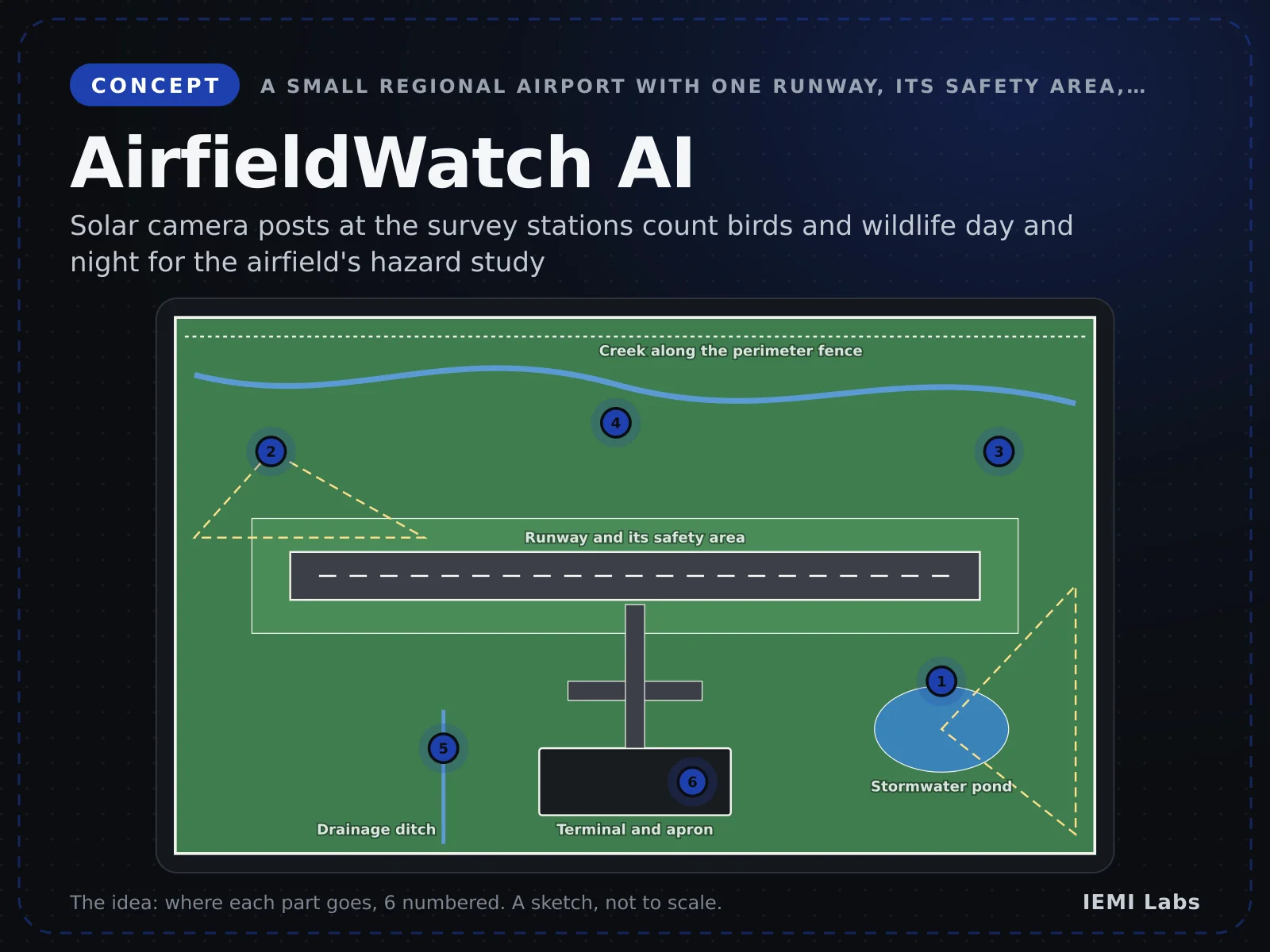
A thermal and visible camera turret on a mast that spots birds and wildlife near runways.
From $8,900 per turret
DetailsRoadSense AI
Concept · target $1,490