Skip to content
IEMI Labs
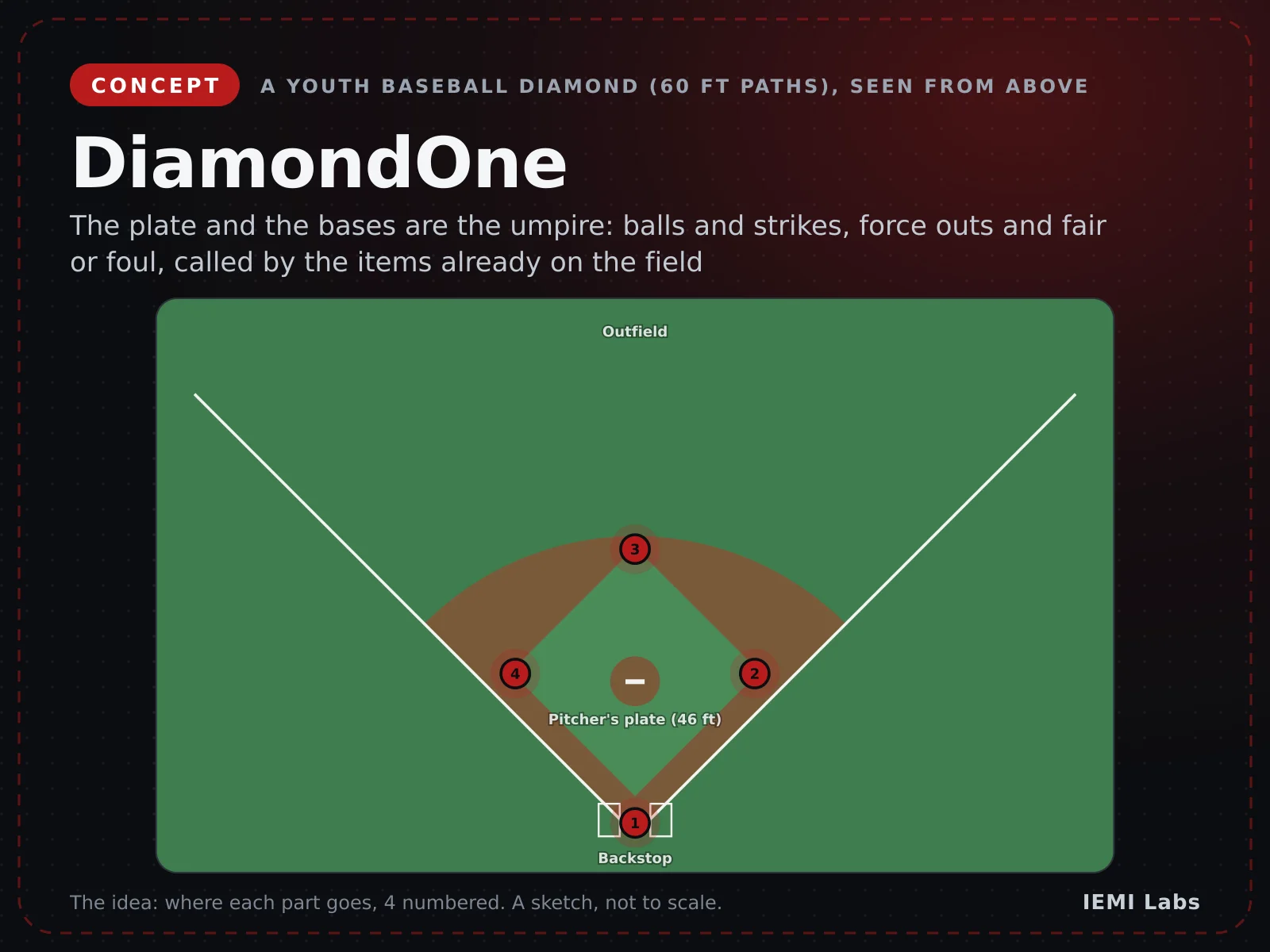
Now part of DiamondOne. DiamondOne does this product's jobs and more in one device, our one product for Baseball and softball.

CageTrax

Every swing measured, and a cage that runs itself without a desk

Concept · not for sale
Engineering design: CageTrax
Target price from$2,490per cage (hardware, mounts and install)

Software: $79 per cage per month

Concept, not for sale yet. Tell us if you want it; that decides what we build.

Rate this idea and tell us what to change
CageTrax concept: the idea and where each part goes

Drag to rotate · right-drag to move · scroll to zoom · click a part for its size and placeSwipe to rotate · pinch to zoom · two fingers to move · tap a part for its size

How it fits together

CageTrax, part by part

Scroll or tap a part. Press “See the 3D CAD design” to watch the model, built from our CAD, light each part up and show how it connects.

CageTrax concept: the idea and where each part goes

Real-time 3D render · drag to rotate · final design may varySwipe sideways to rotate

  1. 01

    The whole CageTrax

    Two strobe-lit cameras and a radar watch a batting cage. The Pi finds the ball in 3D and reports exit speed, launch angle and distance.

  2. 02Brain

    Raspberry Pi 5 (cage node)

    The brain: it runs the cage node services program

  3. 03

    Stereo OV9281 cameras

    Two global shutter cameras film the ball at 120 fps

    Raspberry Pi 5 (cage node) · CSI-2 ribbon cables · 1280 x 800 mono video

  4. 04

    Trigger board

    Starts both exposures on the same edge, 120 times a second

    Raspberry Pi 5 (cage node) · GPIO PWM pins (12, 13) · 120 Hz trigger, strobe gate

  5. 05

    850 nm strobe lights

    Flash 150 microseconds so the ball does not blur

    Raspberry Pi 5 (cage node) · Gate line from trigger board · 150 µs pulses

  6. 06

    OPS243 speed radar

    Measures pitch and ball speed off the bat

    Raspberry Pi 5 (cage node) · USB serial cable · Speed readings

  7. 07

    Cage-door kiosk

    Shows each swing and reads the wristband tap

    ESP32-S3 · Wi-Fi (MQTT) · Taps and swing numbers

  8. 08

    CageGuard pod

    Pauses the machine when a person is in the cage

    XIAO ESP32-C3 · Wi-Fi (MQTT) · Zone alerts, pause

  9. 09

    All connected

    7 key parts, one program, and your phone

What it is

A camera bar, radar and tap-in kiosk that measure every batted ball in a cage.

What it does

  • Measures exit velocity and launch angle
  • Estimates spray and distance
  • Files each swing to the hitter
  • Runs leaderboards and game modes

Who it's for

Owners of batting-cage facilities and travel-ball academies with 4–12 cages.

How the parts connect

CageTrax, wired up

Every part, what links it to the brain, and how the data reaches your phone. A solid line is a cable; a dashed line is a radio link.

Stereo OV9281 cameras1280 x 800 mono videoCSI-2 ribbon cablesTrigger board120 Hz trigger, strobe gateGPIO PWM pins (12, 13)850 nm strobe lights150 µs pulsesGate line from trigger…OPS243 speed radarSpeed readingsUSB serial cableCage-door kioskTaps and swing numbersWi-Fi (MQTT)own board: ESP32-S3CageGuard podZone alerts, pauseWi-Fi (MQTT)own board: XIAO ESP32-C3THE BRAINRaspberry Pi 5 (cage node)runs cage node servicesNode.js 22 with opencv.jsEdge Hubvia Ethernet · MQTTPhone, kiosk and TVvia Local web app · Wi-Fi
Drawn from the CageTrax parts list. The 3D view above is built separately, from the CAD.

The program

What controls CageTrax

Runs on
Raspberry Pi 5 (4 GB)
Written in
Node.js 22 with opencv.js
System
Raspberry Pi OS
AI model
None. Frame differencing, stereo triangulation and a flight model
  1. 1Capture two 120 fps mono streams with rpicam-vid
  2. 2Subtract background and find ball blobs in both views
  3. 3Match blobs, triangulate and fit a ballistic track
  4. 4Fuse camera speed with the radar outbound speed
  5. 5Compute distance and publish the swing over MQTT
cage node services.tsmain loop
for await (const [left, right] of capture.pairs()) {   // two rpicam-vid streams
  const a = findBlobs(left, bg.left);       // background-subtracted
  const b = findBlobs(right, bg.right);
  const pts = triangulate(matchEpipolar(a, b), calib);
  track.add(pts);                           // ballistic fit
  if (track.leftHittingZone()) {
    const fit = track.fit();                // exit velocity, angle, spray
    const ev = fuse(fit.speed, radar.lastOutbound(), fit.dir);
    const dist = flightModel(ev, fit.launchAngle, site.airDensity);
    mqtt.publish(`local/cagetrax/${cage}/swing`,
                 swingJson(ev, fit, dist), { qos: 1 });
  }
}

To your phone

How the data reaches CageTrax hitter and coach app

iPhone, Android browser, facility TV

  1. Cage node
  2. Edge Hub
  3. Phone, kiosk and TV

What you see in the app

One screen for each job CageTrax does.

  • Swing dataA hitter taps her wristband at the cage door. Every ball she hits is measured, filed to her and shown on the kiosk in under a second.

  • Age speed capA 14-year-old taps into the 70 mph cage. The radar reads a pitch over his 65 mph cap, so the machine stops until the desk clears it.

  • Self-service cageLate at night nobody is at the desk. A hitter opens the gate to pick up balls, and the machine loses power until the gate shuts again.

  • League nightOn league night a travel team rotates through the cages. Every swing feeds the Exit Velo Ladder on the leaderboard TV.

App screens with sample data. The interface is in development.

What the app gets

Data CageTrax sends to the app
Exit velocity78.4 mphEach swing
Launch angle21°Each swing
Distance262 ft, ±12 ftEach swing
Pitch speed58.2 mphEach pitch
Cage health120 fps, radar okEvery 60 s

No camera-based identity. Wristband IDs map to profiles on the facility hub. The cloud gets only pseudonymous metrics.

CAD design · Design complete on paper (stages 1-6, rev A2 CageGuard), not built

Designed in code, checked in 3D

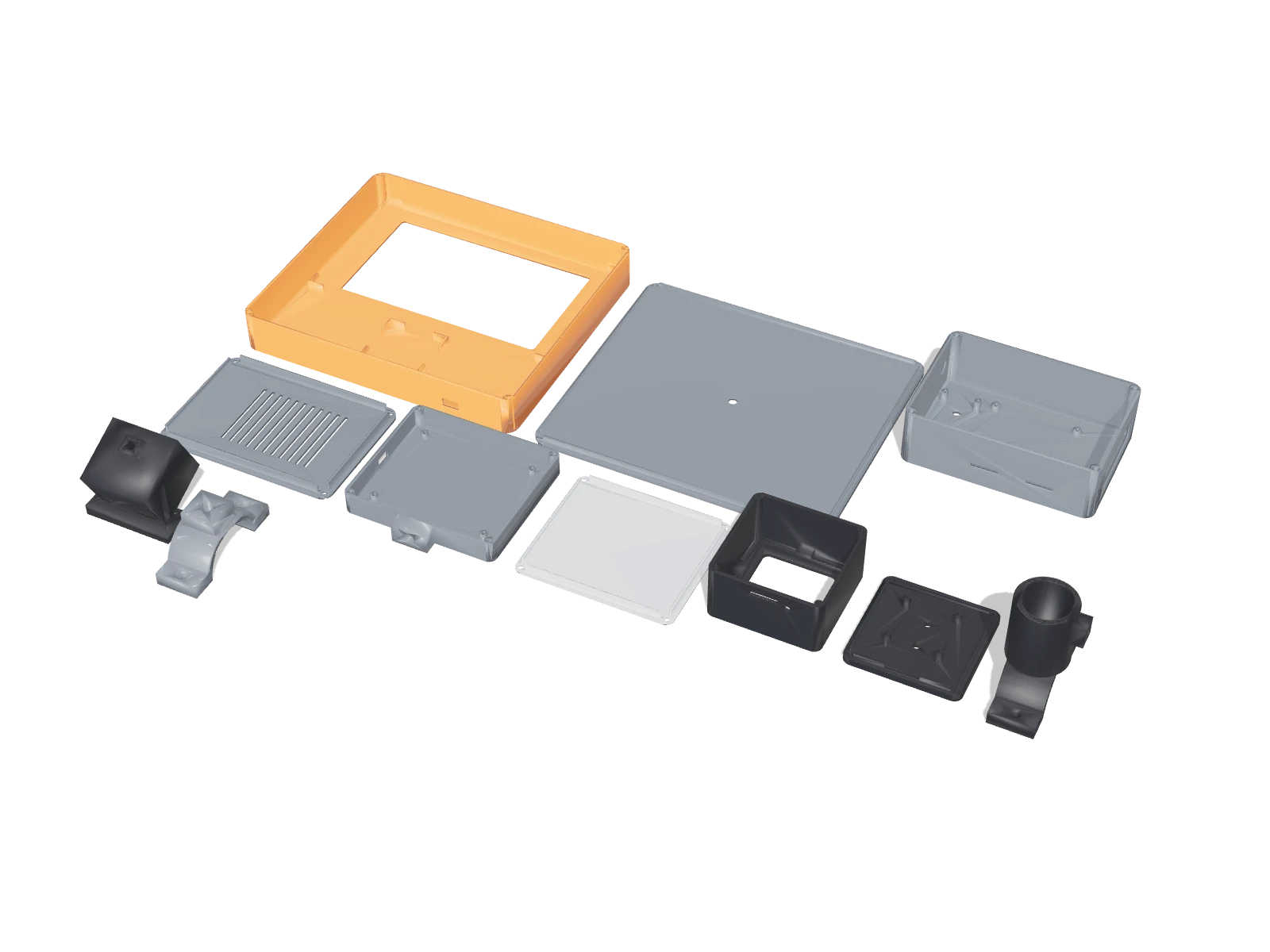
  • 14 printed parts, each a single closed solid
  • Every bought part fitted inside and checked for collisions
  • Assembled exactly as shown in the 3D CAD view (the button on the picture at the top)
See the CAD parts renderCageTrax printable parts rendered from the CAD

Key specs

CageTrax hardware
AI processorRaspberry Pi 5 4GB cage node + IEMI trigger board; shared IEMI Edge Hub per facility
Camera2 × Arducam OV9281 1 MP mono global-shutter cameras (1280 × 800, 120 fps) with 850 nm bandpass filters and 6 × OSRAM SFH 4715AS 850 nm strobe LEDs each
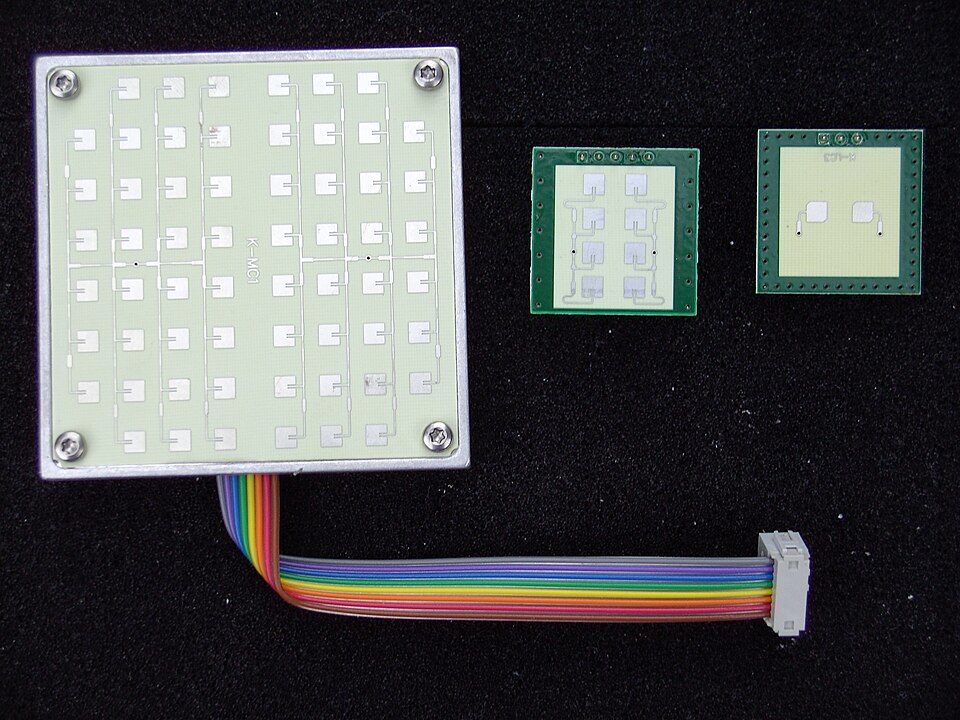
SensorsOmniPreSense OPS243-A 24 GHz Doppler radar (±0.5% speed) · PN532 NFC reader in the kiosk · CageGuard: HLK-LD2450 24 GHz radar on the L-screen, gate reed contact, UL-listed Shelly Plug US Gen4 for machine power
ConnectivityLocal MQTT to the kiosk, TV page and facility hub · Metrics only to the cloud, no video · Kiosk: Waveshare ESP32-S3-Touch-LCD-7
PowerIndoor plug-in adapters: about 11.8 W per cage node, about 3 W per kiosk
Enclosure3D-printed ASA and PETG camera pods with polycarbonate windows on a 2040 aluminium spine, cage-pipe clamps with EMT standoff arms, radar radome housing and an orange kiosk front
Dimensions500 mm stereo baseline; bar 0.6–0.8 m outside the side net; radar 1.5 m behind the plate, 1.0 m up
All target specifications

Measurement

Measurement target specifications
Exit velocity±1 mph
Launch angle±1.5°
DistanceModel estimate, about ±15 ft at 350 ft
Display latencyUnder 1 second

Sensing

Sensing target specifications
Cameras2 × 120 fps global shutter, 850 nm strobe
Strobe pulse150 µs, locked to exposure
Radar24 GHz Doppler, ±0.5% speed
Not measuredSpin, swing mechanics

Install

Install target specifications
Cages per facility4–12, one shared hub
MountingClamps on 1-5/8 to 1.9 in cage pipe
PowerAbout 12 W per cage

Targets for production units; they may change during development.

Pricing

Hardware: $2,490 per cage (hardware, mounts and install)

Software: $79 per cage per month

Target pricing. The subscription covers software, leaderboards, cloud and support. Estimated hardware about $714 per cage plus a shared facility hub of about $300. CageGuard add-on target +$249 per cage (about $64 of parts, est.), no extra monthly fee.

Indicative launch pricing in USD, excluding taxes and shipping. Final pricing is confirmed before any balance is charged.

Community

What do you think of CageTrax?

CageTrax is in development. Rate the idea, tell us what to change about the features, specs or price, and we'll build it with your feedback.

How much people want it

–

No ratings yet

  1. 50
  2. 40
  3. 30
  4. 20
  5. 10

Follow CageTrax

Get build updates and first access when pre-orders open.

Leave feedback

Your rating of the idea

Feedback on a product concept in development, not a review of a shipped product. Posts may be moderated; links and contact details are held for review. See our community guidelines and privacy policy.

Comments

    No comments yet. Tell us what you'd want from CageTrax.

    Questions

    Ask about CageTrax

    Tell us what this would save you, or ask anything. We reply within two business days.

    We use your details only to respond to this request. See our privacy policy.

    From the product lab · ideation phase

    Lab updates for CageTrax

    All lab updates
    1. LatestOne baseball and softball product per lane, as the smart L-screen itself.
      • Still part of DiamondOne, now redesigned as a smart L-screen: https://iemilabs.com/products/diamondone/

      See it in 3DFull research and design

    2. A batting-cage owner needs one system per lane for swing numbers, swing video, the right machine speed for each hitter and a lane that runs without staff. Today these are separate buys: HitTrax-class data about $17,744 a lane, a programmable machine $4,598.99 (Anytime Baseball Supply), a facility control package $35,000 (JJ Amusements), and house rules that want gates shut and nobody walking to a running machine (MEL Safety Institute, May 2026). Young pitchers throw live BP with nobody counting against the Pitch Smart guideline (MLB and USA Baseball).
      • CageTrax is now part of DiamondOne: see /products/diamondone/

      See it in 3DFull research and design

    3. A batting-cage owner wants each machine lane to measure every swing, run without staff and give each hitter a pitch speed that suits their age. Posted rules keep under-16s out of the 70–75 mph cages (Fairfax County Park Authority), a used token and card control package for a facility was listed at $35,000 (JJ Amusements), and a programmable touchscreen machine costs $4,598.99 each (Anytime Baseball Supply). Our own two products for it cost $3,188 and $79 a month a lane.
      • Combined into CageLane (https://iemilabs.com/products/cagelane/); CageTrax itself is unchanged

      See it in 3DFull research and design

    4. Batting cage owners want to run cages with fewer staff, but the posted rules (gate shut before pitching starts, one batter, nobody on the plate or in front of a running machine, no under-16s in the 70–75 mph cages, stop for storms) only work when someone watches. Sources: MEL Safety Institute batting cage best practices (May 2026) and Fairfax County Park Authority cage rules.
      • New CAD part guard-pod-case: a pod strapped to the machine's L-screen with a 24 GHz radar that sees anyone within about 5 m of the machine (15/15 fit checks)
      • New CAD part guard-pod-lid: thin radar window, guarded PAUSE key and a red/green light (8/8 fit checks)
      • New CAD part reed-clip, printed twice: holds the gate contact and its magnet on the door pipe (4/4 fit checks)
      • New software cage-guard.mjs: the machine runs only for a tapped-in hitter with pitches left, gate shut, nobody near it, no pause or weather hold, and pitch speed within the age cap (13/13 checks)
      • BOM +$64 per cage (est.), including a UL-listed smart plug that switches itself off if the link fails; target price +$249 per cage
      • Product page, design page and DESIGN.md §10 updated with sources and a rules note

      See it in 3DFull research and design

    CageTrax FAQ

    General FAQ
    Is CageGuard a safety device?

    No. It is a house-rules and access control. It only ever removes power from a cord-connected pitching machine through a UL-listed smart plug, and it never starts a pitch by itself. Helmets, the L-screen, the machine maker's own switch and the facility's posted rules and supervision all stay in place.

    What does CageGuard check before the machine runs?

    A hitter has tapped in and has pitches left in the round, under-10s have an adult checked in, the gate contact shows the door shut, the radar on the L-screen sees nobody within about 5 m of the machine, PAUSE is not pressed, there is no weather hold, and the last pitch speed is within the hitter's age cap. If the cage computer or Wi-Fi fails, the plug switches itself off within 15 seconds.

    Where do the rules come from?

    From the facility. The defaults follow published cage rules: the MEL Safety Institute batting cage best practices (May 2026) and Fairfax County Park Authority's posted rules (for example, no one under 16 in the 70–75 mph cages). Each owner sets their own.

    Is CageTrax available?

    No. CageTrax is a concept in the in-house design and testing stage. The design is complete on paper and in CAD, but nothing has been built, printed or measured, and all specifications are targets.

    Does it measure spin or swing mechanics?

    No. CageTrax measures exit velocity, launch angle, spray direction and pitch speed. Distance is a model estimate shown with a ± band because spin is not measured.

    Can balls hit the cameras?

    The camera bar sits 0.6–0.8 m outside the side net behind polycarbonate, and the radar sits behind the back net. We will test net deflection with 100 balls at 80 mph before release.

    What data is kept about young hitters?

    No video is stored by default, and identity comes only from the wristband or QR join, never from faces. Leaderboards show a first name and last initial, or a nickname.

    Related products

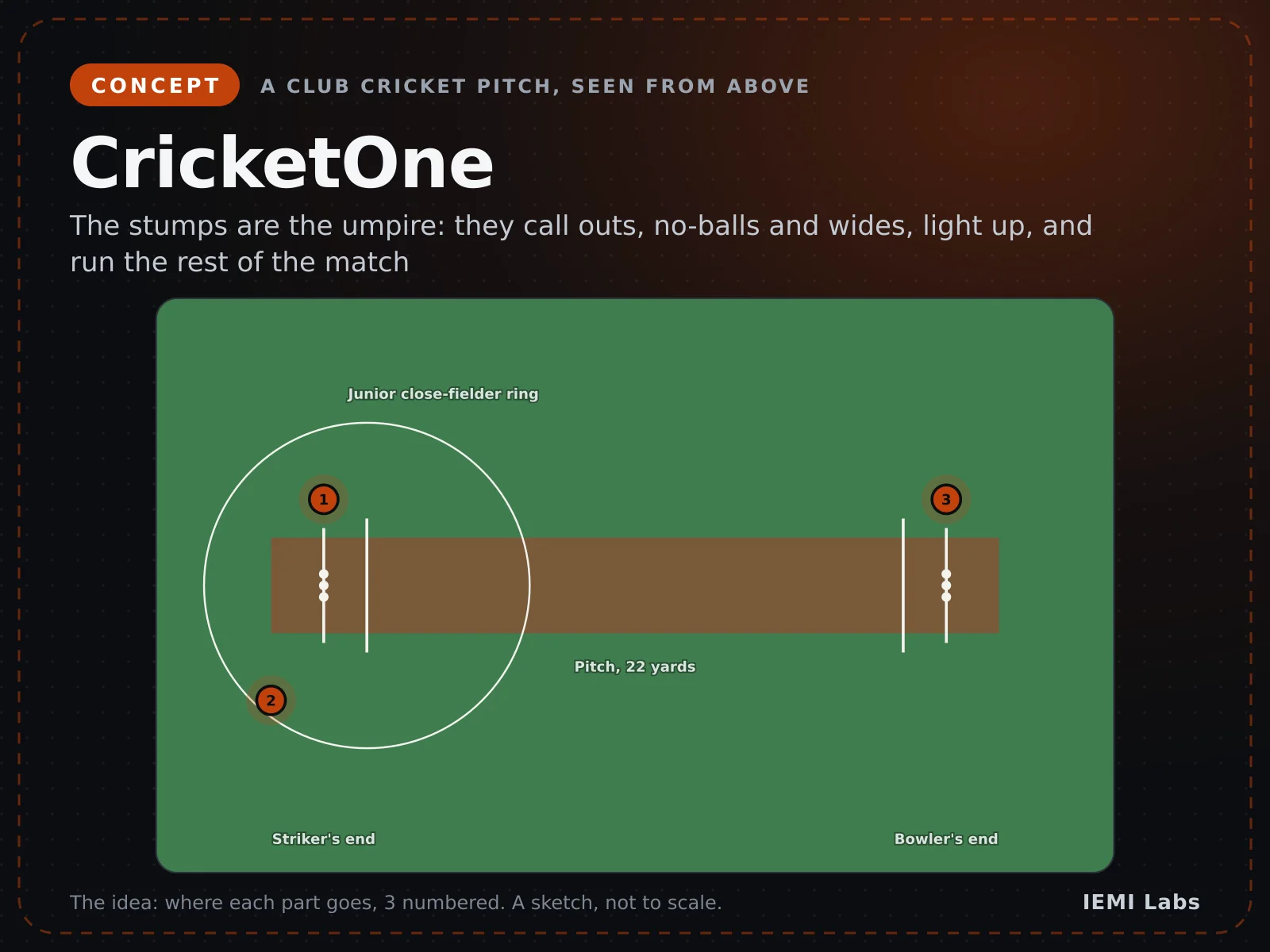
    CricketOne concept: the idea and where each part goes
    SportsConcept

    CricketOne

    IEMI's one cricket product: a smart wicket pair at Law 8 size, with every sensor inside the stumps.

    • Makes the calls: bowled, hit wicket, run-out, stumping, no-ball, wide, over
    • Tracks the ball from six global-shutter stump cameras
    • Times bail-off and checks the bat at the crease in stereo

    From $1,990 per CricketOne

    Details
    FootballOne concept: the idea and where each part goes
    SportsConcept

    FootballOne

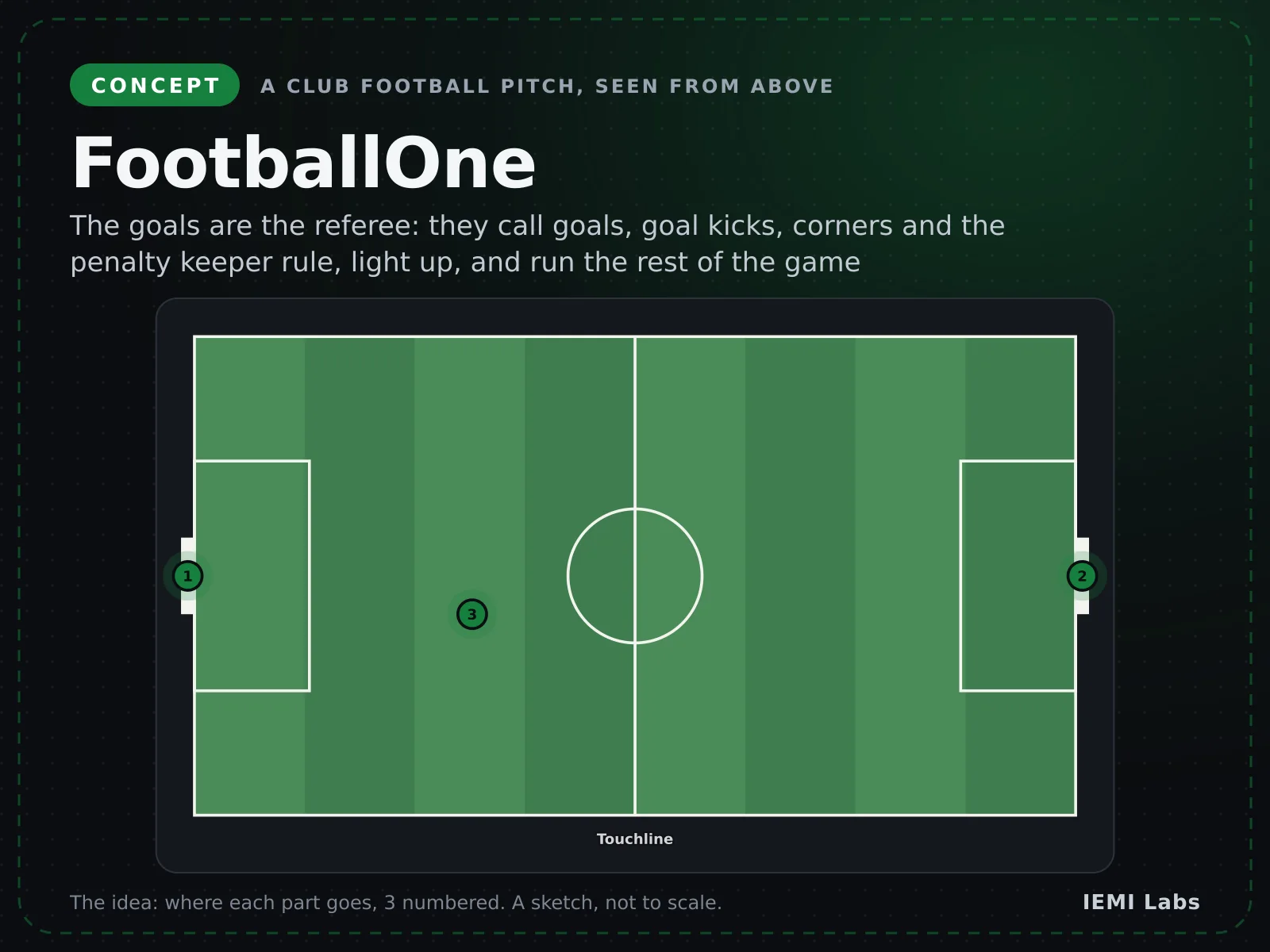
    IEMI's one football product: a pair of legal full-size goals with cameras, computers, batteries and radios inside the posts and crossbar, and a referee wrist unit.

    • Sees the ball cross the line and buzzes the referee
    • Logs shots, saves and headers at goal
    • Counts the keeper’s 8 seconds and keeps the match clock and sin bins

    From $4,690 per pair of smart goals with sockets and the referee wrist unit

    Details
    CourtOne concept: the idea and where each part goes
    SportsConcept

    CourtOne

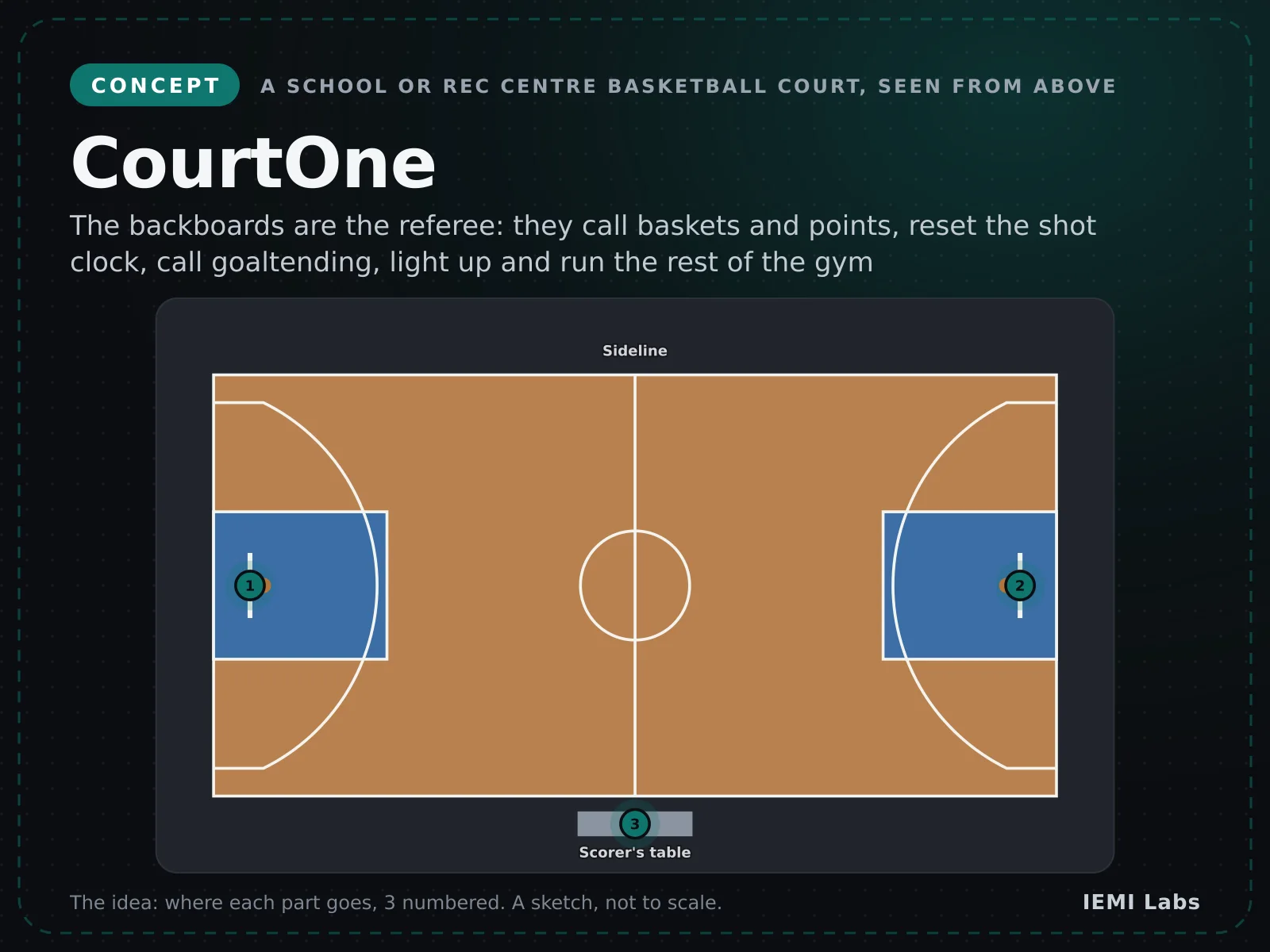
    IEMI's one basketball product: the backboard, ring, padding and shot clock at both ends of a court, with a camera, a computer, a rim sensor and edge lights built in, and one app.

    • Counts makes, maps shot spots and feels rim hits
    • Runs a double-sided 24/14 or 35-second shot clock from the scorer's tablet
    • Lights the board edges red at the end of a period and yellow at the shot clock signal

    From $4,990 per court: two smart backboards with rings, padding and shot clocks

    Details

    CageTrax

    Concept · target $2,490

    I want this