StoveSentry Hood
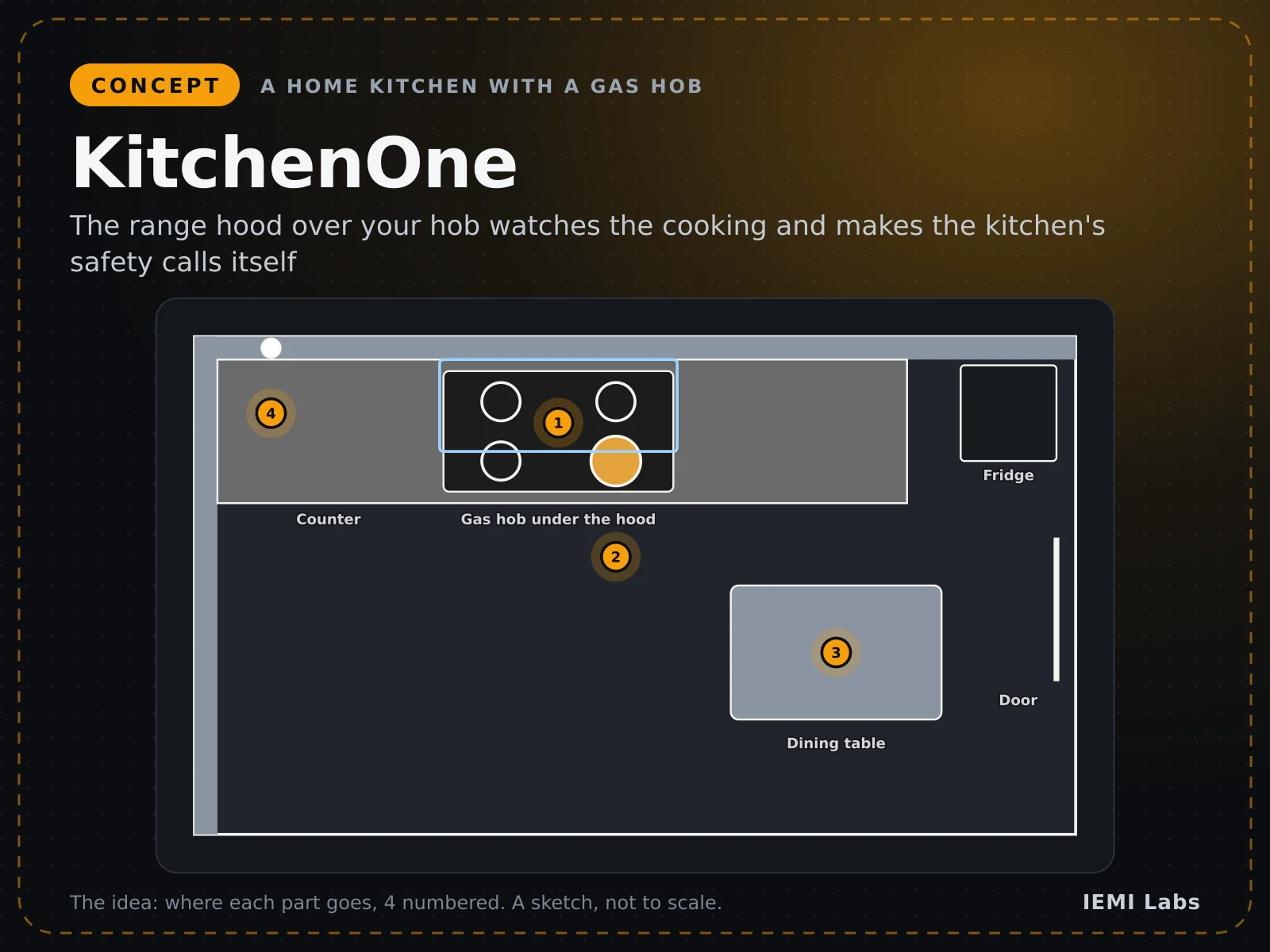
The range hood already over the stove, made smart: the fan comes on by itself, and a pan left on calls the aide
Turns the kitchen's existing range hood fan on whenever a burner is hot and runs a short purge after, and alerts a named responder within minutes when a burner is hot and the kitchen has been empty past the operator's limit, with every step logged.
- Who buys it
- Operators of independent and assisted living and senior affordable housing (maintenance and operations), and short-term-rental hosts with 5 to 200 units.
- Why it pays
- Keeps the $120 hood already installed instead of a $1,162 to $1,699 hood that switches on by itself (est.); the fan runs when cooking, not in 28 % of cooking events as measured in apartments; one avoided kitchen fire (about $15k to $40k, est.) pays for a large fleet.
- Target price
- $149 per kitchen + $4 per month for operators (target); rev A alert-only kit $129. Electrician work for hardwired hoods and listed shut-off devices are separate.
- First-minute wow
- Put a pan on: the hood fan starts within about a minute and stops 10 minutes after the last burner cools, and the operator's weekly report shows each unit's fan-on share of cooking minutes.
What the research found
And how this design answers it
- Alarm box useful once a year → the hood itself becomes the product: AutoVent runs the fan at every meal (rev B)
- Auto-on hoods cost $1,162 to $1,699 → a listed ~$20 smart plug or relay switches the hood already installed; nothing inside the hood is touched
- Magnet bar shifted by wiping → the new front clip squares it against the hood face so burner zones stay put
- Manual control rules → the hood's rockers stay master OFF; firmware never overrides a manual ON
- Life-safety liability → sold B2B as a supplemental alert to named responders, with logs; no fire-prevention or air-quality claim
- Timer guards cry wolf → per-burner thermal plus still-person radar plus a big 'I'm here' button
- Lithium cell above the stove → no battery in the bar; 4×AA backup in a wall control at counter height
- Privacy in residents' homes → no camera or microphone; thermal frames stay on the device
Use case
Pan left on while the resident is in the lounge
ResidentCare aideFront deskOperator
- 01Trigger: oil heating on the front-left burner; AutoVent has already switched the hood fan on
- 02Detection: burner above 180 °C and rising, radar sees no one for 5 minutes
- 03Alert: wall control beeps; 2 minutes later the aide gets a push and SMS, then the front desk gets a call
- 04Action: aide acknowledges, arrives and turns the burner off; the fan purges for 10 minutes and the log records each step
Outcome: Burner off before smoke, with a 9-minute response on record; one avoided fire is worth about $15k to $40k (est.)
How it works
Architecture
- 01
Sense: MLX90640 thermal zones per burner from the hood's front edge, LD2410C 24 GHz presence, optional BME688 fumes
- 02
Decide: ESP32-S3 runs the zone, kitchen and AutoVent state machines on the device, so the fan and local alarm work without the cloud
- 03
Act: local HTTP to a listed smart plug or relay on the hood supply, re-sent every 60 s; the plug auto-offs after 20 min if the bar goes quiet
- 04
Send: MQTT over TLS each minute and on every event; wall control keeps alerts running about 7 hours on mains loss
- 05
Tell: operator policy escalates push, SMS and voice to the rota; weekly fan-on and response reports
Hardware
Real parts, buyable today
Bill of materials: about $111 per kitchen (bar + clip + wall control + smart plug + kit) at qty 10–50 (est.).
| Block | Part | Why this part |
|---|---|---|
| Thermal | Melexis MLX90640ESF-BAA-000-TU (32×24, 110° class) | All 4 burners in view from the hood front; 3 to 4 pixels across a 180 mm pan (CAD report) |
| Presence | Hi-Link HLK-LD2410C 24 GHz radar | Sees a person sitting still, so slow cooking doesn't alarm |
| MCU | Espressif ESP32-S3-WROOM-1-N8R8 | PSRAM for frames, Wi-Fi for alerts and the plug, BLE for setup |
| Fan switch | Shelly Plug US Gen4 (UL/ETL range), or a listed inline relay for hardwired hoods | About $20; mains is switched only by a listed product, never by our plastic |
| Backup power | TI TPS61023 + LM66100 + 4×AA in the wall control | About 7 hours of alerting with no lithium cell above the stove |
| Alarm | 5 V piezo sounder + Omron B3F-4055 'I'm here' button | One press clears the alarm; a double press runs or stops the fan |
Mechanical
Printable CAD
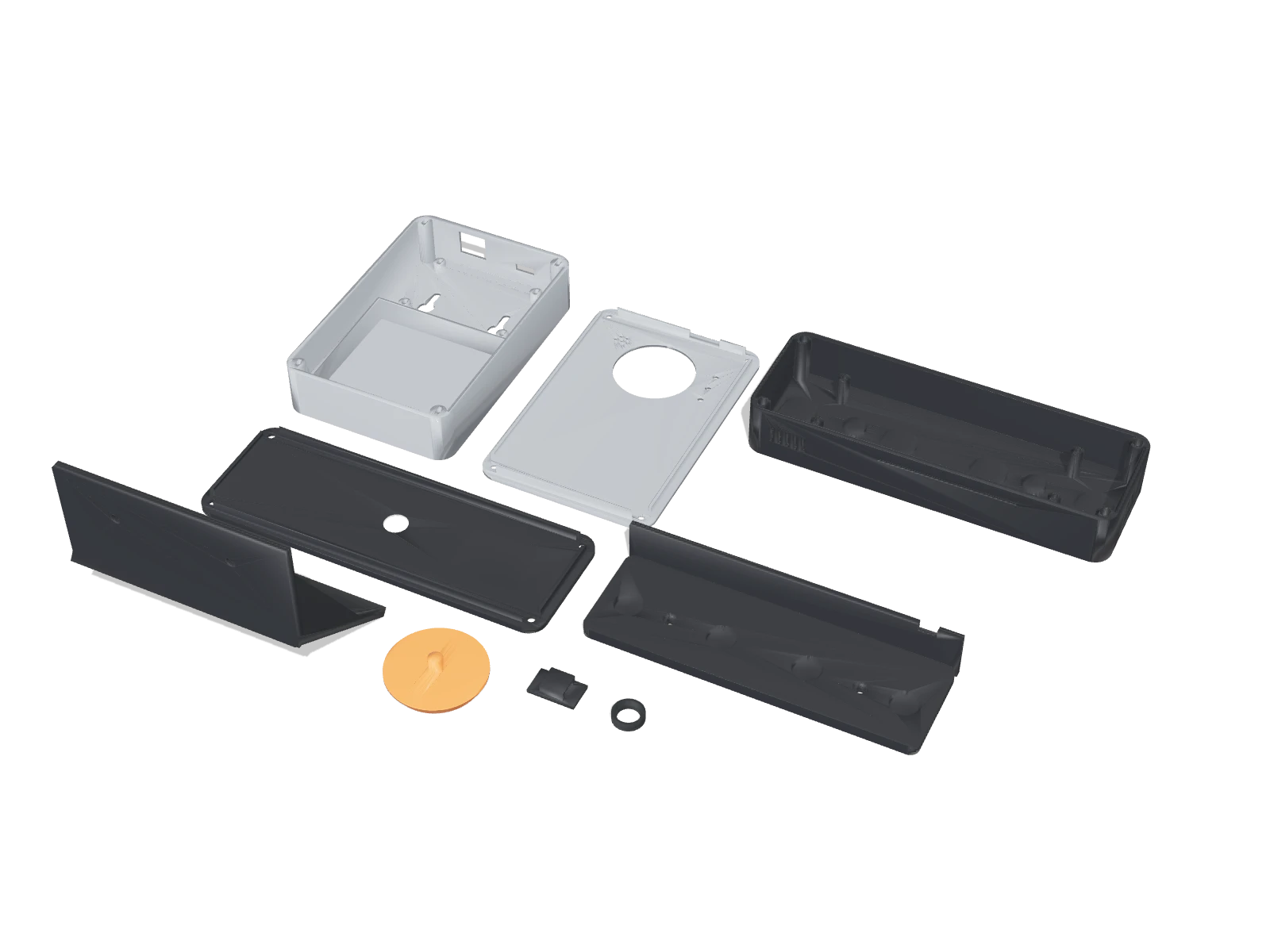
9 parts, generated from code and checked as closed solids. Pick a part to inspect it, or download the STL files to print.
See the CAD parts render
Loading the CAD…
Real CAD · drag to rotate · scroll to zoomReal CAD · swipe sideways
Bought hardware fitted inside this part (checked in the CAD: nothing collides with the plastic)
- Sensor bar housingss-bar-housing.stl · ASA
- Sensor bar coverss-bar-cover.stl · ASA
- Thermal lens gasketss-lens-gasket.stl · TPU 95A
- Hood front clip (rev B)ss-hood-front-clip.stl · ASA
- Backsplash bracketss-backsplash-bracket.stl · ASA
- Wall control basess-wall-control-base.stl · PETG
- Wall control frontss-wall-control-front.stl · PETG
- I'm-here buttonss-cancel-button.stl · PETG
- Cable clipss-cable-clip.stl · ASA
Open risks we are working on
- Most apartment hoods are hardwired, so AutoVent needs an electrician (cord kit or listed relay) unless fitted at turnover
- Broan-NuTone is already funded to build a smart hood; a cheap auto-on hood would turn AutoVent into a feature
- Whether an add-on fan controller meets ASHRAE 62.2-2022 manual-control rules is unconfirmed; no code claim made
- Product-liability insurance for a solo company may be costly or unavailable; must be bound before any paid sale
- No North American listing standard for an alert-only cooking monitor was found; needs an NRTL pre-assessment
- Hood heat and grease may exceed 70 °C or fog the lens; bench test T6 decides
- No operator has asked for auto-on hoods yet; gate G2 interviews and a 5-kitchen trial come first
Design stage only: nothing on this page is for sale. Specifications and prices are targets.